
每次多益選項出現 considerable、substantial、significant 就開始選到心慌?這六個「相當大的」英文字,是多益易混淆單字排行榜常客,差異其實沒那麼難分。
Considerable 跟 Substantial 差在哪
這兩個字最容易被搞混,因為中文翻譯都很像「相當大的」,但用法上有一個關鍵區別。
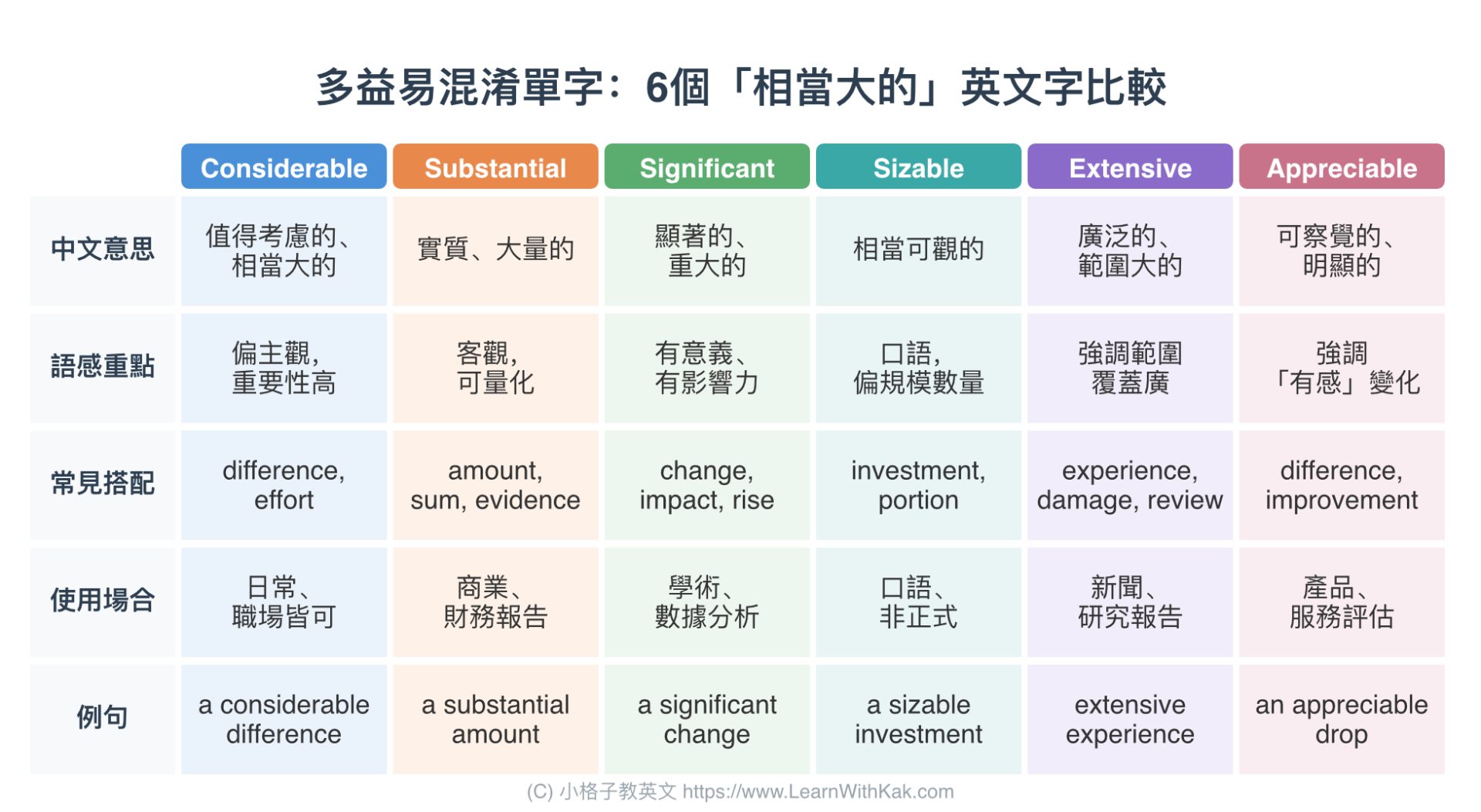
considerable 中文比較偏向「值得考慮的、程度上算大的」,通常帶點主觀判斷,講的是重要性或程度,不一定有具體數字。substantial 中文則比較「實質、大量」,通常搭配可以量化的東西,像是金額、數量、資源,感覺更客觀、更有份量。
(1)
A: The company reported a considerable increase in sales this quarter.
A: 這間公司這季的銷售有相當大的成長。
B: That’s great news, the marketing campaign really paid off.
B: 太好了,行銷活動真的有效果。
(2)
A: We need a substantial amount of funding before we can launch this project.
A: 我們要有相當大筆的資金才能啟動這個計畫。
B: I already talked to a few investors, they seem interested.
B: 我已經跟幾個投資人談過了,他們滿有興趣的。
(3)
A: There’s a considerable difference between the two proposals.
A: 這兩個提案之間有相當大的差異。
B: Yeah, one focuses on cost, the other on speed.
B: 對啊,一個著重成本,一個著重速度。
(4)
A: The renovation cost a substantial sum, way more than we expected.
A: 這次裝修花了一大筆錢,比我們預期多很多。
B: I know, the material prices went up so much this year.
B: 我知道,今年的建材價格漲超多。
(5)
A: It took considerable effort to convince the client to sign.
A: 說服客戶簽約花了不少心力。
B: I bet, that client is known for being picky.
B: 我猜也是,那個客戶出了名的難搞。
簡單記法:如果是在講「金額、數量、實質東西」,優先想到 substantial;如果是在講「程度、重要性、值不值得花心思」,considerable 比較合適。
這兩個字其實常常出現在同一種情境,差別只在講話的人想強調什麼。老闆在開會時提到業績成長,如果想強調「這數字很紮實、看得到」,會用 substantial;如果想強調「這件事值得我們花時間討論」,就會傾向用 considerable。多益閱讀測驗常常把這種語感差異藏在選項裡,光看中文翻譯很容易兩個都選得通,但看上下文在講數字還是講重要性,答案就會很明顯。
Significant 的特殊用法
significant 中文常被翻成「顯著的、重大的」,但它跟前面兩個字有一個很不一樣的地方:significant 講的是「有意義的、有影響力的」,不是單純的「大」。一件事情可以體積很小,但只要影響夠大,就能用 significant。
(6)
A: There’s been a significant change in our team’s workflow.
A: 我們團隊的工作流程有重大改變。
B: Yeah, ever since we switched to the new system.
B: 對啊,自從我們換了新系統之後。
(7)
A: Losing that client would be a significant loss for the company.
A: 失去那個客戶對公司來說會是重大損失。
B: I know, they’re like 30% of our revenue.
B: 我知道,他們佔了我們營收的三成左右。
(8)
A: This research shows a significant correlation between sleep and productivity.
A: 這份研究顯示睡眠和生產力之間有顯著的關聯。
B: That explains why I get nothing done when I’m tired.
B: 難怪我累的時候什麼都做不好。
(9)
A: Her promotion is a significant milestone in her career.
A: 她升職是她職涯裡一個重要的里程碑。
B: She’s worked so hard for this, she totally deserves it.
B: 她真的很努力,完全值得。
(10)
A: There wasn’t any significant improvement after the update.
A: 更新之後並沒有顯著的改善。
B: That’s disappointing, I thought it would fix the lag.
B: 有點失望,我以為可以解決延遲問題。
在職場email或報告裡,significant 很常拿來講「影響、關聯、里程碑」,跟 considerable、substantial 偏重數量或程度不一樣,significant 講的是這件事重不重要。
這也是為什麼 significant 常常跟數據、研究、統計綁在一起出現。學術寫作或市場分析報告裡常看到 significant difference、significant impact 這種搭配,因為研究者要表達的不是「數字大」,而是「這個結果有意義、值得注意」。反過來說,如果只是單純數量變多,但沒有特別的意涵,用 considerable 或 substantial 反而更自然。也因為這樣,在統計學的文章裡看到 statistically significant,指的是這個結果不是隨機出現的,而是有實質意義的差異,跟中文常講的「明顯」不完全是同一件事。
Sizable、Extensive、Appreciable 怎麼用
這三個字沒有前面三個那麼常見,但在多益的閱讀測驗跟商業情境裡也會出現,各自有自己的使用場合。
sizable 中文接近「相當可觀的」,比較口語,常拿來形容數量、金額、規模,語氣沒有 substantial 那麼正式。extensive 中文是「廣泛的、範圍很大的」,重點在覆蓋範圍廣,不是單純的大。appreciable 中文則是「可察覺的、明顯到看得出來」,強調的是「有感」的變化,就算幅度不算誇張,但足夠讓人注意到。
(11)
A: The company just received a sizable investment from a tech firm.
A: 這間公司剛拿到一筆相當大的投資,來自一家科技公司。
B: Wow, that should help them scale up fast.
B: 哇,這樣應該可以讓他們快速擴張。
(12)
A: We did an extensive review of all the vendor contracts.
A: 我們對所有供應商合約做了廣泛的審查。
B: Did you find anything problematic?
B: 有發現什麼問題嗎?
(13)
A: There’s been an appreciable drop in customer complaints since we updated the app.
A: 自從我們更新app之後,客訴有明顯下降。
B: That’s a relief, the old version had so many bugs.
B: 太好了,舊版本真的有夠多bug。
(14)
A: Her collection of vintage records is quite sizable.
A: 她收藏的老唱片數量相當可觀。
B: I saw it once, it took up an entire room.
B: 我看過一次,佔了整整一個房間。
(15)
A: The damage from the storm was more extensive than we initially thought.
A: 這次暴風雨造成的損害比我們一開始想的還要廣泛。
B: They’re still assessing the full cost.
B: 他們還在評估全部的損失金額。
(16)
A: There was an appreciable difference in taste after they changed the recipe.
A: 他們改了配方之後,味道有明顯的不同。
B: I actually prefer the new one.
B: 我其實比較喜歡新版本。
這三個字的差別可以這樣記:sizable 講規模大小,extensive 講範圍廣不廣,appreciable 講有沒有明顯感覺到變化。
值得注意的是,appreciable 雖然長得像 appreciate,但這裡跟「感激」沒有關係,是從「察覺、感知」延伸出來的意思,這也是不少學生會搞混的地方。extensive 則很常出現在新聞報導或研究報告裡,用來形容範圍、規模、或是經驗背景,履歷上寫 extensive experience 就是在強調經驗涵蓋的層面很廣,而不是單純年資很長。
多益考題常見陷阱
多益很喜歡拿這幾個字互相替換當選項,考的其實是搭配詞跟語境,不是死背中文意思。
(17)
A: The report showed a significant rise in employee turnover last year.
A: 報告顯示去年員工離職率有顯著上升。
B: That’s the kind of sentence TOEIC loves throwing at you with tricky options.
B: 這種句子多益超愛出,選項都超容易選錯。
(18)
A: I almost picked considerable instead of substantial on that question.
A: 我剛剛那題差點選considerable而不是substantial。
B: Yeah, when it’s about actual numbers or evidence, substantial is usually the safer choice.
B: 對啊,只要牽涉到具體數字或證據,通常substantial比較保險。
(19)
A: Extensive experience in project management is required for this role.
A: 這個職位需要廣泛的專案管理經驗。
B: That phrase shows up in almost every job posting question on the test.
B: 這種說法幾乎每次考試的徵才題都會出現。
看到跟統計、數據、研究結果有關的句子,significant 通常是首選;看到具體數字或金額,substantial 比較保險;看到範圍、經驗、損害這類詞,extensive 常常是正解。這種多益易混淆單字的題型,靠的是平常多看例句累積語感,而不是硬背中文對照表。
另外一個實用技巧是先看句子裡有沒有明確的數字或百分比,如果有,通常 substantial 或 significant 比較貼切;如果句子在講「感覺上、印象上」的改變,appreciable 或 considerable 反而更常出現。職場email裡也一樣,想強調數字亮眼用 substantial,想強調這件事對公司很重要就用 significant,就像介紹自己專業經驗時常用到的know-how一樣,抓對用字才能讓對方一秒get到重點,考試跟工作上寫信都會順很多。
下次選項又看到這幾個字,先想它們搭配的是數字、範圍還是意義,選錯的機率會少很多。
延伸閱讀:【Weigh 中文是什麼?和 Weight 差在哪,職場和多益都用得到】
如果你喜歡這篇文章的話,可以追蹤我們的 Threads 和 Facebook 唷!