
Come up with 中文常被說成「想出」,但很多人看到 come down with 就懵了,以為也是差不多的意思,結果查了才發現差超多,一個是動腦想點子,一個是生病要請假。這篇把兩個片語的用法、語感、例句全部整理好,看完保證不會再搞混。
Come up with 中文是想出點子的意思
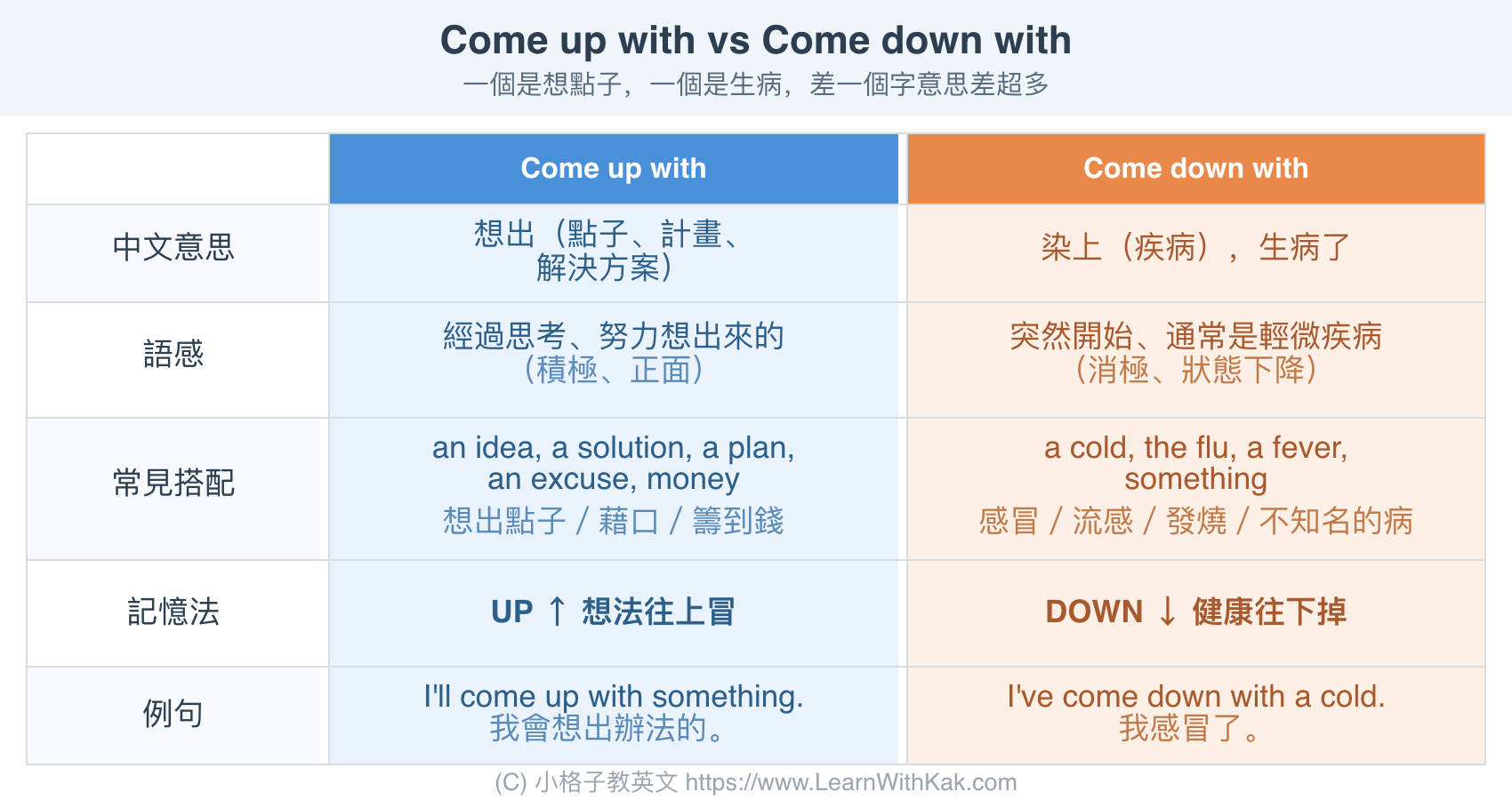
come up with 是超常用的片語,中文意思是「想出」,用在你經過思考、腦力激盪之後,終於想到某個主意、計畫、答案,或解決方案的時候。
結構很簡單:come up with + 某個東西。語感上是偏積極正面的,因為代表你花了力氣想出結果,不是隨便講講。中文很難用一個詞完全對應,因為它同時包含「思考的過程」跟「最後想到答案」這兩層意思,比單純的 think of 更強調中間經過一番努力,不是靈光一閃就結束。
很多人會把 come up with 跟 think of 搞混,但其實語感差蠻多的。think of 比較單純,代表「想到」,可能只是腦中閃過一個念頭,不一定要付諸行動。come up with 則暗示你是為了解決某個問題、達成某個目標,才特地想出這個東西,通常後面會接著要拿出來用,像是提案、答案、或藉口。
什麼時候會用到 come up with?通常是這幾種情境:
- come up with an idea(想出點子)
- come up with a solution(想出解決方案)
- come up with a plan(想出計畫)
- come up with an excuse(想出藉口)
- come up with money(籌到錢)
(1)
A: We need a theme for the party. Any ideas?
A: 我們需要派對主題,有想法嗎?
B: Give me a minute, I’ll come up with something creative.
B: 給我一分鐘,我會想出有創意的東西。
(2)
A: How did you solve that problem so fast?
A: 你怎麼那麼快就把那個問題解決掉的?
B: I couldn’t come up with the answer myself, so I asked around.
B: 我自己想不出答案,所以我到處問人。
(3)
A: The client wants a completely different design.
A: 客戶要完全不同的設計。
B: No worries, we’ll come up with something better by tomorrow.
B: 別擔心,我們明天前會想出更好的。
如果要用 come up with 造句練習,可以先從「想出+名詞」這個結構開始練,例如:
(4) She always comes up with brilliant ideas during meetings.
她開會的時候總是能想出很棒的點子。
(5)
A: Why were you late again?
A: 你怎麼又遲到了?
B: Traffic was crazy, I couldn’t come up with a better excuse!
B: 塞車塞到爆,我想不出更好的藉口了!
(6)
A: Do you have the deposit money ready?
A: 訂金準備好了嗎?
B: Not yet, but I’ll come up with it by Friday.
B: 還沒,但我週五前會籌到。
Come down with 中文是生病了的意思
come down with 意思是「染上(疾病)」、「生病了」,特別是用在比較輕微、暫時性的病,像感冒、流感、發燒這種,不會用在癌症、心臟病這種嚴重或慢性疾病上。
結構是:come down with + 疾病。語感偏消極,代表原本好好的,狀態突然往下掉。跟中文的「得了」、「染上」很接近,但英文母語者在口語裡幾乎不會用 get 加疾病這種說法,反而是 come down with 才是最自然、最常聽到的講法,尤其是描述那種突然發作、來得沒有預警的小病。
come down with something 中文的意思則是「生了某種不確定的病」,通常是還沒確診、只是覺得身體怪怪的時候會這樣說。像是早上起床覺得喉嚨癢癢的、頭有點暈,但還說不出是感冒還是過敏,這時候用 something 就很剛好,不用硬講出病名。這個用法在辦公室閒聊或跟同事請假的時候特別常出現,因為很多時候真的還沒去看醫生,只能先說自己「好像快生病了」。
常見搭配像這樣:
- come down with a cold(感冒)
- come down with the flu(流感)
- come down with a fever(發燒)
- coming down with something(覺得快生病了)
(7)
A: Are you coming to work tomorrow?
A: 你明天會來上班嗎?
B: Probably not, I’ve come down with a bad cold.
B: 應該不會,我得了重感冒。
(8)
A: Where’s Sarah today?
A: Sarah 今天怎麼沒來?
B: She came down with the flu, so she’s staying home.
B: 她得流感了,所以在家休息。
(9)
A: You look terrible, are you okay?
A: 你看起來好糟,還好嗎?
B: I know, I think I’m coming down with something.
B: 我知道,我覺得我快生病了。
(10)
A: Can you still make it to the hike this weekend?
A: 這週末的爬山還去得成嗎?
B: Probably not, I’ve come down with a fever since last night.
B: 應該不行,我從昨晚開始發燒。
(11)
A: I need to call in sick today.
A: 我今天要請病假。
B: What’s wrong, did you come down with something?
B: 怎麼了,你生病了嗎?
如果臨時要請假英文怎麼寫,come down with 就是最自然的開場理由,比單純說 I’m sick 更具體,主管一看就知道是身體突然出狀況,不是隨便找藉口。
(12)
A: The whole office is dropping like flies!
A: 辦公室的人一個個都倒下了!
B: I know, half the team has come down with the flu this week.
B: 對啊,這禮拜一半的團隊都得流感了。
上下對稱的記憶法
這兩個片語最容易記的方式,就是照字面的「上」跟「下」去聯想。
come UP with,想法「往上」冒,就像你在動腦筋,點子從腦袋裡一個一個冒出來,代表積極、正面、創意爆發的狀態。
come DOWN with,健康「往下」掉,原本好好的身體狀態,因為生病而下降,代表消極、狀態變差。
用箭頭來記會更直覺:
- come UP with an idea,想法上升 ↑
- come DOWN with the flu,健康下降 ↓
這個記憶法之所以好用,是因為英文裡很多片語動詞的方向性介系詞,其實都藏著情緒或狀態的暗示,不是隨便選的。up 通常跟正面、增加、往好的方向連在一起,像 cheer up(打起精神)、level up(升級);down 則常常跟負面、減少、往壞的方向有關,像 let down(讓人失望)、break down(故障、崩潰)。把這個邏輯套進 come up with 跟 come down with,就會發現規則其實一直都在,只是平常沒特別注意到。
下次遇到不確定要用 up 還是 down 的片語動詞,可以先想想這件事本身是偏正面還是負面,通常就能猜對七八成,比死背單字有效率多了。
(13)
A: This project is really challenging.
A: 這個專案真的很有挑戰性。
B: I know, but I’m sure we’ll come up with a solution together.
B: 我知道,但我確定我們一起可以想出解決方案。
(14)
A: You’ve been coughing all day.
A: 你今天咳一整天了。
B: Yeah, I think I’m coming down with a cold.
B: 對啊,我覺得我快感冒了。
如果你平常在解決問題英文這方面想多學幾個說法,come up with 絕對是必備的動詞片語之一,職場上討論方案時特別常出現。開會的時候如果聽到主管說 let’s come up with a few options,意思就是要大家一起動腦,提出幾個可行方案出來,這種情境幾乎每個上班族都會遇到。
Come up 和 Come down 的其他用法
拿掉 with 之後,come up 跟 come down 還有各自單獨的意思,也很常見。
come up 意思是某個話題、問題、機會「出現」或「被提到」。
(15)
A: Did anyone mention the budget issue in the meeting?
A: 開會有人提到預算問題嗎?
B: Yes, it came up near the end of the discussion.
B: 有,討論快結束的時候有提到。
(16) A great job opportunity came up last week, and I’m still deciding.
上禮拜出現了一個很棒的工作機會,我還在考慮要不要接受。
come down 意思是從高處下來,或是命令、決定從上層「下達」。
(17)
A: What did management decide?
A: 管理層決定了什麼?
B: The new policy came down this morning, we start next week.
B: 新政策今天早上下達了,我們下週開始。
(18)
A: Look at the view from up here!
A: 看這裡上面的風景!
B: Amazing, but we should come down before it gets dark.
B: 太美了,但我們應該在天黑前下來。
come up with 中文是想出點子,come down with 卻是生病了,一個往上一個往下,方向記住了就不會再搞混,下次看到直接反應過來就對了。
延伸閱讀:【Put up with 和 Put up to 根本是兩回事!一個忍受煩人事,一個慫恿做壞事,別再搞混啦!】
如果你喜歡這篇文章的話,可以追蹤我們的 Threads 和 Facebook 唷!