
有沒有那種感覺,聽到別人說 “Thank you for your hospitality”,大概懂意思,但換你說又卡住了?Hospitality 中文不只是「飯店業」,這個字在日常感謝、多益考試、職場 email 裡都超常出現,用法各有不同。這篇把每種情境拆給你看。
最常用的意思:好客、款待
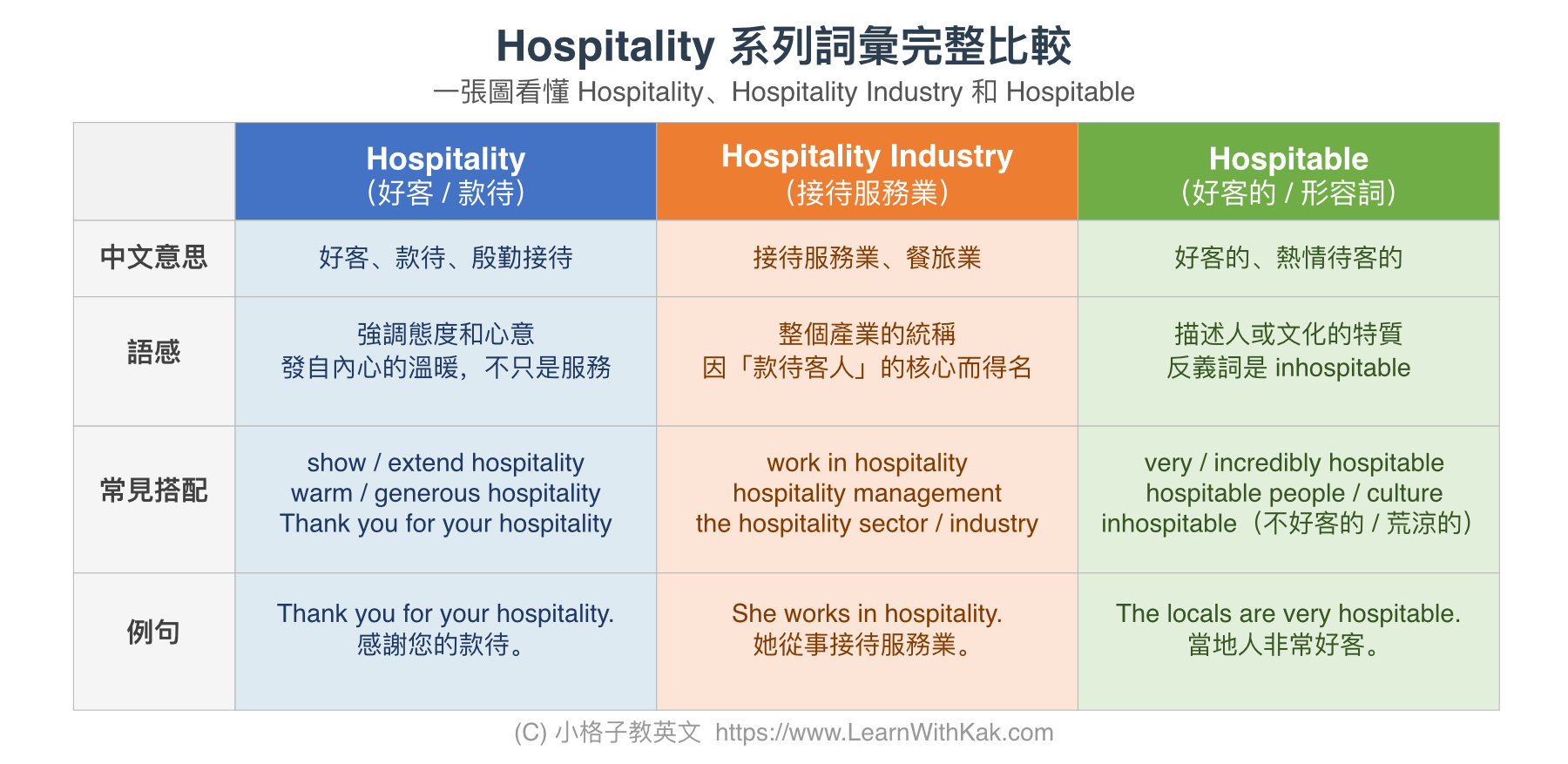
Hospitality 中文最核心的意思是好客、款待、殷勤接待,跟飯店業沒有直接關係,講的是一個人、一個家庭,甚至一整個文化對待客人的方式和態度。
重點在「心意」,不是「服務」。專業服務可以很有效率但很冷漠,hospitality 強調的是讓對方感受到被歡迎、被照顧的那種溫暖感覺。
常見搭配方式:
- show hospitality(展現好客)
- extend hospitality(給予款待)
- warm / generous hospitality(熱情 / 慷慨的款待)
- be known for their hospitality(以好客聞名)
- Thank you for your hospitality(感謝您的款待)
這個用法在旅遊時最常出現。如果你在入住飯店時聽到 “We hope you enjoy our hospitality”,意思是「我們希望您享受我們的款待」,不是希望你享受飯店業。
(1)
A: How was your trip to Kyoto?
A: 你的京都之旅怎麼樣?
B: Amazing. The people there showed incredible hospitality. A shopkeeper even invited us in for tea.
B: 太棒了。當地人的好客精神讓我印象深刻,有一個店主還邀請我們進去喝茶。
(2)
A: Thank you so much for your hospitality this weekend.
A: 非常感謝你這個週末的款待。
B: Of course! We loved having you. Come back anytime.
B: 當然!很高興你來。隨時歡迎再來。
(3)
A: How can we make the visiting team feel welcome?
A: 我們怎樣讓來訪的團隊感到受歡迎?
B: Just show them genuine hospitality. Good food, a warm welcome, and make sure they’re comfortable.
B: 展現真誠的好客精神就好。好食物、熱情歡迎,確保他們住得舒適。
(4)
A: I’ve heard that people in southern Taiwan are really warm.
A: 我聽說台灣南部的人非常親切。
B: That’s true. The hospitality there is on another level. Everyone treats you like family.
B: 真的。那裡的款待精神是另一個層次,每個人都把你當家人對待。
(5) They are known for their warm hospitality and always make guests feel right at home.
他們以熱情款待聞名,總是讓每位客人感到賓至如歸。
Hospitality Industry 中文:整個產業叫這個名字
第二個意思是大家最熟悉的,也是很多人把 hospitality 中文直接翻成「飯店業」的原因:Hospitality 在這裡指的是「接待服務業」、「餐旅業」,也就是我們常看到的 hospitality industry 中文用法。
為什麼這個產業叫 hospitality industry?因為這些行業的核心就是款待客人,從飯店到餐廳到旅行社,本質都是在提供好客精神的服務,所以統稱為 hospitality 行業。
Hospitality industry 包含的產業:
- 飯店和住宿業(Hotels and Accommodation)
- 餐廳和餐飲服務(Restaurants and Food Service)
- 旅遊和觀光業(Travel and Tourism)
- 活動管理(Event Management)
- 郵輪產業(Cruise Industry)
常見相關詞彙:
- hospitality management(餐旅管理)
- hospitality sector(接待服務業板塊)
- work in hospitality(在接待服務業工作)
- career in hospitality(餐旅業職涯)
如果你有興趣往這個方向發展,從餐廳接待和服務英文開始練也是很實際的起點。
(6)
A: What are you studying at university?
A: 你在大學念什麼?
B: Hospitality management. I want to work in hotels after I graduate.
B: 餐旅管理。我畢業後想在飯店業工作。
(7)
A: Are you looking for a job?
A: 你在找工作嗎?
B: Yes. I have three years of experience in hospitality, mainly in food and beverage.
B: 是的。我在接待服務業有三年的經驗,主要是餐飲方面。
(8)
A: What do you think about working in the hospitality industry?
A: 你覺得在接待服務業工作怎麼樣?
B: It’s demanding but rewarding. You get to interact with people from all over the world.
B: 很累但很有成就感。可以跟來自世界各地的人互動。
(9)
A: Why did you choose a career in hospitality?
A: 你為什麼選擇在餐旅業發展?
B: I’ve always enjoyed making people feel welcome. It’s just something I’m passionate about.
B: 我一直很喜歡讓人感到受歡迎,這是我的熱情所在。
(10)
A: How has the hospitality sector changed recently?
A: 接待服務業最近有什麼變化?
B: A lot of hotels are using technology to personalize the guest experience now.
B: 現在很多飯店開始用科技來個人化住客體驗。
(11) She has over ten years of experience in the hospitality industry, specializing in event management.
她在接待服務業有超過十年的經驗,專長是活動管理。
多益和職場英文裡的 Hospitality
這部分很多人沒想到,但確實直接影響多益分數和職場英文表現。
多益(TOEIC)
多益 Part 3、Part 4、Part 7 大量出現飯店 check-in、餐廳訂位、會議場地安排、商務接待等場景,這些統稱就是 hospitality 相關情境。看懂這個字的語感,整個出題邏輯都會清楚很多。
多益常出現的相關字彙:
- check in / check out(入住 / 退房)
- reservation / booking(訂位 / 預訂)
- accommodate(安排住宿或滿足需求)
- venue(場地)
- amenities(設施)
- hospitality suite(接待包廂)
職場英文
職場裡,hospitality 最常出現在兩種情況。
一是感謝對方接待。去對方公司拜訪後,在 email 裡說 “Thank you for your hospitality” 或 “Thank you for your warm hospitality during our visit” 是非常標準的說法,比只說 “Thanks for having us” 更專業、更到位。
二是描述接待客戶的行為。”We want to show our clients some hospitality” 或 “The event is designed to show hospitality to our overseas partners”,這種說法在商務英文裡很常見。
如果你常需要寫職場 email,這個字真的值得記下來,用的時機比大多數人想的多。
(12)
A: The TOEIC had a lot of hotel and restaurant conversations. Were they hard?
A: 多益有很多飯店和餐廳的對話,難嗎?
B: Not really. Once you know the hospitality vocabulary, the conversations follow a pretty predictable pattern.
B: 還好。一旦你熟悉接待服務業的字彙,那些對話就很有規律可循。
(13)
A: How do you usually end a thank-you email after visiting a client?
A: 拜訪客戶後的感謝信你通常怎麼結尾?
B: I always include “Thank you for your hospitality.” It’s short but sounds very professional.
B: 我一定會加「感謝您的款待」。簡短但很專業。
(14)
A: Should I mention the dinner they hosted for us in the follow-up email?
A: 後續 email 裡應該提到他們為我們辦的晚宴嗎?
B: Definitely. Something like “We truly appreciated your hospitality during our visit” works perfectly.
B: 一定要。像「我們非常感謝您訪問期間的款待」這樣說就很棒。
(15)
A: We’re hosting a group of overseas clients next month. Any suggestions?
A: 我們下個月要接待一批海外客戶,有什麼建議嗎?
B: Make sure they experience some local hospitality. A nice dinner and a city tour would go a long way.
B: 確保他們感受到本地的款待精神。一頓好飯加一個城市導覽,效果會很好。
(16) The hospitality suite on the top floor is reserved for our VIP clients during the conference.
頂樓的接待包廂在會議期間保留給貴賓客戶。
Hospitable 中文:形容詞版怎麼用
講完名詞 hospitality,來看看形容詞版。Hospitable 中文是「好客的」、「熱情待客的」,通常用來形容人、家庭或文化,強調那種讓人感到受歡迎的特質。
對應反義詞是 inhospitable。有趣的是,inhospitable 不只能形容人不好客,也可以形容環境,意思是「荒涼的」、「嚴苛的」,在多益 Part 7 的地理或自然類文章裡偶爾會看到:
- inhospitable climate(惡劣氣候)
- inhospitable terrain(艱困地形)
- inhospitable conditions(艱苦的環境條件)
Hospitality(名詞)和 hospitable(形容詞)的關係:
- 他們展現了溫暖的款待 → They showed great hospitality.
- 他們非常好客 → They were very hospitable.
hospitable 中文這個形容詞用法很簡單,記住跟 hospitality 同根,「-able」結尾就是「有這個特質的」。
(17)
A: What are the people like in that city?
A: 那個城市的人怎麼樣?
B: Very hospitable. They always make you feel welcome, even if you’re a complete stranger.
B: 非常好客。就算你是完全的陌生人,他們也讓你感到很受歡迎。
(18)
A: Why didn’t you enjoy your trip there?
A: 你為什麼不喜歡那次旅行?
B: The locals were quite inhospitable. Nobody wanted to help or even talk to us.
B: 當地人不太好客。沒有人想幫忙甚至跟我們說話。
(19)
A: What made you choose Taiwan for your business trip?
A: 你為什麼選台灣出差?
B: Besides the business opportunities, Taiwanese people are incredibly hospitable. I always feel at home here.
B: 除了商機,台灣人非常好客,我在這裡總是感到很自在。
(20)
A: How was the hiking trip in that remote area?
A: 那個偏遠地區的健行怎麼樣?
B: Challenging. The terrain was pretty inhospitable: steep, rocky, and bitterly cold.
B: 很有挑戰性。地形很艱困,陡峭、多石頭、又非常冷。
(21) She is one of the most hospitable people I’ve ever met. She always makes sure her guests have everything they need.
她是我見過最好客的人之一,她總是確保客人有一切所需。
Hospitality vs Hostility:差一個字,意思完全反過來
這兩個字長得很像,意思卻完全相反,初學者非常容易混淆。
Hostility 中文 = 敵意、敵對、不友善
記憶方法很直覺:
- Hospitality → host(主人)的延伸 → 招待客人 → 好客
- Hostility → hostile(敵對的)的名詞形式 → 敵意
這組對比在多益 Part 7 的閱讀文章裡偶爾出現,一不小心看錯字,整題意思就全反了。
(22)
A: How was the negotiation?
A: 談判進行得怎樣?
B: Not great. There was a lot of hostility in the room. Everyone seemed on edge.
B: 不太好。會議室裡充滿敵意,大家都很緊繃。
(23)
A: Did you feel any hostility from the other team?
A: 你有感受到對方團隊的敵意嗎?
B: A little. It was very different from the hospitality they showed us the last time we visited.
B: 有一點,和上次我們拜訪時他們展現的好客態度截然不同。
(24)
A: Why did the meeting go so badly?
A: 那個會議為什麼進行得那麼糟?
B: There was clear hostility between the two sides. Nobody was willing to compromise.
B: 雙方之間有明顯的敵意,沒有人願意妥協。
(25) The hostility between the two departments has made collaboration almost impossible.
兩個部門之間的敵意讓合作幾乎不可能。
下次看到 hospitality,記得先想想是哪種情境:感謝別人招待、還是在聊產業,意思差很多。Hospitable 和 hostility 也值得一起記下來,一個是好客的形容詞,一個是意思完全相反的警示牌。
延伸閱讀:【出國住飯店想要高樓層怎麼說?不要尾房、要景觀、要安靜,一篇學會所有選房英文】