
朋友叫你換工作、同事建議你換個做法、家人覺得你應該去看醫生,偏偏你不想照做,又不知道怎麼開口說「謝謝但不用了」。這種時候最卡,因為婉拒英文說得不好,要嘛太衝,要嘛對方根本聽不出來你在拒絕。這篇整理了 7 種婉拒英文說法,語氣從委婉到稍微直接都有,日常和職場都適用。
婉拒和直接拒絕,差在哪
先講一個很多人忽略的事:拒絕建議跟拒絕邀請,語感上是不一樣的。
拒絕邀請(”I can’t make it to dinner”)通常比較中性,對方不會覺得被否定。但拒絕建議,就帶有一點「我不認同你的判斷」的意味,處理不好的話,對方可能會覺得好意被掃地出門。
所以婉拒建議的英文,很多時候都會有兩個動作:先表示有聽到、有感謝,然後再說「但是我打算這樣做」。這個結構在職場英文尤其重要,因為要讓對方覺得你是在做決定,而不是在打臉他。
多益(TOEIC)的 Part 3、Part 4 聽力,以及 Part 7 閱讀,很常出現職場情境對話,其中婉拒提案、回應同事建議是常見的場景。看懂這些語氣,對多益英文的理解很有幫助。
感謝 + 婉拒:Thanks, but I think I’ll…
這是最日常、最不容易踩雷的結構,先表示感謝,再說自己的打算。語氣不強硬,但意思很清楚。
- Thanks for the suggestion, but I think I’ll…(感謝你的建議,但我打算…)
- I appreciate the advice, but I’ve decided to…(謝謝你的建議,但我已經決定…)
- That’s a good point, but I’m going to stick with my original plan.(你說的有道理,但我還是打算照原來的計畫走。)
注意 “I appreciate the advice” 是很常見的職場婉拒開場白,比單純的 “Thanks” 聽起來更正式、更有誠意。
(1)
A: You should really try that new doctor downtown. I heard she’s amazing.
A: 你真的應該去找市中心那位新來的醫生,聽說她很厲害。
B: Thanks for the suggestion, but I think I’ll stick with my current doctor for now.
B: 謝謝你的建議,但我目前還是打算繼續看現在這位醫生。
(2)
A: Have you considered switching to a standing desk? It’s so much better for your back.
A: 你有考慮換站立式辦公桌嗎?對背很好的。
B: I appreciate the advice. I’ve actually thought about it, but I’m going to hold off for now.
B: 謝謝你的建議,我其實有想過,但目前打算先不換。
(3)
A: Why don’t you take the highway? It’s faster.
A: 你何不走高速公路?比較快。
B: That’s a good point, but I think I’ll take the local road today. I don’t mind the extra time.
B: 你說的有道理,但我今天想走一般道路,多花一點時間也沒關係。
(4)
A: You should apply for that management position. You’d be great at it.
A: 你應該去應徵那個管理職,你一定很適合。
B: I appreciate you saying that. I’ve decided to stay in my current role for now, but I’ll keep it in mind.
B: 謝謝你這樣說,我目前決定留在現職,但我會記在心裡的。
表示會考慮,但沒打算真的照做:I’ll keep that in mind
這類說法有一個妙用,就是既沒有明確拒絕,又讓對方知道你有在聽。說白了,就是台灣人常說的「好啦好啦」的禮貌英文版。
當然,這不是要你不誠實,這些說法在語氣上本來就帶有「謝謝,但我可能不會這樣做」的意思,是非常正常的社交語言。
- I’ll keep that in mind.(我會記住的。)
- I’ll take that into consideration.(我會把這個納入考量。)
- That’s worth thinking about.(這個值得想想。)
“I’ll take that into consideration” 在職場英文和多益英文裡都常見,是在會議上回應上司或客戶建議時很好用的一句話,語氣既尊重又不失主見。
(5)
A: You should really learn how to code. It’ll open so many doors for you.
A: 你真的應該去學寫程式,會幫你打開很多機會。
B: That’s worth thinking about. I’ll look into it.
B: 這個值得想想,我會去了解看看。
(6)
A: I think you should change the color scheme of the presentation. Blue might be too cold.
A: 我覺得你應該換一下簡報的配色,藍色感覺太冷了。
B: I’ll take that into consideration before the final version.
B: 在最終版本之前,我會把這個納入考量。
(7)
A: Maybe try meditating before bed instead of scrolling on your phone.
A: 也許睡前可以試試冥想,不要一直滑手機。
B: I’ll keep that in mind. I’ve been meaning to sleep better.
B: 我會記住的,我最近本來就想改善睡眠。
(8)
A: The report would flow better if you reorganized the sections.
A: 如果你重新整理一下章節順序,報告讀起來會更順。
B: I’ll take that into consideration. Thanks for looking it over.
B: 我會考慮的,謝謝你幫我看。
說明自己已有打算:I’ve already decided to…
有時候你已經想清楚了,不需要再多解釋,但也不想讓對方覺得你完全沒在聽。這時候,把「我已經決定了」說清楚,就是最乾淨的婉拒方式。
- I’ve already decided to…(我已經決定要…)
- I think I’m going to stick with my original plan.(我打算照原來的計畫走。)
- I’ve thought it through and I’m going to go with…(我想清楚了,我打算選…)
這個結構的關鍵是「我已經做過功課了」這個訊號。它讓對方知道你不是衝動決定,而是有想過,只是結論不同。這在職場英文溝通上特別重要,尤其是面對資深同事或主管的建議時。
(9)
A: Have you considered renting instead of buying? The market’s pretty uncertain right now.
A: 你有考慮租房而不是買嗎?現在市場很不穩定。
B: I’ve thought it through, and I’m going to go ahead and buy. It makes more sense for my situation.
B: 我想清楚了,我還是打算買,以我的狀況來說比較划算。
(10)
A: You might want to delay the launch until next quarter.
A: 你或許應該把上線時間延到下一季。
B: I appreciate the input, but I’ve already decided to move forward with the original timeline.
B: 謝謝你的意見,但我已經決定照原來的時間表推進。
(11)
A: Why not take the other route? It’s more scenic.
A: 何不走另一條路?風景比較好。
B: I think I’m going to stick with my original plan. I know this route well.
B: 我打算照原來的路走,這條我比較熟。
(12)
A: You should consider bringing in an outside consultant for this project.
A: 這個專案你應該考慮找外部顧問。
B: We’ve thought it through as a team, and we’re going to handle it internally for now.
B: 我們團隊已經討論過了,目前打算在內部解決。
職場和多益必學:會議、Email 中的婉拒說法
在比較正式的場合,例如開會的時候有人提案、或是在 email 裡回應對方的建議,用詞就需要再更有層次一點。太直接容易顯得不尊重,太模糊又讓人搞不清楚你的立場。
這幾句是多益英文 Part 3 和 Part 7 常出現的句型,也是職場英文溝通裡很有用的表達方式:
- While I understand your point, I think…(我理解你的意思,但我認為…)
- I see where you’re coming from, but…(我明白你的出發點,但…)
- That’s an interesting idea, though I’d like to go in a different direction.(這個想法很有意思,不過我想走另一個方向。)
- I appreciate your perspective, but we’ve decided to…(謝謝你的看法,但我們已經決定…)
“I see where you’re coming from” 這句非常實用,它明確傳遞出「我有認真聽你說」的訊號,但後面的 but 就是在設定立場了。跟表達不同意的用法其實很接近,但婉拒建議更強調「我有自己的計畫」,而不只是說「我不同意你」。
(13)
A: I think we should push the deadline to give the team more time.
A: 我覺得應該延後截止日期,讓團隊有更多時間。
B: I see where you’re coming from, but pushing the deadline isn’t an option at this point. Let’s talk about how we can manage the workload instead.
B: 我明白你的出發點,但目前延後截止日期不是選項,我們來討論一下怎麼分配工作量。
(14)
A: It might be better to present the data in a table format rather than a chart.
A: 也許用表格呈現數據會比圖表更好。
B: That’s an interesting idea, though I’d like to go with the chart. I think it’s easier for the client to read at a glance.
B: 這個想法很有意思,不過我還是想用圖表,我覺得客戶一眼就能看懂。
(15)
A: We recommend using a different vendor for this project to reduce costs.
A: 我們建議這個專案換一家供應商以降低成本。
B: I appreciate your perspective. We’ve considered it, but we’ve decided to continue with our current vendor for continuity reasons.
B: 謝謝你的看法,我們有考慮過,但為了維持合作連貫性,我們決定繼續用現在的供應商。
(16)
A: Have you considered restructuring the introduction of your proposal?
A: 你有考慮重新調整提案的開頭嗎?
B: While I understand your point, I think the current structure works well for this particular client. I’ll keep your suggestion in mind for the next one.
B: 我理解你的意思,但我覺得目前的結構對這個客戶來說蠻合適的,下次我會把你的建議記起來。
(17)
A: Maybe we should delay the announcement until we have more data.
A: 也許我們應該等到有更多數據再發公告。
B: I see where you’re coming from, but I think the timing is important here. We’re going to move forward as planned.
B: 我明白你的出發點,但我覺得時機很重要,我們會照計畫進行。
在 email 裡回應建議,通常會在開頭先肯定對方,例如:
“Thank you for your suggestion regarding the project timeline. After careful consideration, we’ve decided to proceed with the original schedule.”(感謝你針對專案時間表提出的建議。經過仔細考慮,我們決定照原來的時間表執行。)
這種格式在職場 Email 裡很實用,語氣正式但不失禮。
已有自己的想法:I’d rather / I think I’ll pass
在比較熟悉的朋友或同事之間,有時候不需要鋪那麼多墊子,可以說得稍微直接一點,但還是有禮貌。
- I’d rather not.(我寧願不要。)
- I think I’ll pass on that.(這個我就不了。)
- It’s not really my thing, but thanks.(這不太適合我,但謝謝。)
- I’ll give it a miss this time.(這次就算了。)
“I’d rather not” 是非常口語、非常自然的說法,語氣上帶一點點「我有我的考量」,但不需要解釋原因,也不會讓人覺得你在逃避。
跟 I’d rather 和 I’d better 的用法有關,這兩個在日常英文對話裡都很高頻,搞混了語氣差很多。
(18)
A: You should try that spicy noodle challenge. It’s only twenty bucks.
A: 你應該去挑戰那個辣麵,才二十塊而已。
B: I think I’ll pass on that. I’m not great with spicy food.
B: 這個我就不了,我吃辣不行。
(19)
A: Why don’t you join us for karaoke tonight?
A: 你何不今晚跟我們去唱歌?
B: I’d rather not tonight. I need to get some rest. You guys have fun!
B: 今晚算了,我需要休息一下,你們玩得開心!
(20)
A: You should try intermittent fasting. I lost five kilos doing it.
A: 你應該試試間歇性斷食,我靠這個瘦了五公斤。
B: It’s not really my thing, but I’m glad it worked for you.
B: 這個不太適合我,但很高興對你有效。
(21)
A: Have you thought about reaching out to that recruiter I mentioned?
A: 你有想過聯絡我說的那個獵頭嗎?
B: I’ll give it a miss for now. I’m not actively looking, but thanks for thinking of me.
B: 目前先算了,我現在沒有在積極找,但謝謝你想到我。
讓對方說完,再婉拒:That said, I think…
有一個比較進階的婉拒技巧,就是先肯定對方說的某一部分,然後再轉入你自己的立場。這在英文溝通裡叫做「acknowledge and redirect」,讓對方感覺被聽進去,但你的決定不變。
- That said, I think I’m going to…(話雖如此,我還是打算…)
- You make a good point. That said, I’ve decided to…(你說得有道理,話雖如此,我已經決定…)
I can see the logic in that. I’m still going to go with…(我看得出來這個邏輯,我還是打算選…)
這類說法特別適合在對話中雙方都有一些道理、但你就是不打算改變做法的情況。在處理改變想法相關的英文對話時,這個結構也很常出現。
“That said” 是轉折詞,有「話雖如此」的意思,後面接的就是你真正的立場。比 “but” 更有層次,也比 “however” 更口語,職場和日常都能用。
(22)
A: If you take a break now, you’ll come back to the project with fresh eyes.
A: 你如果現在休息一下,回來繼續做專案時會有新的眼光。
B: You make a good point. That said, I think I need to finish this section first before I can step away.
B: 你說得有道理,話雖如此,我覺得需要先把這個部分做完才能休息。
(23)
A: You might want to lower your asking price. The market isn’t great right now.
A: 你或許應該調低開價,現在市場不太好。
B: I can see the logic in that. I’m still going to hold firm on the price for a couple more weeks and see what happens.
B: 我看得出來這個邏輯,但我還是打算再撐幾個星期,看看狀況再說。
(24)
A: I think you should ask for feedback from the whole team before making the final decision.
A: 我覺得你應該在做最終決定前,先聽取整個團隊的意見。
B: That’s fair. That said, I’ve already gathered input from the key stakeholders, so I’m comfortable moving forward.
B: 這個說法很公道,話雖如此,我已經收集了主要相關人員的意見,我對繼續推進有把握。
(25)
A: You should really do more research before committing to that supplier.
A: 你真的應該在決定用那家供應商之前多做一些調查。
B: I can see the logic in that. We’ve done quite a bit of vetting already, so I’m going to go ahead.
B: 我看得出來這個邏輯,我們已經做了蠻多審核,所以我打算繼續推進。
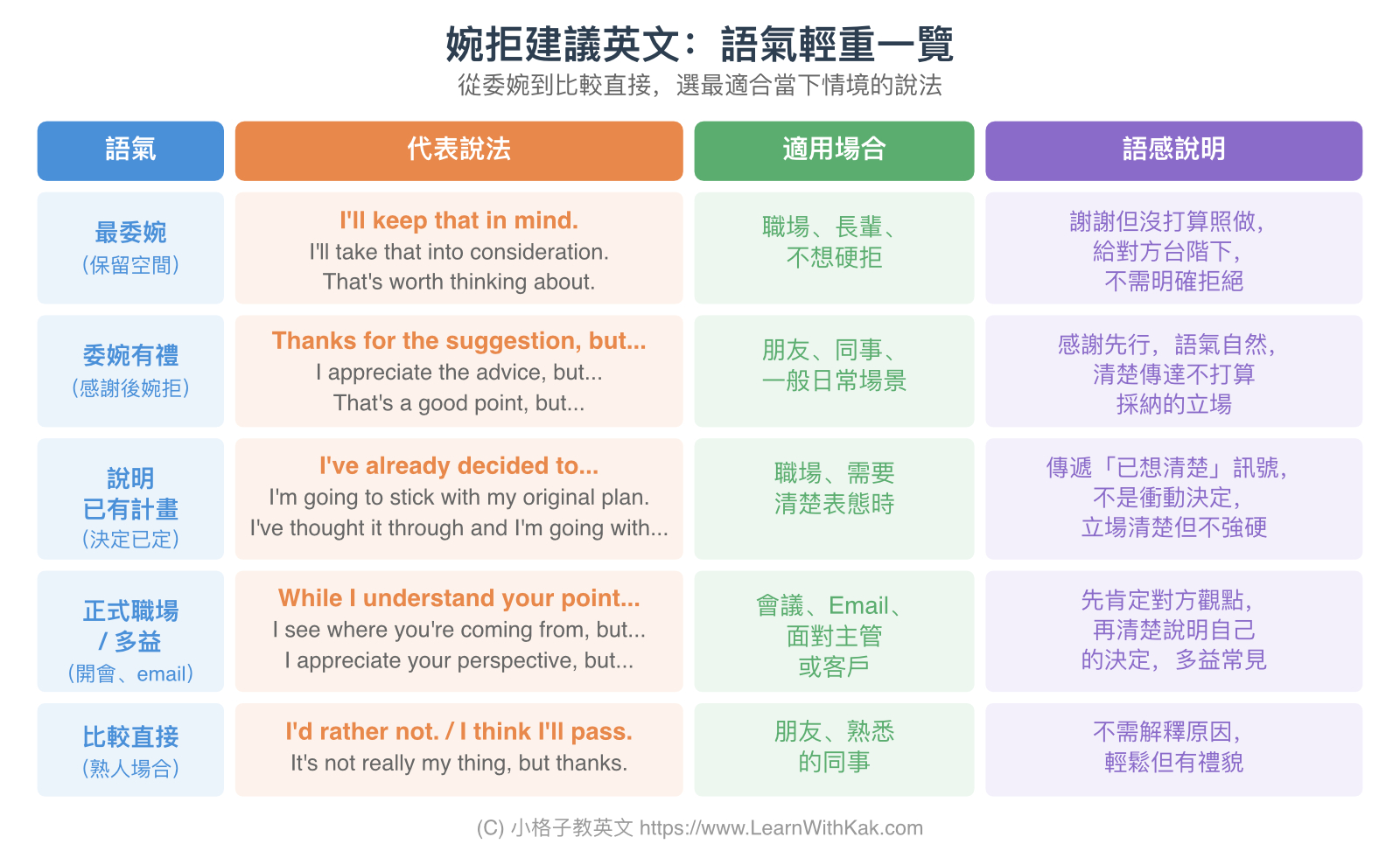
婉拒建議其實說難不難,說簡單也不簡單,難的不是單字,是那個語氣拿捏。太直接傷人、太模糊讓人搞不清楚你的意思。這篇整理的七種婉拒英文說法,不管是跟朋友聊天還是開會,都可以直接套用,找到最適合你的那個版本就好。
延伸閱讀:【如何用英文委婉地給建議?】
如果你喜歡這篇文章的話,可以追蹤我們的 Threads 和 Facebook 唷!