
你是不是每次想表達意見都只會說 “I think”?這個說法本身沒有錯,但一直用同一句,英文聽起來會很單調,有時候還顯得不夠專業或不夠有自信。其實表達意見英文的說法超多種,根據情境選對句型,能讓你的想法更有說服力、更得體,不管是開會、寫 email 還是面試都用得到。一起來看看這些道地又實用的說法吧!
表達確定的觀點:I believe / I’m convinced
當你對某件事很有把握,想要表達比較強烈、確定的觀點時,”I believe” 和 “I’m convinced” 都比 “I think” 更有力。這些說法表示你經過思考或分析,而不只是隨口說說。
(1)
A: What’s your take on the new marketing strategy?
A: 你對新的行銷策略有什麼看法?
B: I believe it’s the right direction for us. The data supports a shift toward digital channels.
B: 我認為這是我們的正確方向。數據支持轉向數位通路。
(2)
A: Are you sure this approach will work?
A: 你確定這個方法會有效嗎?
B: I’m convinced it will. We’ve seen similar strategies succeed in comparable markets.
B: 我確信會有效。我們看過類似策略在相似市場中成功過。
(3)
A: Do you think we should postpone the launch?
A: 你覺得我們應該延後上市嗎?
B: I believe we should proceed as planned. Delaying would cost us our competitive advantage.
B: 我認為我們應該按計畫進行。延遲會讓我們失去競爭優勢。
表達專業判斷:In my view / In my opinion
想學表達意見英文的進階版,”In my view” 和 “In my opinion” 比 “I think” 更正式一些,適合用在商業郵件中表達你的專業判斷。這些說法承認這是你個人的觀點,但同時也表示這個觀點是經過深思熟慮的。
(4)
A: How should we handle the client’s complaint?
A: 我們應該如何處理客戶的投訴?
B: In my view, we should offer a full refund and additional compensation. Maintaining the relationship is more valuable than the short-term cost.
B: 依我看,我們應該提供全額退款和額外補償。維持關係比短期成本更有價值。
(5)
A: Should we hire more staff or outsource?
A: 我們應該雇用更多員工還是外包?
B: In my view, outsourcing makes more sense at this stage. It gives us flexibility without long-term commitments.
B: 依我看,現階段外包更合理。它讓我們有彈性而不需長期承諾。
表達建議或推薦:I’d suggest / I’d recommend
當你想提出建議時,”I’d suggest” 和 “I’d recommend” 比 “I think we should” 聽起來更專業、更有建設性。這些說法清楚表明你是在提供建議,而不是命令或要求。
(6)
A: We’re having trouble meeting the deadline. Any ideas?
A: 我們很難趕上截止日期。有什麼想法嗎?
B: I’d suggest we extend the timeline by two weeks rather than rushing and compromising quality.
B: 我建議我們將時程延長兩週,而不是倉促行事而影響品質。
(7)
A: How can we improve team communication?
A: 我們要如何改善團隊溝通?
B: I’d recommend implementing a daily stand-up meeting. It’s worked well for other departments.
B: 我建議實施每日站立會議。這在其他部門很有效。
表達可能性或推測:It seems / It appears
當你不是百分之百確定,或是想要委婉地表達觀察時,”It seems” 和 “It appears” 是很好的選擇。這些說法比較客觀,適合用來陳述你從資料或情況中觀察到的事情。
(8)
A: Why are sales down this month?
A: 為什麼這個月銷售下滑?
B: It seems that the recent price increase has affected customer purchasing behavior.
B: 看來最近的價格上漲影響了客戶的購買行為。
(9)
A: How’s the new employee adapting?
A: 新員工適應得如何?
B: It appears she’s settling in well. She’s already contributing to team projects.
B: 她似乎適應得不錯。她已經開始為團隊專案做出貢獻了。
(10)
A: What’s the status of the website redesign?
A: 網站重新設計的狀況如何?
B: It seems we’re behind schedule due to technical challenges with the payment gateway.
B: 由於支付閘道的技術挑戰,我們似乎落後進度了。
表達基於證據的觀點:The data suggests / Evidence indicates
如果你的觀點是基於數據或證據,直接點出來會讓你的論點更有說服力。這些說法把重點放在客觀事實上,而不只是個人意見。
(11)
A: Should we increase our inventory for the holiday season?
A: 我們應該為假期增加庫存嗎?
B: The data suggests we should. Last year’s sales exceeded our stock by 30%.
B: 數據顯示我們應該。去年的銷售超出我們庫存 30%。
(12)
A: Is the new training program effective?
A: 新的培訓計畫有效嗎?
B: Evidence indicates it is. Employee performance scores have improved by 25% since implementation.
B: 證據顯示有效。實施以來員工績效分數提升了 25%。
表達個人感覺或直覺:I feel / My sense is
雖然在正式場合中要謹慎使用,但 “I feel” 或 “My sense is” 在某些情況下可以表達你的直覺或對氛圍的感受。這些說法比較適合用在談論人際關係、團隊氣氛或需要情緒智商的議題。
(13)
A: How do you think the client will respond to our proposal?
A: 你覺得客戶會如何回應我們的提案?
B: I feel they’re open to it, but concerned about the timeline. We should address that upfront.
B: 我感覺他們對此持開放態度,但擔心時程。我們應該先處理這點。
(14)
A: Is the team on board with the reorganization?
A: 團隊支持重組嗎?
B: I feel there’s some resistance, particularly from the senior staff. We might need more one-on-one discussions.
B: 我感覺有些阻力,特別是來自資深員工。我們可能需要更多一對一討論。
表達謹慎的觀點:It may be worth / It might be advisable
當你想提出建議但不想顯得太強勢,或是情況還不確定時,”It may be worth” 和 “It might be advisable” 是很好的選擇。這些說法比較委婉,給對方更多思考空間,也是很實用的英文溝通技巧,尤其在跟主管或客戶溝通敏感話題時特別好用。
(15)
A: We’re considering launching the product in December.
A: 我們正考慮十二月推出產品。
B: It may be worth postponing until January to avoid the holiday rush and get more media attention.
B: 也許值得延到一月以避開假期旺季並獲得更多媒體關注。
(16)
A: Should we respond to the negative review publicly?
A: 我們應該公開回應負面評論嗎?
B: It might be advisable to reach out privately first before making a public statement.
B: 也許應該先私下聯繫再發表公開聲明。
表達團隊或集體觀點:We feel / Our team believes
在代表團隊或公司發言時,使用 “We feel” 或 “Our team believes” 會比 “I think” 更適合。這些說法表示這不只是你個人的意見,而是經過團隊討論或共識的觀點。
(17)
A: What’s your company’s position on the partnership proposal?
A: 貴公司對合作提案的立場是什麼?
B: We feel it’s a strong opportunity that aligns with our strategic goals. Our team is eager to move forward.
B: 我們認為這是符合我們策略目標的絕佳機會。我們團隊很期待推進。
(18)
A: How does your department view the new policy changes?
A: 你們部門如何看待新的政策變更?
B: Our team believes the changes will improve efficiency, though we have some concerns about the transition period.
B: 我們團隊相信這些變更會提升效率,雖然我們對過渡期有些疑慮。
不同情境該用哪種表達?
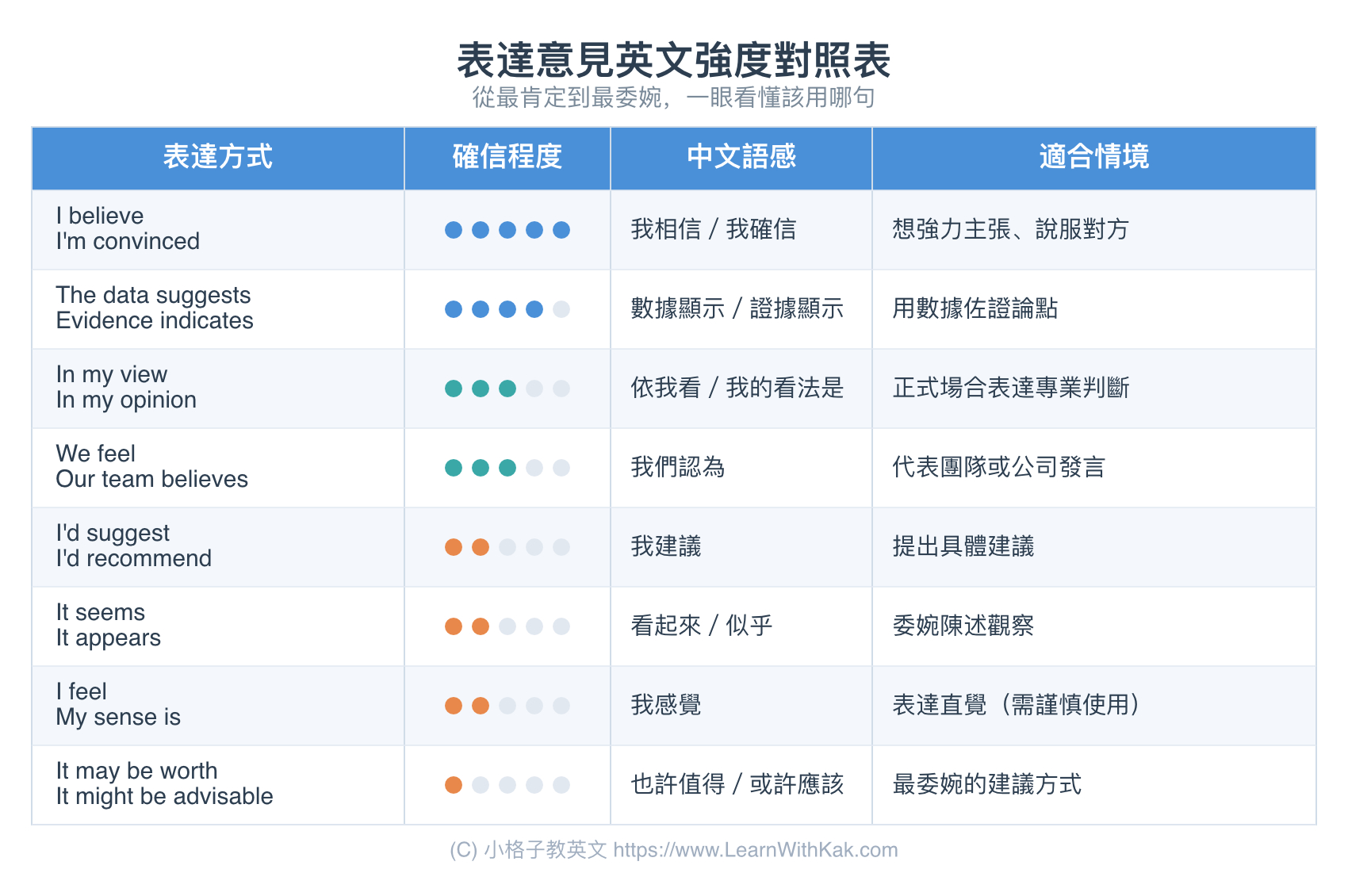
現在你知道這麼多種表達意見英文的方式了,但什麼時候該用哪一個呢?整理給你參考:
- 表達強烈確信時:用 “I believe”、”I’m convinced” 例如:I believe this is the right course of action for our company.
- 提出專業判斷時:用 “In my view”、”In my opinion” 例如:In my opinion, we should prioritize customer experience over short-term profits.
- 給建議時:用 “I’d suggest”、”I’d recommend” 例如:I’d recommend scheduling a follow-up meeting next week.
- 陳述觀察時:用 “It seems”、”It appears” 例如:It appears there’s been a delay in the shipment.
- 引用數據時:用 “The data suggests”、”Evidence indicates” 例如:The data suggests that our target audience prefers video content.
- 表達直覺時:用 “I feel”、”My sense is”(但要謹慎使用) 例如:I feel that the client is hesitant due to budget concerns.
- 委婉建議時:用 “It may be worth”、”It might be advisable” 例如:It may be worth considering alternative suppliers.
- 代表團隊時:用 “We feel”、”Our team believes” 例如:We feel that this partnership will benefit both organizations.
學會依情境切換這些句型,本身就是一種很重要的英文溝通技巧,能讓你在不同場合都表達得更精準、更得體。
常見錯誤要避免
在替換 “I think” 時,有些錯誤要特別注意:
錯誤 1:過度使用同一個替代詞
如果你整封信都是 “I believe this, I believe that”,就跟一直用 “I think” 一樣單調。要混合使用不同的表達方式。
錯誤 2:在不確定時用太肯定的說法
錯誤: I’m convinced the market will grow by 50% next year.(如果你其實不確定)
正確: The data suggests the market could grow significantly, potentially by 40-50%.
錯誤 3:在正式場合用太口語的說法
錯誤: I feel like maybe we should probably think about doing something.(太不確定、太口語)
正確: It may be advisable to consider implementing a contingency plan.
錯誤 4:不考慮語境隨意替換
不是每個 “I think” 都需要被替換。如果是很輕鬆的郵件往來或跟熟悉的同事聊天,用 “I think” 完全沒問題。重點是要能夠根據情境選擇最適合的表達方式。
其實表達意見英文不需要死背公式,多看例句、多練習幾次自然就會抓到語感,下次開會或寫 email 時試著換一種說法看看吧。
延伸閱讀:【表達不同意英文別說 I disagree!10 種高情商職場說法完整解析】
如果你喜歡這篇文章的話,可以追蹤我們的 Threads 和 Facebook 唷!