
考績英文常常卡在同一個地方:單字都認得,但主管一開口問「這一季你做了什麼」,腦中的中文邏輯瞬間找不到對應的英文句子。這篇把考績英文常見的說法整理清楚,從基本詞彙、談成就、面對挑戰,到加薪和升職怎麼開口,都用完整對話帶你練習,讓你下次績效面談前先有底。
考績英文到底怎麼說
「考績」這個詞其實沒有一個萬用的翻譯,要看你指的是「這次考核的過程」還是「考核出來的結果」。
如果是指整個面談和評估的過程,也就是一般說的績效評估英文,最常用的是 performance review 或 performance appraisal。如果偏向年度性質,也可以說 annual review。如果是指考核出來的成績或等級,比較常用 performance rating 或 performance evaluation。
(1)
A: When is your performance review this year?
A: 你今年的考績什麼時候?
B: It’s next Friday. I still need to write my self-assessment.
B: 下週五。我還要寫自我評估。
(2)
A: How was your performance rating this quarter?
A: 你這一季的考績評分怎麼樣?
B: Better than I expected. My manager gave me positive feedback on my KPIs.
B: 比我預期的好。我主管對我的關鍵績效指標給了正面回饋。
除了考績本身,面談過程中也會用到幾個基本詞彙:
- Annual review = 年度考核
- KPI (Key Performance Indicators) = 關鍵績效指標
- Objectives / Goals = 目標
- Metrics = 衡量指標
- Self-assessment = 自我評估
(3)
A: Have you finished your self-assessment for the annual review?
A: 你的年度考核自我評估寫完了嗎?
B: Almost. I’m still trying to find the right metrics to back up my results.
B: 快了,我還在找合適的衡量指標來支持我的成果。
(4)
My manager asked me to list my objectives for next quarter before our review.
我主管要我在考核前先列出下一季的目標。
(5)
A: Did you hit all your KPIs this year?
A: 你今年的關鍵績效指標都達成了嗎?
B: Most of them. There’s one metric I fell short on, but I have a plan to fix it.
B: 大部分都達成了,有一項指標沒到,但我有改善計畫。
搞懂這些基本詞彙的差異,之後不管是寫自我評估還是跟主管對話,才不會一直卡在「這個中文到底該用哪個英文字」。
講成就不能只會 I did a good job
考績英文最容易卡住的地方,是要具體描述自己的貢獻。中文可能會說「我做得還不錯」,但這種說法放到英文考績裡完全沒有說服力,因為沒有數字、沒有具體成果。
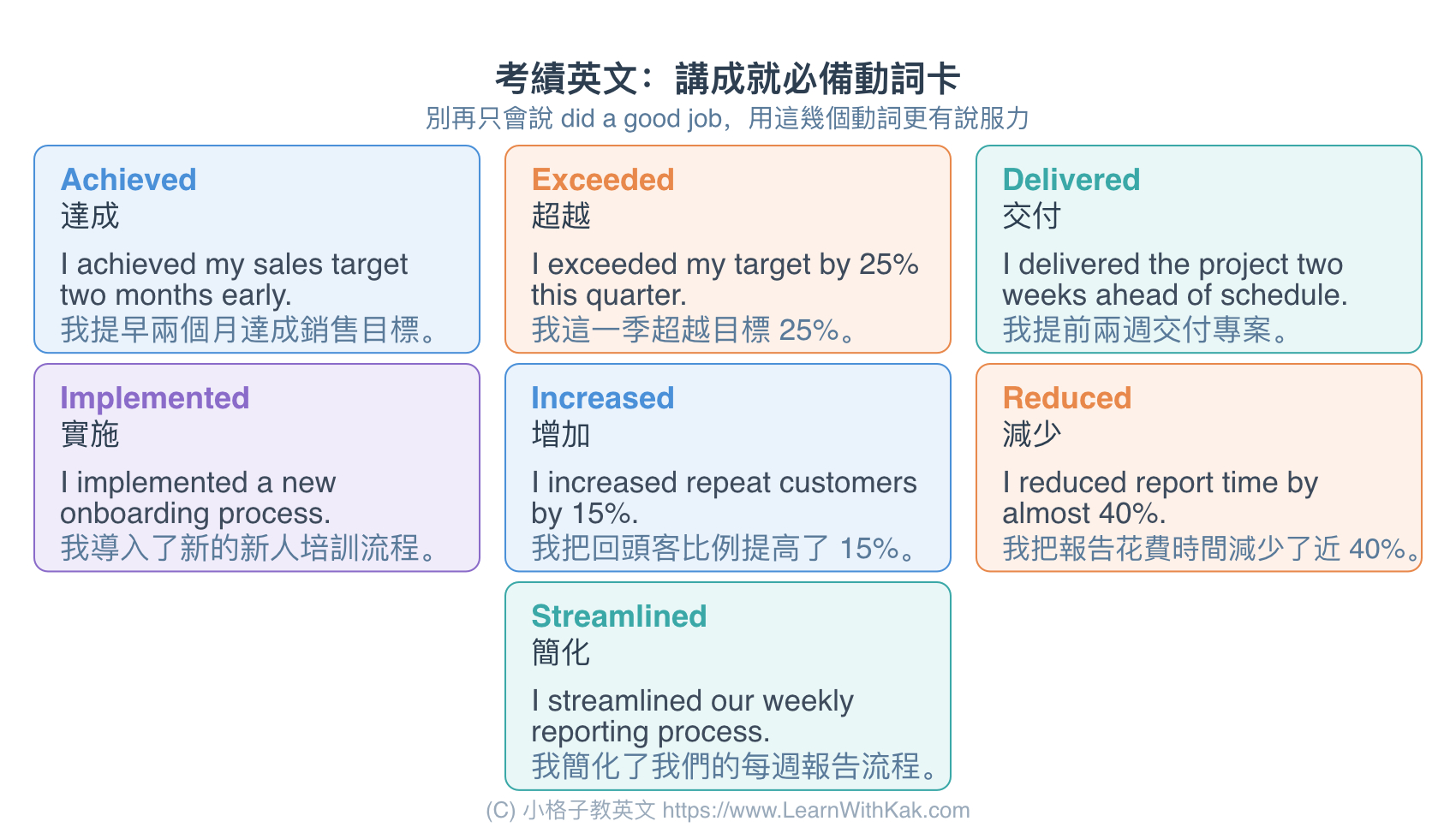
英文考核習慣用具體的動詞加上數字:achieved(達成)、exceeded(超越)、delivered(交付)、implemented(實施)、increased(增加)、reduced(減少)、streamlined(簡化),這些字比 did a good job 更能讓主管一聽就知道你做了什麼。
(6)
Manager: Can you walk me through your accomplishments this year?
主管: 你能說一下今年的成就嗎?
Employee: Sure. I exceeded my sales target by 25% and implemented a new onboarding process that saved the team about two weeks per new hire.
員工: 好的。我超越了業績目標 25%,也導入了新的新人培訓流程,讓每位新人少花大概兩週的時間上手。
(7)
Manager: What would you say was your biggest contribution this quarter?
主管: 你認為這一季最大的貢獻是什麼?
Employee: Streamlining our reporting process. We reduced the time spent on weekly reports by almost 40%.
員工: 簡化了我們的報告流程,每週報告花的時間減少了將近 40%。
(8)
I increased our repeat customer rate by 15% by following up more consistently after each sale.
我透過在每次銷售後更持續地追蹤,把回頭客比例提高了 15%。
(9)
Manager: How did the new system rollout go under your lead?
主管: 你負責的新系統上線進行得如何?
Employee: It went smoothly overall. I delivered the project two weeks ahead of schedule and trained the whole team on the new workflow.
員工: 整體很順利。我提前兩週交付專案,也訓練了整個團隊使用新的工作流程。
用具體數字加上這些動詞,會比空泛地說「我很努力」更有說服力,主管也更容易理解你的貢獻到底值多少。
被問到挑戰時,回答要展現解決問題的能力
考核不會只問你做得好的地方,通常也會問你遇到什麼困難、怎麼解決。這個時候不用怕承認有卡關的地方,重點是要展現你怎麼處理,而不是把責任推給別人。
(10)
Manager: What was the biggest challenge you faced this year?
主管: 你今年面對最大的挑戰是什麼?
Employee: Adjusting to the new CRM system in the middle of a big project. I spent extra time training on it and worked closely with IT to get up to speed.
員工: 是在專案進行到一半時要適應新的 CRM 系統。我花額外時間學習,也跟 IT 密切合作趕快上手。
(11)
Manager: Tell me about a time you had to deal with an unexpected setback.
主管: 說一次你遇到突發狀況要處理的經驗。
Employee: Two team members left unexpectedly right before a deadline. I redistributed the workload and we still delivered on time.
員工: 有兩位團隊成員在截止日前突然離職。我重新分配了工作量,最後還是準時交付。
(12)
A: Did you run into any roadblocks on the project?
A: 這個專案有遇到什麼卡關的地方嗎?
B: A few, mainly around vendor delays. I built in buffer time after that to avoid the same issue.
B: 有幾個,主要是供應商延遲的問題。之後我加了緩衝時間避免再發生。
(13)
The hardest part was managing client expectations while the timeline kept shifting, so I started sending weekly updates to keep everyone aligned.
最困難的部分是時程一直變動的同時還要管理客戶期待,所以我開始每週發進度更新讓大家保持同步。
回答挑戰的時候,中間如果需要跟主管解釋自己當下的判斷或決定,語氣也不用太生硬,可以參考說服對方接受你的做法時常用的一些句型,講起來會更自然、更有邏輯。
談加薪別只會問可以加薪嗎
加薪英文最常見的錯誤,是講得太直接、太生硬,像是直接問 Can I get a raise,聽起來就是在討價還價,缺乏專業感。比較好的方式是先鋪陳自己的貢獻和市場行情,再自然帶到加薪的請求。
(14)
I’d like to discuss my compensation. Based on my performance this year and some market research, I think a salary adjustment would be fair.
我想討論一下我的薪酬。根據我今年的表現和一些市場調查,我認為調整薪資是合理的。
(15)
Given the additional responsibilities I’ve taken on this year, I’d like to talk about a salary increase.
考量到我今年承擔的額外責任,我想談談加薪的事。
(16)
I increased revenue by 30% and brought in two major accounts. Based on industry standards for this level of performance, I’m requesting a 10% raise.
我把營收提高了 30%,也帶進兩個重要客戶。根據這個表現水準的業界標準,我要求加薪 10%。
如果主管當下說沒有預算,也不用直接放棄,可以留一個明確的下一步:
(17)
Manager: I really appreciate your work, but we don’t have the budget for raises right now.
主管: 我很肯定你的表現,但我們現在沒有加薪的預算。
Employee: I understand. Could we revisit this in a few months? In the meantime, are there other options we could look at, like extra vacation days?
員工: 我理解。我們可以幾個月後再討論嗎?同時,有沒有其他可以討論的方案,比如額外的休假?
(18)
A: Is there room to discuss compensation this year?
A: 今年薪酬有討論空間嗎?
B: Let’s set up a separate time to go through the details together.
B: 我們另外約時間仔細討論細節吧。
要求加薪英文最重要的是把重點放在具體貢獻跟數字,而不是「我做很久了」這種理由,這樣主管才有明確的依據去幫你爭取。
升職想爭取,這樣講更有說服力
升職英文跟加薪英文的邏輯有點不一樣,加薪是在證明「我現在的付出值這個價」,升職則是要證明「我已經準備好承擔更大的責任」。所以升職的時候,重點會放在未來能帶來的價值,而不只是過去做過什麼。
(19)
I’m interested in moving into a senior role. I think I’m ready to take on more strategic work and help mentor newer team members.
我有興趣升職到資深職位。我認為自己已經準備好承擔更多策略性工作,也能協助指導新進同事。
(20)
Manager: Where do you see yourself in the next couple of years?
主管: 你認為自己未來幾年會在哪個位置?
Employee: I’d like to grow into a lead role where I can take ownership of bigger projects and help guide the team’s direction.
員工: 我希望能成長到領導職位,可以主導更大的專案,也協助團隊方向。
(21)
A: What would you need to be ready for a promotion?
A: 你覺得要準備好升職還需要什麼?
B: I think I’m already handling a lot of that work informally. I’d like the chance to take it on officially.
B: 我覺得這些工作我其實已經在非正式地做了,希望能有機會正式接下來。
(22)
I’ve been in this role for three years and consistently exceeded my targets. I think it’s time to talk about the next step.
我在這個職位已經三年,也一直超越目標。我認為是時候談談下一步了。
(23)
Manager: What makes you think you’re ready to take on a leadership position?
主管: 你覺得自己為什麼準備好接下領導職位了?
Employee: I’ve already been unofficially leading two projects this year, and I’d like the opportunity to do that with the title and responsibility that comes with it.
員工: 我今年其實已經非正式地在帶兩個專案了,我希望能有機會正式擔起這個頭銜和責任。
升職英文的說服力來自「已經在做這些事」,而不是「我覺得我值得」,把已經展現出來的能力講清楚,會比單純表達意願更有說服力。
主管給負評時,回應要專業不要防衛
考核不會永遠都是好話,收到負面回饋的時候,回應的方式其實比回饋內容本身更能決定主管對你的印象。防衛心太重或直接反駁,都會讓整個對話變得尷尬。
(24)
Manager: I’ve noticed you’ve missed a few deadlines this quarter.
主管: 我注意到你這一季錯過了幾次截止日。
Employee: You’re right, and I take responsibility for that. I’ve realized I need to improve my time management, so I’ve started breaking tasks into smaller milestones to stay on track.
員工: 你說得對,我會負起責任。我意識到自己需要改善時間管理,所以我開始把任務拆成更小的階段來掌控進度。
(25)
Manager: Your presentations could use some work.
主管: 你的簡報還可以再加強。
Employee: I appreciate the feedback. Could you give me a specific example of what I should focus on?
員工: 謝謝你的回饋,你可以給我一個具體的例子,讓我知道該加強哪個部分嗎?
(26)
A: I felt like communication on this project could have been clearer.
A: 我覺得這個專案的溝通可以更清楚一點。
B: That’s fair. I’ll make sure to send more regular updates going forward.
B: 你說得對,之後我會確保更常發進度更新。
回應負評的時候,比起急著解釋自己沒有錯,先承認再提出具體的改善做法,會讓主管覺得你是真的有在思考怎麼變好。如果平常在職場上就常常要接收或給出這類回饋,回饋要怎麼講才不會讓對方不爽其實也是同一套邏輯,語氣拿捏好,事情才不會變成針對個人。
考績英文說到底就是把自己的表現講清楚,不用背很多花俏的句子,掌握好講成就、談挑戰、要求加薪和升職這幾種情境的說法,下次面談前先在腦中演練一次,講出來就會順很多。
延伸閱讀:【Feedback 給錯方式,對方只會更不爽:Constructive Criticism 職場英文完整說法】
如果你喜歡這篇文章的話,可以追蹤我們的 Threads 和 Facebook 唷!