
新來的主管翻完你接手的專案資料,拍拍你的肩膀說:“You’ve got your work cut out for you.”。cut out for you 看起來很像「工作都幫你切好了」,聽起來好像是好消息?其實剛好相反,這句話是「接下來有得忙了」的意思,說的人多半是在同情你,不是在誇你。這篇來聊這句話真正的語氣、主詞換了要怎麼改、跟 be cut out for 差在哪,還有被這樣說的時候怎麼接話最自然。
You’ve got your work cut out for you 意思
You’ve got your work cut out for you 的意思是「你接下來要面對一件很難、很花力氣的事」,很接近中文說的「有硬仗要打了」、「這下有得忙了」。它不是在誇你,也不是在罵你,比較像是看到你手上那一大包工作,忍不住說一句「辛苦了」。
語氣上通常是帶點同情的輕描淡寫,說的人知道這件事不簡單,但不會把話講得很重。要注意的是,這句話本身並不代表對方覺得你做得到,如果他真的對你有信心,通常會再補一句 but I know you can handle it。有時候語氣放冷一點,聽起來也可能像「這下你麻煩大了」,所以還是要看說話的人和當下的場合。
為什麼是 cut out?
最常見的說法是這個片語跟裁縫有關。裁縫師會先把布料一片片剪好,看起來準備工作都做完了,但真正花時間的縫合和修改其實才剛開始。用這個畫面來記就很好記:布都剪好了,最累的還在後面。
不過這個由來比較像是「最說得通的解釋」,早期文獻裡的 work cut out 其實沒有明講跟裁縫有關,意思也很中性,只是「幫某人安排好的工作」。現在這個「事情多到很吃力」的意思,牛津英文詞典找到的早期紀錄出自狄更斯 1843 年的《小氣財神》(A Christmas Carol),是一路慢慢演變出來的。
(1)
A: I heard you’re taking over the Anderson account.
A: 聽說你要接 Anderson 那個客戶?
B: Yeah, and the last guy left everything in a mess.
B: 對啊,而且前一個負責的人留下一堆爛攤子。
A: Oof. You’ve got your work cut out for you.
A: 唉,那你有得忙了。
(2)
A: My son is failing three classes this semester.
A: 我兒子這學期有三科快被當了。
B: Three? You’re going to have your work cut out for you getting him back on track.
B: 三科?要把他拉回正軌,你可有得忙了。
(3)
A: I have to finish a 50-page report by Friday.
A: 我星期五前要交一份 50 頁的報告。
B: That’s three days from now. You’ve got your work cut out for you.
B: 那只剩三天欸,你這下有得拚了。
(4)
A: We bought an old apartment, and we’re redoing the whole thing ourselves.
A: 我們買了一間老公寓,打算全部自己翻修。
B: Yourselves? You’ve really got your work cut out for you.
B: 自己來?那你們真的有硬仗要打了。
主詞換了,後面也要跟著換
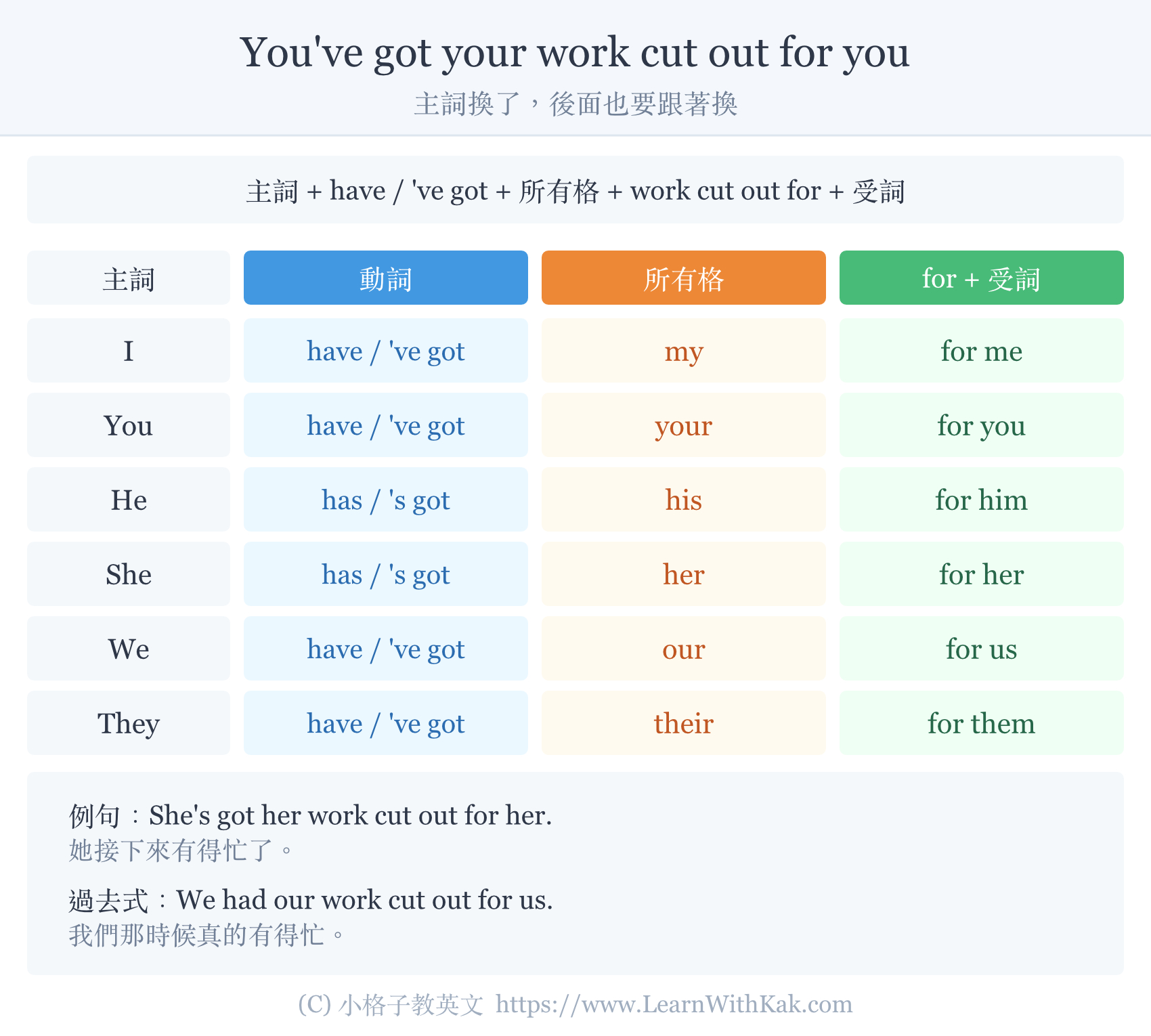
查 have your work cut out for you 意思的時候,你會發現網路上的版本超多,有 have your、has his、we have our,看起來有點亂。其實規則很簡單,整句就一個公式:
主詞 + have / ‘ve got + 所有格 + work cut out for + 受詞
這三個位置都要指同一個人。主詞是 I,後面就是 my 和 me;主詞是 she,後面就是 her 和 her。最常見的錯誤是只改主詞,後面照抄 your 和 you,例如 She has your work cut out for you,老外聽了會以為你在講另一個人。
have 和 ‘ve got 意思完全一樣,美國人平常講話比較常說 You’ve got your work cut out for you,寫 email 或比較正式的場合用 have 就好。口語裡還會聽到直接省掉 ‘ve 的 We got our work cut out for us,朋友聊天很常見,但寫東西時不要這樣用。要講過去的事就把 have 換成 had,講未來就用 will have。
(5)
A: Our team only has two weeks to launch the new app.
A: 我們團隊只有兩週可以讓新 app 上線。
B: Two weeks? You guys have your work cut out for you.
B: 兩週?你們有得忙了。
(6)
A: Kevin just got put in charge of the night shift.
A: Kevin 剛被派去管夜班。
B: He’s got his work cut out for him. That team has been a mess for months.
B: 他有得忙了,那個團隊已經亂好幾個月了。
(7)
A: How was moving day?
A: 搬家那天還順利嗎?
B: We had our work cut out for us. The elevator was broken, and we live on the sixth floor.
B: 那天真的累翻了,電梯剛好壞掉,我們又住六樓。
(8)
A: My mom is staying with us for a month, and our apartment is tiny.
A: 我媽要來我們家住一個月,我們家又超小。
B: That sounds cozy.
B: 聽起來很溫馨啊。
A: Ha. I’ve got my work cut out for me.
A: 哈,我接下來有得忙了。
(9)
錯誤:She has your work cut out for you.
正確:She has her work cut out for her.
她接下來有得忙了。
職場上什麼時候會聽到
這句話在辦公室出現的頻率很高,交接一個問題很多的專案、接手最難搞的客戶、deadline 突然往前移,都很容易聽到。很多時候主管會先問你這件事 doable 嗎,你一點頭,接著換來的就是這句。
說的人可以是同事,也可以是主管,基本上都是在表達「我知道這不簡單」。講到自己團隊的時候,主詞換成 we,就變成大家一起面對的意思,聽起來比較有團隊感,也不會像在幫別人默哀。
(10)
A: Welcome to the team! You’ll be handling our toughest client.
A: 歡迎加入團隊!你會負責我們最難搞的客戶。
B: Oh, okay. That sounds challenging.
B: 喔,好。聽起來蠻有挑戰性的。
A: You’ve got your work cut out for you, but I know you can handle it.
A: 你接下來會很辛苦,但我相信你處理得來。
(11)
A: Did you hear Sarah is running the whole marketing team by herself now?
A: 你有聽說 Sarah 現在一個人管整個行銷團隊嗎?
B: By herself? She’s got her work cut out for her.
B: 一個人?她有得忙了。
(12)
A: The deadline got moved up to next Wednesday.
A: 截止日提前到下週三了。
B: Next Wednesday? Now we really have our work cut out for us.
B: 下週三?這下我們真的有硬仗要打了。
(13)
A: Corporate wants us to cut costs by 20% without letting anyone go.
A: 總公司要我們在不裁員的情況下,把成本砍掉兩成。
B: Without layoffs? Then we’ve got our work cut out for us.
B: 不能裁員?那我們真的有得拚了。
(14)
A: The client rejected our proposal again and wants a new one by Monday.
A: 客戶又退了我們的提案,要我們星期一前交新的。
B: Looks like we’ve got our work cut out for us this weekend.
B: 看來我們這個週末有得忙了。
被這樣說的時候怎麼回
聽到這句話最不適合回的就是 Thank you,因為對方不是在誇你,回謝謝會有點像會錯意。比較自然的回法要看你想表達什麼:
- Tell me about it. 意思是「就是說啊」,同意對方,順便吐一下苦水。
- I’m up for the challenge. 意思是「我準備好了」,表現出你有信心。
- Any tips? 直接請對方給建議,對方做過類似的事時特別好用。
- Could I get some help with…? 趁機請人支援,把難題拆一部分出去。
- Wish me luck. 輕鬆帶過,帶一點自嘲。
如果想接著說明你打算怎麼處理,用 handle、deal with 這類解決問題的動詞接下去就很自然,對方也會覺得你心裡已經有計畫了。
(15)
A: You’ve got your work cut out for you with that client.
A: 那個客戶夠你忙了。
B: Tell me about it. He’s already sent me six emails today.
B: 就是說啊,他今天已經寄六封信給我了。
(16)
A: Leading a product launch in your first month? You’ve got your work cut out for you.
A: 才來第一個月就要帶產品上市?你有得忙了。
B: I know, but I’m up for the challenge.
B: 我知道,但我準備好接受挑戰了。
(17)
A: Planning a company trip for 30 people? You’ve got your work cut out for you.
A: 要規劃 30 個人的員工旅遊?你有得忙了。
B: I know. Any tips? You did it last year, right?
B: 對啊,有什麼建議嗎?你去年辦過對吧?
(18)
A: You’ve got your work cut out for you with the year-end audit.
A: 年底稽核夠你忙了。
B: I really do. Could I borrow someone from your team for a few days?
B: 真的。可以跟你們組借一個人幾天嗎?
(19)
A: Your in-laws are staying with you for the whole Lunar New Year break? You’ve got your work cut out for you.
A: 公婆整個過年假期都住你家?你有得忙了。
B: Ha, wish me luck.
B: 哈,祝我好運吧。
生活中也很常用
不只上班,生活裡任何需要花很多力氣的事都可以用這句話,帶小孩、辦婚禮、搬家、說服固執的家人都算。朋友之間講起來更輕鬆,常常是半開玩笑地替對方「默哀」一下,對方聽了也會覺得你知道他的辛苦。
(20)
A: Congrats on the twins! How are you holding up?
A: 恭喜生了雙胞胎!你還好嗎?
B: Thanks! Honestly, with two of them, we’ve got our work cut out for us.
B: 謝謝!老實說兩個一起來,我們真的有得忙了。
(21)
A: I’m planning my sister’s wedding. She wants 200 guests, and I only have two months.
A: 我在幫我姊籌備婚禮,她要請 200 個人,我只有兩個月可以準備。
B: Two hundred people in two months? You’ve got your work cut out for you.
B: 兩個月辦 200 人?你這下有得忙了。
(22)
A: My dad’s been sick for weeks, but he still won’t see a doctor.
A: 我爸不舒服好幾個禮拜了,還是不肯去看醫生。
B: Trying to change a stubborn parent’s mind? You’ve got your work cut out for you.
B: 要說服固執的爸媽?這可不容易。
(23)
A: I want to lose 10 kilos before my wedding in four months.
A: 我想在四個月後的婚禮前瘦 10 公斤。
B: That’s a lot. You’ll have your work cut out for you, but it’s doable if you stick with it.
B: 那蠻多的欸。你會很辛苦,但只要能堅持下去還是做得到。
跟 be cut out for 不一樣
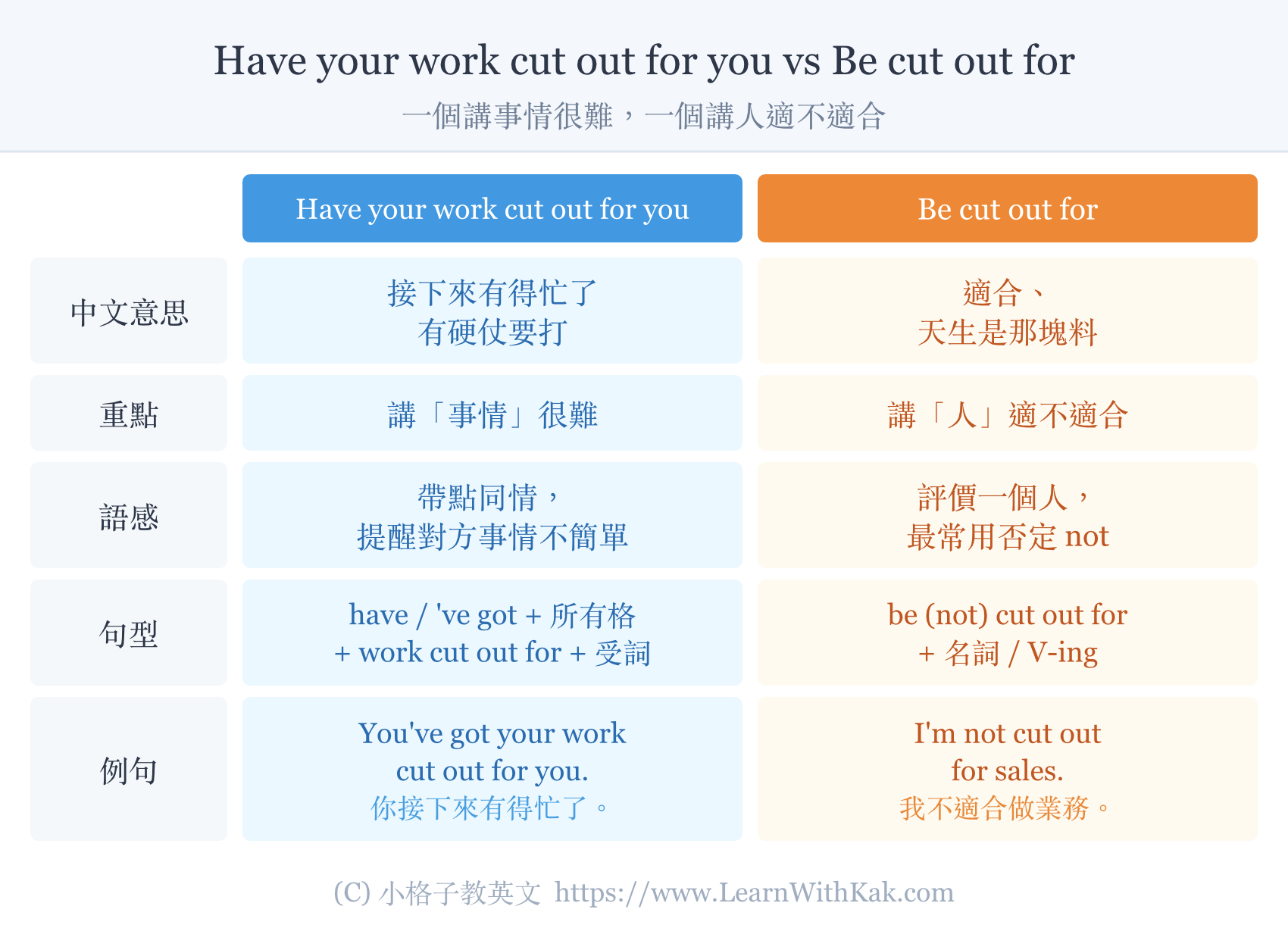
這兩個片語都有 cut out for,很容易被搞混,但意思差很多。be cut out for 是「適合、天生是那塊料」,講的是一個人適不適合做某件事,而且最常出現在否定句 not cut out for。
分辨的方法很簡單:有 have 和 work 的,講的是「事情很難」;用 be 動詞的,講的是「人適不適合」。所以 You’ve got your work cut out for you 不是在說「這工作很適合你」,剛好相反,是在提醒你這工作會很辛苦。cut out 這個片語本身還有好幾種常見用法,從叫人別鬧到戒掉甜食都能用,be cut out for 只是其中一種。
(24)
A: How’s the new sales job going?
A: 新的業務工作還好嗎?
B: Honestly, I don’t think I’m cut out for it. I hate cold calling.
B: 老實說我覺得我不適合,我超討厭打陌生開發電話。
(25)
A: You’ve got your work cut out for you with this new sales target.
A: 新的業績目標夠你忙了。
B: I know. Some days I wonder if I’m even cut out for sales.
B: 我知道。有時候我都懷疑自己到底適不適合做業務。
(26) He’s definitely cut out for teaching. He never loses his patience with kids.
他天生就是當老師的料,對小孩從來不會失去耐心。
(27)
A: My cousin quit nursing school after one semester.
A: 我表妹念護理系念一個學期就休學了。
B: Maybe she just wasn’t cut out for it.
B: 可能她就是不適合吧。
意思很像的說法
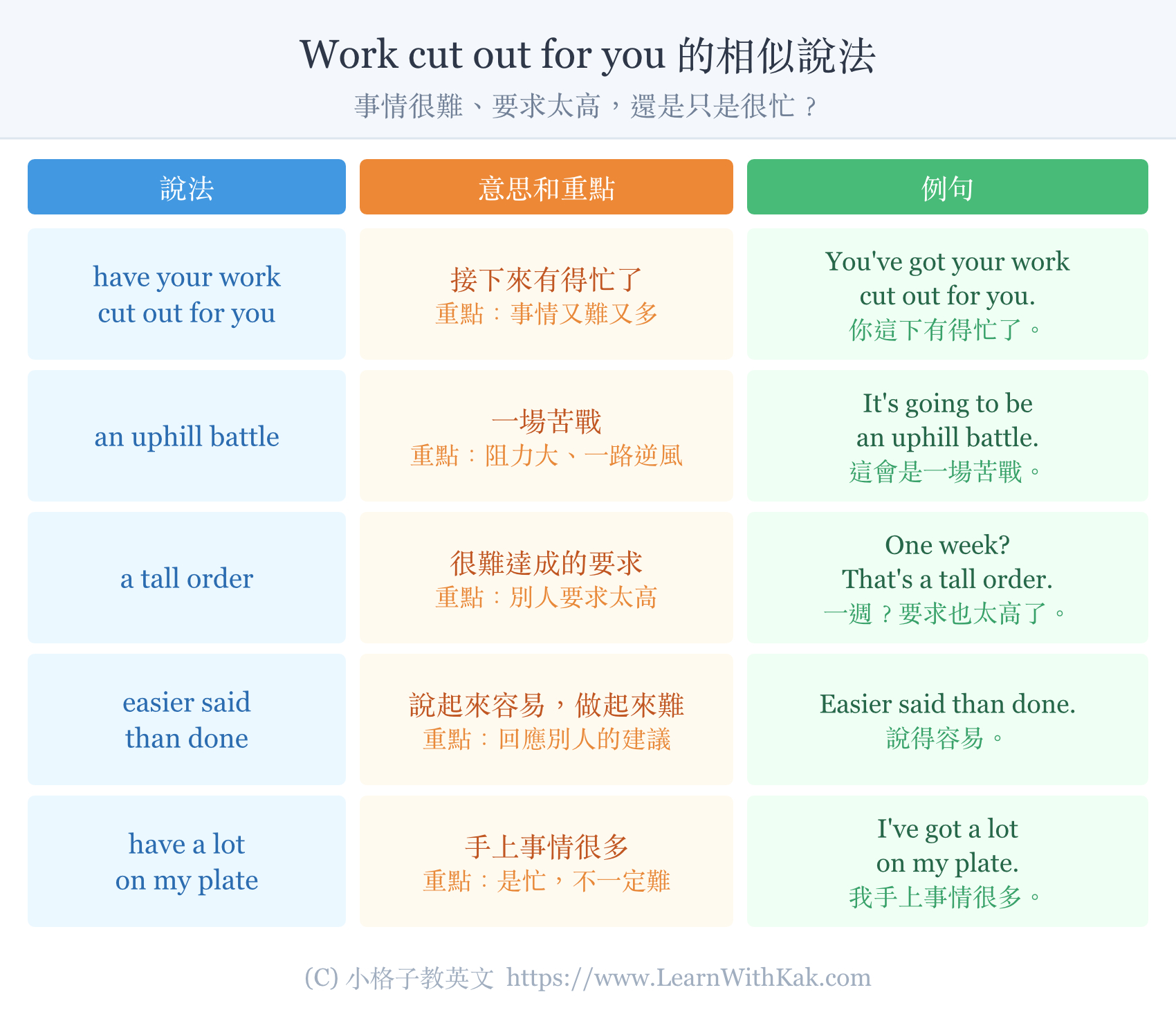
想表達「這件事很難」,英文還有幾個常見說法,語感各有一點不同。an uphill battle 是「一場苦戰」,強調一路上阻力很大,像在爬坡一樣。a tall order 是「很難達成的要求」,重點放在別人要求太高。easier said than done 是「說起來容易,做起來難」,通常用來回應別人隨口給的建議。
另外有兩個常被混在一起的也要注意。have a lot on my plate 是「手上事情很多」,重點是忙,不一定難,比較接近 busy、swamped 這些「很忙」的英文說法。如果只是想說事情本身難,用 tough、tricky、challenging 這類形容詞就夠了。至於 Good luck with that,雖然字面是祝你好運,但常常帶著酸酸的諷刺語氣,跟 you’ve got your work cut out for you 那種同情的感覺完全不一樣,用錯場合會很尷尬。
(28)
A: We’re trying to get the city to put a crosswalk near the school.
A: 我們在爭取市政府在學校附近畫斑馬線。
B: That’s going to be an uphill battle. They’ve already said no twice.
B: 那會是一場苦戰,他們已經拒絕兩次了。
(29)
A: The client wants the whole website redesigned in one week.
A: 客戶要我們一個禮拜內把整個網站改版。
B: One week? That’s a tall order.
B: 一個禮拜?這要求也太高了。
(30)
A: Just stop checking your phone before bed.
A: 你睡前不要滑手機就好啦。
B: Easier said than done.
B: 說得容易。
(31)
A: Can you help out with the newsletter this month?
A: 這個月可以幫忙弄一下電子報嗎?
B: I’d love to, but I’ve got a lot on my plate right now.
B: 我很想幫,但我現在手上的事情真的很多。
(32)
A: I’m going to binge the whole season tonight and still get up at six.
A: 我今晚要把整季追完,然後明天六點照樣起床。
B: Good luck with that.
B: 是喔,祝你好運囉。
常見問題
Have your work cut out for you 意思是正面還是負面?
偏中性到負面,但不是在罵人。它描述的是「接下來的事很難」,說的人通常帶著一點同情。
(33)
A: I’m training three new hires while covering for my manager.
A: 我要帶三個新人,同時還要幫主管代班。
B: Wow, you’ve got your work cut out for you.
B: 哇,你這下有得忙了。
可以對主管說這句話嗎?
可以,但要注意語氣。對主管說這句,聽起來有點像在評論他的工作量,比較保險的做法是後面加一句願意幫忙的話。
(34)
A: The board wants the full budget plan by next Friday.
A: 董事會要我們下週五前交出完整的預算計畫。
B: Sounds like you’ve got your work cut out for you. Let me know if I can take anything off your plate.
B: 聽起來你有得忙了。有什麼我可以幫你分擔的,跟我說一聲。
Have 和 ‘ve got 有差嗎?
意思一樣。’ve got 比較口語,美國人日常講話很常用;have 比較中性,寫信也適合。
(35)
A: The new system goes live next month, and nobody’s been trained yet.
A: 新系統下個月就要上線,但還沒有人受過訓練。
B: We’ve got our work cut out for us, then.
B: 那我們有得忙了。
一定要加 for you 嗎?
不一定。英式英文很常只說 have your work cut out,後面不加 for you,意思一樣。
(36) She’ll have her work cut out convincing the board to approve the budget.
她要說服董事會通過預算,可有得忙了。
下次聽到 You’ve got your work cut out for you,先別急著說謝謝,對方是在提醒你接下來不輕鬆。回一句 Tell me about it,再想想可以找誰幫忙,這場硬仗就沒那麼可怕了。
延伸閱讀:【老闆說的話別照字面聽!職場英文眉角:8 句潛台詞解密】
如果你喜歡這篇文章的話,可以追蹤我們的 Threads 和 Facebook 唷!