
Chance 中文是什麼?很多人第一反應是「機會」,然後理所當然覺得它跟 Opportunity 可以互換。大部分情況這樣想沒問題,但 chance 其實還有幾種 opportunity 完全說不了的意思。這篇把 chance 的用法全部拆開來講,搞清楚之後你就知道什麼時候能換、什麼時候不行。
先說說什麼時候可以混用
先把最輕鬆的講完。Chance 和 opportunity 都有「機會」的意思,在很多句子裡可以互換,意思一樣。
(1)
A: Did you get to try the new menu?
A: 你有去試那個新菜單嗎?
B: Yeah, I had the chance to go last week.
B: 有,我上週有機會去了。
(2)
A: Did you get to try the new menu?
A: 你有去試那個新菜單嗎?
B: Yeah, I had the opportunity to go last week.
B: 有,我上週有機會去了。
(1) 和 (2) 的意思完全一樣,互換沒有問題。
(3)
A: I’m glad we got the chance to catch up.
A: 很高興我們有機會敘舊。
B: Me too! It’s been way too long.
B: 我也是!真的太久沒見了。
(4)
A: I’m glad we got the opportunity to catch up.
A: 很高興我們有機會敘舊。
B: Me too! It’s been way too long.
B: 我也是!真的太久沒見了。
這兩組說法語感幾乎一樣,日常對話裡換來換去都可以。但接下來的用法,就不能這樣換了。
「碰巧」這種感覺,只有 Chance 才有
Chance 有一個 opportunity 沒有的意思:「碰巧、偶然、意外」。這種「完全沒計劃,但剛好發生了」的感覺,英文用 by chance 或是把 chance 放在名詞前面當形容詞來表達。
By chance 就是「碰巧、偶然」,放句尾或句中都可以:
(5)
A: How did you find this place?
A: 你怎麼找到這個地方的?
B: Honestly, I found it by chance. I was just walking around.
B: 說真的是偶然發現的,我只是在附近亂走。
(6)
A: Do you know if they have vegetarian options?
A: 你知道他們有沒有素食選項?
B: I don’t know. Do you by any chance have the menu?
B: 不知道耶,你剛好有菜單嗎?
這裡的 by any chance 是「剛好、碰巧」的禮貌問法,語感很接近中文的「你不知道剛好有嗎?」非常常用。
(7)
I ran into my old professor by chance at the airport.
我在機場碰巧遇到以前的教授。
Chance 也可以放名詞前面當形容詞,表示「意外的、偶然的」:
(8)
A: So how did you two meet?
A: 那你們兩個是怎麼認識的?
B: It was a chance meeting. We were both waiting for the same bus.
B: 是偶然相遇,我們都在等同一班公車。
(9)
That was a chance encounter I’ll never forget.
那次偶然的相遇我永遠不會忘記。
這幾個用法都不能把 chance 換成 opportunity,因為 opportunity 完全沒有「碰巧」的語感。
要不要賭一把?這時候用 Chance
Chance 還有一個很常用的意思:冒險、碰運氣。這時候通常出現在 take a chance 或 take chances 這兩個片語裡,但語感有點不同。
Take a chance 是指某一次具體的冒險,「明知有風險,但還是試試看」的感覺:
(10)
A: Should I apply for that job? I’m not sure I’m qualified.
A: 我應該去應徵那份工作嗎?我不確定我夠格。
B: Just take a chance. The worst they can say is no.
B: 就冒個險試試看吧,最壞就是被拒絕而已。
(11)
A: Are you sure we should take this shortcut? I’ve never been this way.
A: 你確定要走這條捷徑嗎?我從來沒走過耶。
B: Let’s just take a chance. We’re already late.
B: 就賭一把吧,我們已經遲了。
Take chances 則是「習慣性冒險」,帶有「輕率、不謹慎」的感覺:
(12)
A: I heard he invested all his savings in crypto.
A: 我聽說他把所有積蓄都投進加密貨幣了。
B: Yeah, he always takes chances like that. I don’t get it.
B: 對啊,他就是喜歡這樣賭,我真的不理解。
還有一個超常用的說法是 stand a chance,意思是「有可能成功、有希望」,最常出現在否定句裡:
(13)
A: Do you think our team can win?
A: 你覺得我們隊可以贏嗎?
B: Honestly? We don’t stand a chance. They’re way better than us.
B: 說真的?我們沒贏的希望,他們比我們強太多了。
(14)
A: I want to audition for that role.
A: 我想去試鏡那個角色。
B: You should go for it! You definitely stand a chance.
B: 你應該去試!你絕對有希望的。
(15)
If you don’t practice, you won’t stand a chance at the competition.
如果你不練習,在比賽裡根本沒有希望。
Chance 中文的這個「冒險、碰運氣」用法,完全不能換成 opportunity,因為 opportunity 沒有這種賭博的語氣。
Chance 也能講機率
Chance 還有一個 opportunity 完全沒有的用法:講可能性、機率。這在日常英文裡超常見,但很多人沒特別注意過。
Chances are… 是固定說法,意思是「很可能、大概」:
(16)
A: I wonder if Jake is coming tonight.
A: 不知道 Jake 今晚會不會來。
B: Chances are he forgot. He never checks his phone.
B: 他大概忘了,他從來不看手機。
(17)
Chances are you’ve already heard this song before.
你大概已經聽過這首歌了。
The chances of something 是在講某件事的發生機率:
(18)
A: Do you think it’ll rain tomorrow?
A: 你覺得明天會下雨嗎?
B: The chances of rain are pretty high. I’d bring an umbrella.
B: 下雨的機率蠻高的,我會帶傘。
(19)
The chances of getting that promotion are slim if you don’t speak up.
如果你不主動表現,升遷的機率很低。
這幾個講機率的用法,一律只能用 chance,不能換成 opportunity。
Opportunity 是「條件到位的機會」
說完 chance 的幾種用法,來聊一下 opportunity 中文這個字的語感有什麼不一樣。Opportunity 也是「機會」,但帶有「條件剛好具備、值得好好把握」的感覺,不是撞到的,而是出現了一個可以主動利用的時機。
Take the opportunity 是「把握這個機會、趁這個機會」,語感比 take a chance 正面很多,完全沒有賭博的感覺:
(20)
A: You’re going to Singapore for a conference?
A: 你要去新加坡開會?
B: Yeah, and I’m going to take the opportunity to visit some old friends while I’m there.
B: 對,我打算趁這個機會順便去拜訪一些老朋友。
(21)
A: The CEO is here today. Are you going to talk to him?
A: 執行長今天在,你打算跟他說話嗎?
B: Definitely. I want to take this opportunity to introduce myself.
B: 當然,我想趁這個機會自我介紹一下。
(22)
I’d like to take this opportunity to thank everyone who supported me.
我想趁這個機會感謝所有支持過我的人。
Opportunity 也可以說某個機會「被錯過了」,這時候帶有「本來應該好好把握,但沒有」的惋惜感:
(23)
A: Did you apply for that scholarship?
A: 你有申請那個獎學金嗎?
B: No, I missed the deadline. It was such a missed opportunity.
B: 沒有,我錯過截止日了,真的很可惜。
(24)
A: I can’t believe you didn’t say anything when he criticized your work in the meeting.
A: 他在會議上批評你的工作,你居然什麼都沒說,我真的不敢相信。
B: I know. It was a missed opportunity to explain myself.
B: 我知道,那是個應該為自己說話的機會,但我沒把握到。
Opportunity 在職場超常出現
Opportunity 在職場英文裡出現的頻率非常高,比 chance 正式,書面和口語都很常用。如果你有在寫職場 email,或是準備英文面試,這幾個說法一定要熟。
Job opportunity 和 career opportunity 都是「工作機會、職涯機會」,非常標準:
(25)
A: Why are you leaving your current job?
A: 你為什麼要離開現在的工作?
B: I’m looking for new career opportunities. I feel like I’ve stopped growing here.
B: 我在找新的職涯發展機會,覺得在這裡已經停止成長了。
(26)
A: Have you seen the job posting for the marketing role?
A: 你有看到那個行銷職位的徵才嗎?
B: Yes! It looks like a great opportunity. I’m definitely applying.
B: 有!看起來是個很好的機會,我一定要投。
Golden opportunity 是「千載難逢的好機會」,強調這個機會難得:
(27)
A: Are you going to pitch your idea to the investors?
A: 你打算向投資人提出你的想法嗎?
B: Absolutely. This is a golden opportunity I can’t pass up.
B: 當然,這是個千載難逢的機會,我不能放過。
Equal opportunity 是「平等機會」,在職場和社會議題上很常出現:
(28)
We are an equal opportunity employer.
我們是一個提供平等就業機會的雇主。
(29)
A: Do you think women have equal opportunities in this industry?
A: 你覺得女性在這個行業有平等的機會嗎?
B: It’s getting better, but there’s still a lot of room for improvement.
B: 越來越好了,但還有很大的改善空間。
Opportunity 中文的這種正式語感,讓它在職場書面英文裡遠比 chance 更常見。這一點跟 Complex 跟 Complicated 的情況有點像,兩個字意思很接近,但正式度和語感有差,用對才夠道地。
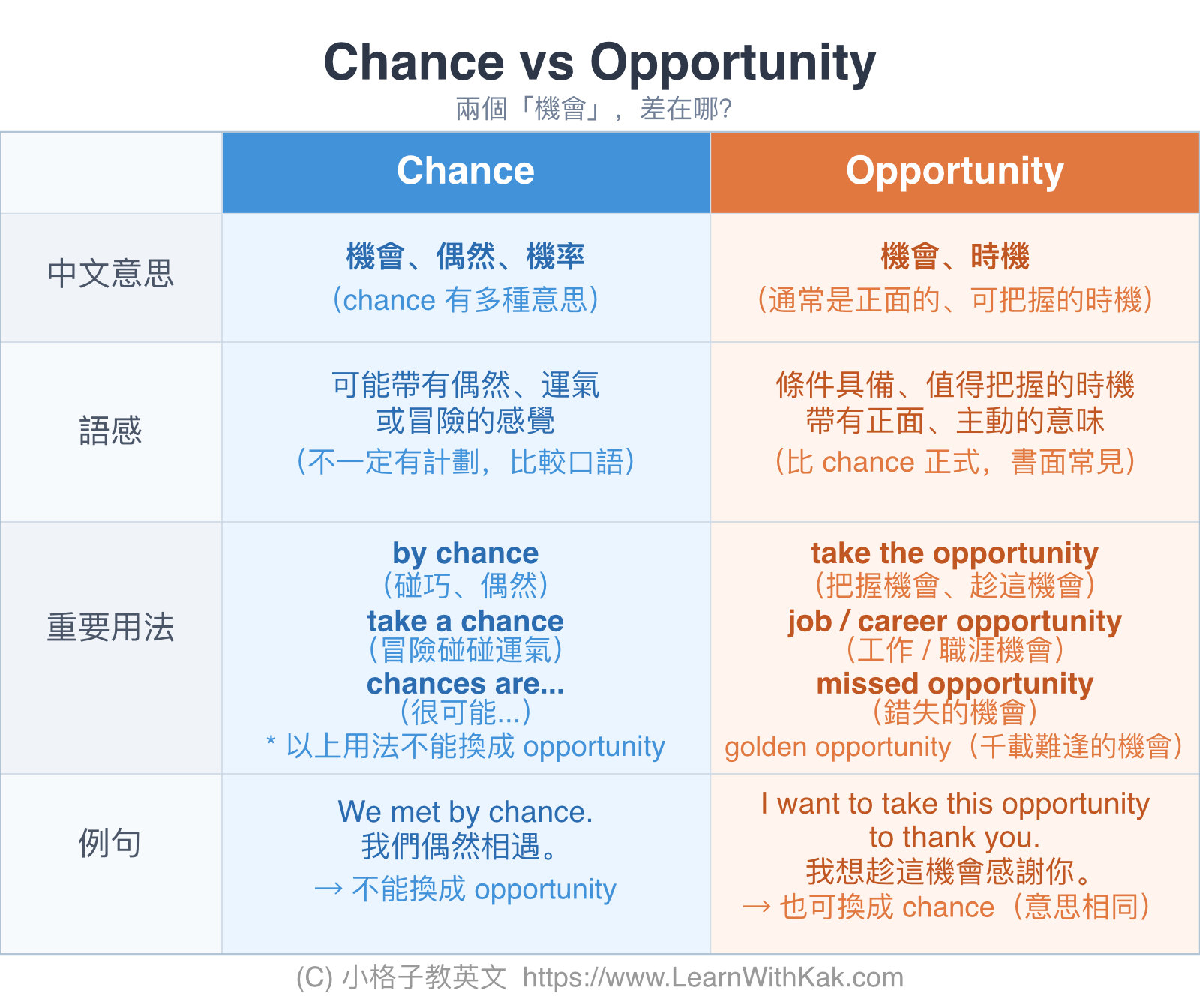
Chance 和 Opportunity 確實有很多重疊的地方,但 chance 能做的事多很多:碰巧遇到、冒險碰運氣、講機率,這些 opportunity 全都說不了。下次遇到「機會」這個概念,先問自己:是「條件具備可以好好把握的時機」,還是「運氣、偶然、冒險」?答案清楚了,用哪個字也就清楚了。
延伸閱讀:【Wind up 中文是什麼?Wind up、End up、Turn out: 三種「結果」說法的差別】
如果你喜歡這篇文章的話,可以追蹤我們的Threads和Facebook唷!