
你有沒有被 benefit 和 beneficiary 這兩個字搞混過?它們長得超像,只差幾個字母,但意思完全不同!Beneficiary 中文意思是「受益人」,就是那個實際拿到錢、拿到好處的人;而 benefit 是「好處」、「福利」,是那個好處本身。一個是人,一個是東西,來聽小編解釋這兩個英文單字的用法吧,順便教你一個超好記的字尾記憶法,保證看完就不會再搞混!一起來看看吧!

Benefit:名詞與動詞的雙重身份
Benefit 這個字很特別,它可以當名詞,也可以當動詞,兩種用法都超常見。
作為名詞:好處、利益、福利
Benefit 當名詞時,中文意思是「好處」、「利益」、「福利」、「津貼」。
核心概念是什麼?就是你得到的優勢、好處、或是對你有利的東西。在職場上,最常聽到的就是 employee benefits(員工福利),像是健保、勞保、退休金這些公司提供給員工的福利。政府提供的補助或津貼也叫 benefits,像是失業津貼、育兒津貼。
常見的搭配有哪些?Health benefits(健康福利,像醫療保險)、retirement benefits(退休福利)、fringe benefits(額外福利,像是公司提供的免費午餐、健身房會員)、the benefits of…(…的好處,像是運動的好處)。
什麼時候會用到?第一,談論工作時,面試或看工作offer常會問 “What benefits does the company offer?”(公司提供什麼福利?);第二,討論某件事的優點時,像是 “What are the benefits of learning English?”(學英文有什麼好處?);第三,談論政府補助或津貼時。
(1)
A: Are you considering that job offer?
A: 你在考慮那個工作機會嗎?
B: Yeah, the salary is okay, but the benefits are amazing—full health coverage and four weeks of vacation.
B: 對,薪水還可以,但福利超棒——全額健康保險和四週假期。
(2)
A: What are the benefits of working from home?
A: 在家工作有什麼好處?
B: You save time on commuting, and you can work in a more comfortable environment.
B: 你省下通勤時間,而且可以在更舒適的環境工作。
(3)
A: Does your company offer good benefits?
A: 你公司提供好的福利嗎?
B: Yes, we get health insurance, retirement contributions, and even gym memberships.
B: 有,我們有健保、退休金提撥,甚至還有健身房會員。
(4)
A: I’m thinking about joining that yoga class.
A: 我在考慮參加那個瑜珈課。
B: You should! The benefits of regular exercise are incredible for both body and mind.
B: 你應該要去!規律運動的好處對身心都超棒。
(5) She receives unemployment benefits while looking for a new job.
她在找新工作時領取失業津貼。
作為動詞:有益於、對…有好處
Benefit 當動詞時,中文意思是「使受益」、「對…有好處」、「有助於」。
常見的用法有兩種:第一種是 benefit from(從…中獲益),像是 “I benefited from the training program”(我從訓練課程中獲益);第二種是 benefit + 人或事物,意思是「對…有益」,像是 “This policy will benefit all employees”(這個政策會讓所有員工受益)。
什麼時候會用到?當你想描述某個事物的正面影響,或是說明誰會因為某件事而得到好處時。
(6)
A: Should I take this online course?
A: 我應該上這個線上課程嗎?
B: Definitely! You’ll benefit from the expert advice and practical tips.
B: 絕對要!你會從專家建議和實用技巧中獲益。
(7)
A: Who will benefit from this new tax policy?
A: 誰會從這個新稅務政策中受益?
B: Mainly small businesses and middle-income families.
B: 主要是小型企業和中等收入家庭。
(8)
A: Why should we invest in employee training?
A: 為什麼我們該投資員工訓練?
B: Because the whole company benefits when employees develop new skills.
B: 因為當員工發展新技能時,整個公司都會受益。
Beneficiary:那個「拿錢/拿好處的人」
Beneficiary 的中文意思是「受益人」、「受惠者」。
核心定義是什麼?就是那個實際拿到錢、拿到好處、拿到財產的人。這個詞最常出現在三個領域:保險(Insurance)、信託(Trust)、遺產(Inheritance)。當你填人壽保險單時,一定會看到要你填 “Beneficiary”,那就是在問「如果你出事了,保險金要給誰?」
為什麼這個詞這麼重要?因為它是法律文件上的專有名詞,決定了錢或財產最後會給誰。如果你買了人壽保險卻沒填受益人,或是填錯人,你的家人可能拿不到保險金。在遺囑裡,beneficiary 就是會繼承你財產的人。在信託裡,beneficiary 是信託基金的受惠者。
常見的情境有哪些?人壽保險受益人(life insurance beneficiary)、遺囑受益人(beneficiary of a will)、信託受益人(trust beneficiary)、獎學金受益人(scholarship beneficiary,拿到獎學金的學生)。
實用的搭配包括:name someone as beneficiary(指定某人為受益人)、primary beneficiary(主要受益人,第一順位)、secondary beneficiary(次要受益人,備用的)。
(9)
A: Have you filled out your life insurance form yet?
A: 你填好人壽保險表格了嗎?
B: Almost done. I just need to decide who to name as my beneficiary.
B: 快好了。我只需要決定要指定誰當我的受益人。
(10)
A: Who did you list as the beneficiary on your policy?
A: 你在保單上列了誰當受益人?
B: My wife is the primary beneficiary, and my children are secondary beneficiaries.
B: 我太太是主要受益人,我的孩子們是次要受益人。
(11)
A: What happens to the trust fund after your parents pass away?
A: 你父母過世後信託基金會怎麼樣?
B: My sister and I are the beneficiaries. We’ll each receive half.
B: 我姊姊和我是受益人。我們各拿一半。
(12)
A: Congratulations on getting the scholarship!
A: 恭喜你拿到獎學金!
B: Thanks! I’m so honored to be selected as a beneficiary of this program.
B: 謝謝!我很榮幸被選為這個計畫的受益人。
(13)
A: Do I need to update my beneficiary information?
A: 我需要更新我的受益人資訊嗎?
B: Yes, especially if you got married or had children. You should update it regularly.
B: 需要,特別是如果你結婚或有小孩了。你應該定期更新。
(14) She named her nephew as the beneficiary of her retirement account.
她指定她姪子為她退休帳戶的受益人。
Benefit vs Beneficiary 快速對比
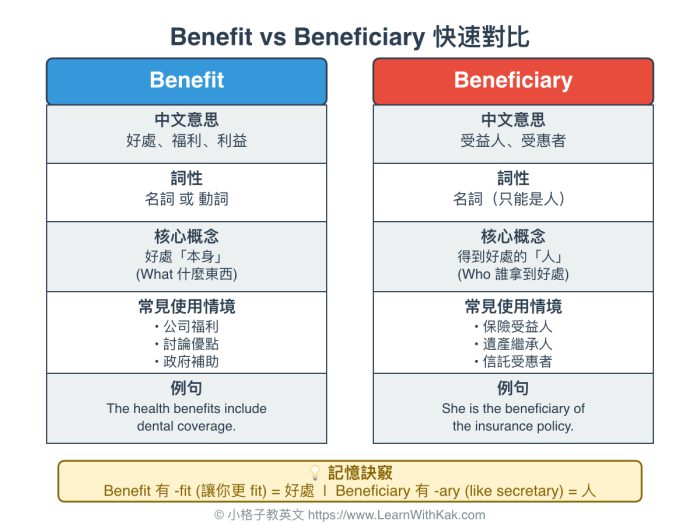
(14)
The health benefits include dental and vision coverage.
健康福利包括牙科和視力保險。 → 福利本身
(15)
She is the beneficiary of her father’s life insurance policy.
她是她父親人壽保險的受益人。 → 拿到保險金的人
記憶訣竅:
Benefit = 好處(What 什麼東西)
Beneficiary = 受益人(Who 誰拿到好處)
記憶神助攻:字尾聯想法
想要永遠記住這兩個字的差別?用字尾聯想法超好記!
先看 benefit 的字尾 -fit。想到什麼?想到 fit(合適、健康、適合)!福利、好處就是讓你生活更 fit、更好的東西。所以 benefit = 讓你 fit 的東西 = 好處、福利。這個聯想很自然,因為福利確實是讓你生活更健康、更適合、更好的東西。
再看 beneficiary 的字尾 -ary。這個字尾跟很多表示「人」或「地方」的字一樣。想想看:secretary(秘書)是人、missionary(傳教士)是人、revolutionary(革命者)也是人。另一方面,library(圖書館)、dictionary(字典)是存放東西的地方。在法律用語中,-ary 結尾特別常用來指特定身份的人。所以 beneficiary 的 -ary 結尾告訴你:這是一個「人」,特別是有特定身份的人 = 受益人。
- 字尾 -fit 聯想: Benefit → fit(健康、合適) → 讓你更 fit 的東西 → 好處、福利
- 字尾 -ary 聯想(人): Secretary(秘書)→ 人 Missionary(傳教士)→ 人 Beneficiary(受益人)→ 人
- 字尾 -ary 聯想(地方): Library(圖書館)→ 存放書的地方 Dictionary(字典)→ 存放字的地方
記憶口訣: 看到 -fit → 想到 Fit → 這是「好處」 看到 -ary → 想到 Secretary → 這是「人」
實用補充:相關詞彙
學完 benefit 和 beneficiary,再認識一些相關詞彙會更完整。
Beneficial 是形容詞,意思是「有益的」、「有利的」。例如 “Exercise is beneficial for your health”(運動對你的健康有益)。
Benefit package 是「福利套餐」,指的是公司提供的整套福利,包括健保、退休金、假期等等。面試時常會聽到 “We offer a competitive benefit package”(我們提供有競爭力的福利套餐)。
(16) Regular meditation is highly beneficial for reducing stress and improving focus.
規律冥想對減壓和提升專注力非常有益。
(17) The company’s comprehensive benefit package includes health insurance, stock options, and flexible working hours.
公司的全面福利套餐包括健康保險、股票選擇權和彈性工作時間。
現在你應該搞懂 benefit 和 beneficiary 的差別了吧,記住關鍵:benefit 是好處本身(東西),beneficiary 是拿到好處的人(人)。Benefit 可以當名詞(福利)或動詞(使受益),在職場、日常生活都常用;beneficiary 只能當名詞(受益人),主要出現在保險、遺產、信託這些法律文件上。
如果你喜歡這篇文章的話,可以追蹤我們的Threads和Facebook唷!