
你有沒有過那種經驗:正在做事突然想起一件重要的事,或是靈光一閃想到解決方案,結果想說「我剛想到」,腦中只有 “I just think” 這種超怪的英文?拜託,think 是「思考」不是「想到」好嗎!其實「It just occurred to me 意思」就是「我剛想到」,而且這才是老外真正會用的道地說法。今天就來教你 5 種表達「突然想到、靈光一閃、恍然大悟」的英文,從輕微的「剛想到」到強烈的「我去!原來是這樣!」通通有,讓你不再講出讓人一頭霧水的菜英文!
Occur 的基本意思 – 這個字有夠神奇
在學 “It just occurred to me” 之前,先來搞懂 occur 這個字。Occur 基本上是「發生」的意思,像是地震發生、事故發生之類的。但是!這個字還有個超酷的用法你絕對想不到。
Occur to someone 的意思是「某人想到、某人腦中突然冒出某個想法」。邏輯是這樣的:「某個想法發生在某人腦中」,所以用 occur(發生)這個字。是不是超妙?
文法小陷阱來了:occur 的過去式是 occurred,是兩個 r!不是一個 r!超多人會寫成 occured(只有一個r),這是錯的喔。考試會扣分那種。
「我剛想到 英文」最道地的說法就是用這個 occur to someone,比起你直翻的 “I just think” 根本天差地遠好嗎。
(1)
A: When did the accident occur?
A: 意外什麼時候發生的?
B: Around 3 PM yesterday, according to the police report.
B: 警察說是昨天下午三點左右。
(2)
A: My car makes this weird noise sometimes.
A: 我的車有時候會發出怪聲音欸。
B: Does it occur all the time or just occasionally?
B: 一直都這樣還是偶爾才會?
A: It occurs intermittently, which makes it hard to diagnose.
A: 斷斷續續的,超難抓問題。
(3)
A: How often do earthquakes occur in Taiwan?
A: 台灣多常地震?
B: Pretty frequently. Small ones occur almost every day, but you don’t always feel them.
B: 蠻常的啊。小地震幾乎每天都有,只是你不一定感覺得到。
(4)
The thought never occurred to me. I didn’t even consider that possibility.
我根本沒想到這點。我完全沒考慮過那個可能性。
(5)
A: Why didn’t you call me when you got lost?
A: 你迷路的時候為什麼沒打給我?
B: Honestly, it didn’t occur to me at the time. I was too stressed out.
B: 老實講,我當時根本沒想到。我壓力太大了啦。
(6)
Has it ever occurred to you that maybe you’re working too hard?
你有沒有想過也許你工作太拼了?
It just occurred to me – 我剛想到(最常用款)
現在重點來了:It just occurred to me that…,中文就是「我剛想到…」、「我突然想起…」。
這句話強調的是「欸!我剛剛才想到欸!」的感覺。Just 這個字超關鍵,就是「剛剛、才剛」的意思,所以整句就是在說「這個念頭剛剛才跑進我腦袋」。
It just occurred to me 跟 I just remembered 有87%像,但還是有差。I just remembered 比較是「記憶」,就是你本來知道但忘了,現在想起來那種。It just occurred to me 則是「意識到」,可能是你之前根本沒想過、沒注意到的事情,現在突然意識到了。
這個說法超常用,而且聽起來超自然。不管是突然想起忘記的事、突然意識到某個問題、或是靈光一閃想到什麼,都可以用這句。基本上就是萬用款。
(7)
A: Did you lock the door when we left?
A: 我們出門的時候你有鎖門嗎?
B: Oh! It just occurred to me that I might have forgotten. Let me check the app.
B: 噢靠!我剛想到我好像忘記了。讓我看一下app。
(8)
It just occurred to me that we haven’t talked in months. How have you been?
我剛想到我們好幾個月沒聊了欸。你最近怎樣?
(9)
A: Why are you calling Jason?
A: 你為什麼要打給Jason?
B: It just occurred to me that he might know the answer to this problem.
B: 我剛想到他可能知道這個問題的答案欸。
(10)
A: It just occurred to me that today is Mom’s birthday. Did you get her a gift?
A: 我剛想到今天是媽生日欸。你有買禮物嗎?
B: Oh no! I completely forgot. We need to get something now!
B: 慘了!我完全忘記。我們現在要去買啦!
(11)
It just occurred to me that you never told me what happened at the meeting yesterday.
我剛想到你都沒跟我說昨天開會發生什麼事欸。
(12)
A: I told Sarah about your surprise party, but it just occurred to me that maybe you didn’t want her to know.
A: 我跟Sarah說了你的驚喜派對,但我剛想到你可能不想讓她知道齁。
B: Oh man, yeah… I was hoping to keep it small.
B: 噢天啊對…我本來想辦小小的就好。
It suddenly occurred to me – 我突然想到(加強版)
如果你想強調「突然性」,可以用 It suddenly occurred to me that…,意思是「我突然想到…」。
Suddenly 就是「突然地」嘛,所以加了 suddenly 之後,整個語氣就更強烈了,有種「哇靠!突然想到!」的感覺。這個說法特別適合用在你靈光一閃、突然想到解決方案、或是突然意識到某個超重要的事情時。
It suddenly occurred to me 比 It just occurred to me 更有戲,更有「啊哈時刻」的感覺。Just 比較平淡,suddenly 比較有爆點。如果你想表達那種「突然頓悟、靈光一閃」的感覺,用 suddenly 就對了。
(13)
A: How did you figure out the password?
A: 你怎麼想到密碼的?
B: It suddenly occurred to me that she always uses her cat’s birthday. Tried it and it worked!
B: 我突然想到她都用她貓咪的生日欸。試了一下就對了!
(14)
A: We need a new approach for this project.
A: 我們這個專案需要新的方法。
B: Wait! It suddenly occurred to me – why don’t we combine both ideas?
B: 等等!我突然想到——我們為什麼不把兩個想法合在一起?
(15)
It suddenly occurred to me that I left my wallet in the taxi. I had to call the company immediately.
我突然想到我把錢包留在計程車上了。我馬上打給車行。
(16)
A: Why did you stop the car?
A: 你為什麼停車?
B: It suddenly occurred to me that we’re going the wrong way. We should have turned left back there.
B: 我突然想到我們走錯路了啦。我們剛才應該要左轉的。
(17)
It suddenly occurred to me that this is exactly what happened last time. We’re repeating the same mistake!
我突然想到這跟上次一模一樣欸。我們在重複同樣的錯誤!
(18)
A: How did you solve the bug?
A: 你怎麼解決那個bug的?
B: I was about to give up when it suddenly occurred to me to check the configuration file. That was the problem!
B: 我快放棄的時候突然想到要檢查設定檔。問題就在那!
It dawned on me – 恍然大悟
It dawned on me that… 超有畫面感,意思是「我恍然大悟」、「我突然明白了」、「突然想起來」。
Dawn 這個字本來是「黎明、天亮」的意思對吧?用來形容「突然明白」有夠生動——就像天突然亮了,你突然看清楚了,整個「喔~~~原來是這樣!」的感覺。
It dawned on me 強調的是「從霧煞煞到突然懂」的那個過程,有種「天啊我終於搞懂了!」的頓悟感。它比 occurred 更強調「理解」和「明白」,不只是「想到」而已。
跟 It occurred to me 的差別:occurred 可能只是想起某件事,但 dawned 通常是「喔~原來如此!我懂了!」的那種恍然大悟。
(19)
A: When did you realize he was lying?
A: 你什麼時候發現他在騙人?
B: It suddenly dawned on me when his story didn’t match what you told me earlier.
B: 當他講的跟你之前跟我說的對不上時,我突然恍然大悟。
(20)
It slowly dawned on me that she wasn’t interested in dating. She was just being friendly.
我慢慢恍然大悟她對約會沒興趣啦。她只是友善而已。
(21)
A: Have you found your phone yet?
A: 你找到手機了沒?
B: Oh! It just dawned on me that I left it in the office. I’ll pick it up tomorrow.
B: 噢!我剛想起我把它留在辦公室了。我明天去拿。
(22)
A: Why did you change your major?
A: 你為什麼換主修?
B: It dawned on me halfway through that I wasn’t passionate about engineering. I realized I wanted to do design instead.
B: 我讀到一半突然明白我對工程根本沒熱情。我發現我其實想做設計。
(23)
It finally dawned on me why everyone was being so weird. They were planning a surprise party!
我終於恍然大悟為什麼大家都怪怪的。他們在計畫驚喜派對啦!
(24)
A: Did you understand the joke?
A: 你聽懂那個笑話了嗎?
B: Not at first, but it dawned on me a few minutes later. That’s actually pretty funny!
B: 一開始沒有,但幾分鐘後我突然懂了。其實還蠻好笑的欸!
其他說「突然想到」的道地表達
除了 occur 和 dawn,英文還有其他超道地的方式來表達「突然想到」。這些說法各有各的fu,看你想表達什麼樣的「突然」。
It struck me that… = 我突然想到、我突然意識到。Strike 是「打、擊中」的意思,所以 it struck me 就像「某個想法打中我」一樣,超有畫面感對吧?語氣跟 occurred 差不多,但更有衝擊感。
It hit me that… = 我突然想到(超口語版)。Hit 也是「打、擊中」,跟 struck 類似但更口語、更chill。這個說法年輕人超愛用,聽起來很自然。
It came to me = 我突然想起來了。強調「想法自己跑出來」的感覺,通常用在你努力想某件事,然後突然想起來的時候。有種「終於想到了!」的感覺。
I just realized = 我剛意識到、我剛發現。這個最直白、最簡單,就是說你剛剛才發現某件事。沒有什麼特殊語感,就是很基本款。
(25)
It struck me that we’ve been doing this the hard way. There’s a much simpler solution.
我突然想到我們一直在用笨方法做這件事欸。有簡單多了的解法。
(26)
A: Do you remember her name?
A: 你記得她叫什麼名字嗎?
B: I was trying to recall it all day, and it finally came to me just now. It’s Emily!
B: 我想了一整天,剛剛終於想起來了。是Emily!
(27)
It hit me that this is exactly what my parents warned me about. I should have listened.
我突然想到這就是我爸媽警告過我的事欸。我應該聽他們的。
(28)
A: Why are you looking at me like that?
A: 你幹嘛那樣看我?
B: It just struck me how much you look like your brother. The resemblance is crazy!
B: 我剛突然發現你跟你哥長超像欸。誇張的像!
(29)
I just realized that I’ve been pronouncing his name wrong this whole time. How embarrassing!
我剛發現我一直都把他的名字念錯。超糗的啦!
(30)
A: What’s wrong?
A: 怎麼了?
B: It just hit me that I have a deadline tomorrow and I haven’t even started. I’m so screwed!
B: 我剛想到我明天有deadline但我根本還沒開始。我死定了啦!
什麼情境用哪個?別再亂用啦
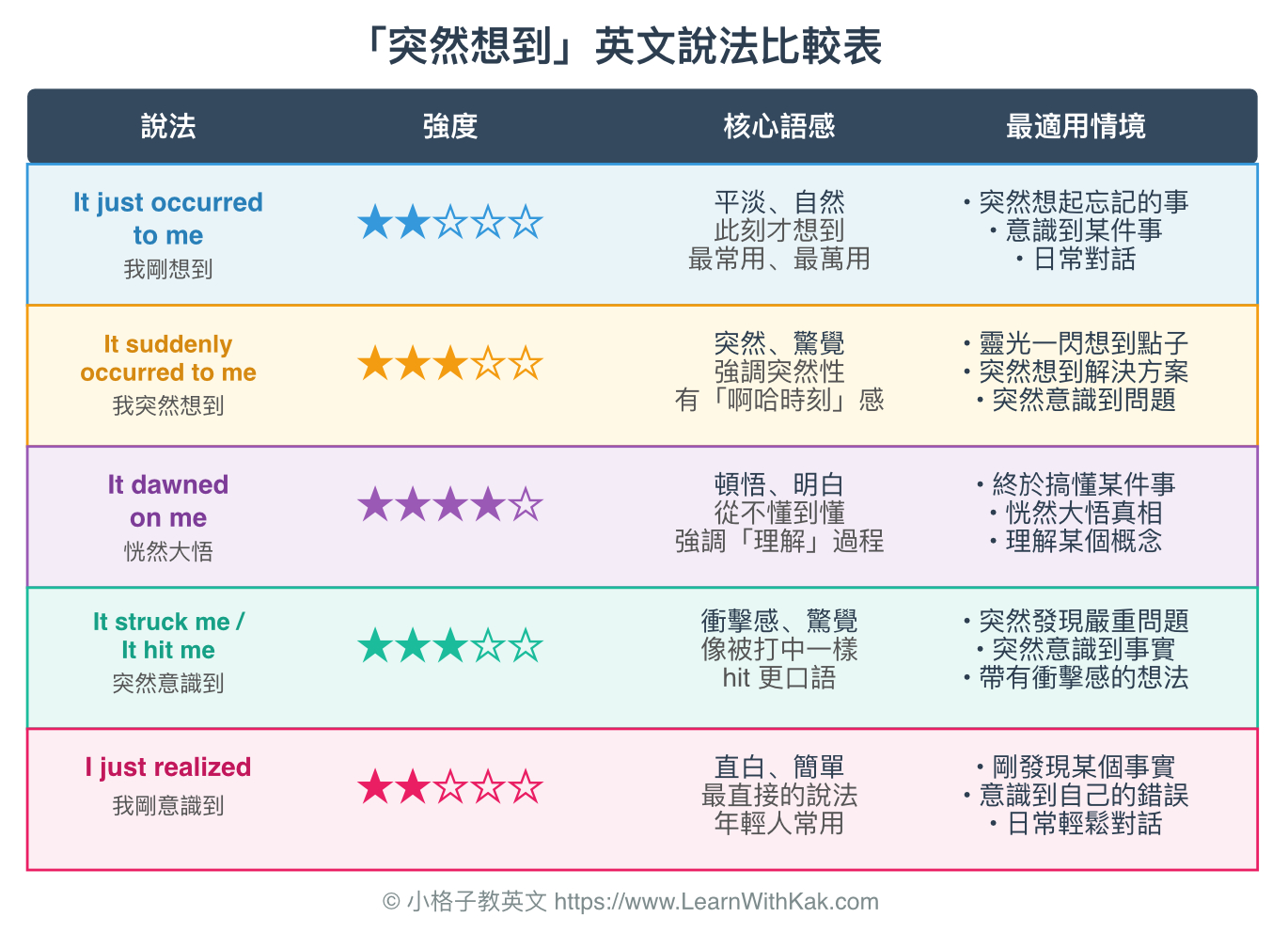
突然想起忘記的事 → 用 It just occurred to me。比如突然想起忘記鎖門、忘記帶東西、忘記重要日期,用這個最自然。就是很平常的「欸我剛想到」。
靈光一閃想到點子 → 用 It suddenly occurred to me。當你突然想到解決方案、好點子、新方法時,suddenly 可以強調那個「啊哈!」的瞬間。
恍然大悟理解某事 → 用 It dawned on me。當你終於搞懂某件事、終於明白真相、終於理解某個概念時,用 dawn 最有那種「天啊原來如此!」的感覺。
突然意識到問題 → 用 It struck me 或 It hit me。當你突然發現某個嚴重問題、突然意識到某個事實時,這兩個都很適合。Hit 更口語、更chill一點。
下次想說「我剛想到」、「突然想到」,拜託不要再講 I just think 或 suddenly remember 這種怪英文了!記住這幾個道地說法:It just occurred to me(我剛想到)、It suddenly occurred to me(我突然想到)、It dawned on me(我去!原來是這樣!)、It struck/hit me(突然被想法打中)。每個都有不同的fu,選對了你的英文聽起來就超自然、超像母語者。而且這些說法真的超常用,學起來絕對不虧,以後聊天、開會、寫email都用得到!
說到「想到」和「記得」,英文有很多細膩的表達方式。這篇介紹了「想到」- It just occurred to me,之前我們也介紹過「記得」,有興趣可以看看這篇: 只會說 I remember?難怪老闆覺得你在打太極!這 5 種「我記得」的說法專業度差超多。
如果你喜歡這篇文章的話,可以追蹤我們的Threads和Facebook唷!