
老外道別最常說的保重英文就是 Take care,但依照場合不同,選字其實差很多,用錯還可能讓對方聽起來怪怪的。
保重英文到底該怎麼說
道別英文的選字,其實看的是關係親疏跟情境輕重,不是每次都套同一句就能安全過關。跟普通朋友道別,Take care 已經很夠用;但如果對方最近身體不太好,或是正要經歷比較辛苦的一段時間,同樣一句 Take care 聽起來就會少了一點份量。
先看幾個生活中常見的道別對話:
(1)
A: I’m heading out now, see you tomorrow.
A: 我要先走了,明天見。
B: Take care, drive safe.
B: 保重,開車小心。
(2)
A: I heard you’re not feeling well.
A: 聽說你最近身體不太舒服。
B: Yeah, just a bit of a cold. Thanks for asking.
B: 對啊,只是有點感冒。謝謝你關心。
A: Take care of yourself, don’t push too hard.
A: 保重身體,不要太勉強。
(3)
A: We won’t see each other for a while after this trip.
A: 這趟之後我們應該有一陣子不會見面了。
B: Take care, and let’s keep in touch.
B: 保重,要保持聯絡喔。
(4)
A: My grandma just got out of the hospital.
A: 我奶奶剛出院。
B: Oh no, I hope she’s doing better. Take care of her.
B: 天啊,希望她好轉一些,要好好照顧她。
從這幾個例句可以發現,Take care 本身彈性很大,可以單獨當作道別用語,也可以接 of 之後變成「照顧某人或某事」的意思。這個差異其實是保重英文最容易搞混的地方,下一個段落會拆解清楚。
Take care of 用法:不只是保重自己
Take care of 用法其實分成好幾種情境,重點在於 of 後面接的對象是誰。接自己就是保重身體,接別人就是照顧對方,接事情則是變成處理、負責的意思,這在職場對話裡特別常出現。
(5)
A: You look exhausted, have you been sleeping enough?
A: 你看起來很累,最近有睡飽嗎?
B: Not really. I need to take care of myself better.
B: 沒有,我應該要好好照顧自己一下。
(6)
A: Can you take care of the client email before noon?
A: 你可以在中午前處理一下那封客戶信件嗎?
B: Sure, I’ll take care of it right away.
B: 沒問題,我馬上處理。
(7)
A: Who’s going to take care of the booth during the exhibition?
A: 展覽期間誰要顧攤位?
B: I’ll take care of that, don’t worry.
B: 我來顧,別擔心。
(8)
A: My parents are getting older, I want to take care of them more.
A: 我爸媽年紀漸漸大了,我想多花時間照顧他們。
B: That’s really thoughtful of you.
B: 你這樣想真的很貼心。
(9)
A: Don’t forget to take care of the paperwork before you leave.
A: 離開前別忘了把文件處理好。
B: Already done, I took care of it this morning.
B: 已經處理完了,我早上就弄好了。
可以發現 take care of 用法的關鍵,其實不是死背中文翻譯,而是先看清楚 of 後面接的是人、事,還是自己,意思就會很自然地跳出來。
除了 Take care,這些說法也很常用
保重英文除了 Take care,其實還有不少道地說法,每一種都有各自適合的情境,選對了會讓你講起來更自然。
(10)
A: The weather’s getting really cold this week.
A: 這禮拜天氣變得好冷。
B: Stay safe, and bring a jacket when you go out.
B: 保重,出門記得多穿件外套。
(11)
A: I’m flying to Osaka next week for a solo trip.
A: 我下禮拜要一個人飛去大阪。
B: Safe travels! Text me when you land.
B: 一路平安!落地記得傳訊息給我。
(12)
A: I’ll be working from the countryside for a bit, less signal there.
A: 我會在鄉下工作一陣子,那邊訊號比較差。
B: Look after yourself, we’ll catch up when you’re back.
B: 要照顧好自己,等你回來我們再約。
(13)
A: This project has been really draining lately.
A: 最近這個專案真的把人榨乾了。
B: Look after yourself first, the project can wait.
B: 先照顧好自己,專案可以晚一點。
從這幾個例句可以看出,Stay safe 比較常用在有風險或天氣變化的情境,Safe travels 幾乎專門用在旅行道別,Look after yourself 則帶有比較深的關心語氣,適合對方正在經歷比較辛苦的階段。如果是信件或訊息結尾要收尾,其實還有其他固定的道別語可以選,像是All the Best 這種郵件結尾常用語,語氣又跟 take care 系列不太一樣,可以依收件人關係去挑選。
職場英文的保重怎麼說才不尷尬
保重英文用在職場,其實眉角更多,因為對象可能是主管、客戶或同事,語氣拿捏不對容易顯得太隨便或太生疏。
(14)
A: I’ll be out of office next week for the business trip.
A: 我下禮拜出差,人會不在辦公室。
B: Take care on the road, and let us know if you need anything.
B: 出差路上多保重,有需要記得跟我們說。
(15)
A: Thanks for covering my shift today, I really appreciate it.
A: 謝謝你今天幫我代班,真的很感謝。
B: No problem, take care of that presentation tomorrow.
B: 沒問題,明天的簡報加油處理好。
(16)
A: This is my last day here before I move to the new department.
A: 今天是我在這個部門的最後一天了。
B: We’ll miss you, take care and stay in touch.
B: 會想你的,保重也要保持聯絡。
(17)
A: I’m heading into a long meeting, might be offline for a while.
A: 我要進去開一個很長的會議,可能會有一陣子沒回訊息。
B: Take care of yourself in there, that client can be tough.
B: 進去顧好自己,那個客戶不好搞。
email 結尾也是保重英文常出現的地方,如果收尾想要換句話說,也可以參考職場 email 開頭結尾常用替代句,讓每次寫信不會一直重複同樣的句型。整體來說,職場情境下的保重英文,選字上會比朋友之間更收斂一點,語氣穩重但不失關心就是最剛好的分寸。
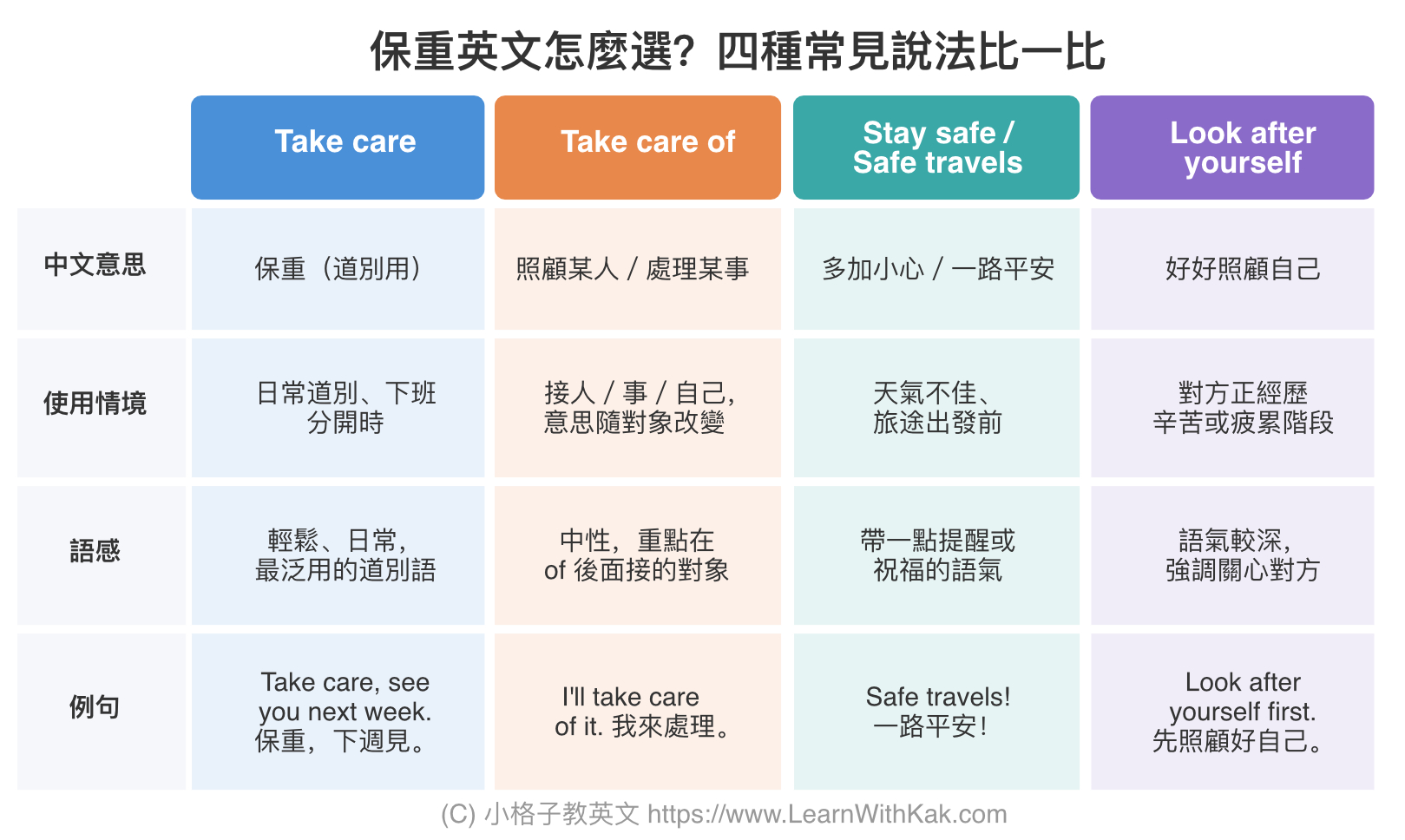
保重英文選字沒有標準答案,重點是先看場合再挑用語,習慣之後自然就會選得又快又準。
延伸閱讀:【All the Best 中文意思是什麼?郵件結尾、道別情境與回應方式完整解析】
如果你喜歡這篇文章的話,可以追蹤我們的 Threads 和 Facebook 唷!