
Readily 中文到底是什麼意思?很多人看到這個字,直覺就翻成「準備好地」,結果講出來的句子老外完全聽不懂。其實 Readily 跟「準備好」幾乎沒關係,它藏了兩個完全不同的語感,一個是「樂意地」,一個是「輕易地」,搞懂差別之後,寫 email 或準備多益都用得上。
Ready 到底有幾種用法,你可能只學了一半
Ready 大家都知道是「準備好的」,但這個字其實比你以為的更好用,不是只有 I’m ready 這一種講法。
Ready 當形容詞的時候,最常見的兩個搭配是 be ready for something(準備好面對某件事)跟 be ready to do something(準備好去做某件事),介系詞不一樣,語感也有點不同,前者比較偏「心理上準備好了」,後者比較偏「馬上要去做」。
除了形容詞,Ready 也可以當動詞用,to ready something 就是「讓某件事準備就緒」的意思,這個用法比較正式,口語比較少聽到,但寫作或新聞裡會出現。另外還有幾個固定搭配,像 get ready(準備一下)、ready-made(現成的)、at the ready(隨時待命),這些都是日常英文常用,但台灣人比較少特別練到的地方。這些固定搭配平常聊天或寫訊息都用得到,記熟幾個之後,講英文的時候會自然很多,不會每次都卡在同一句 I’m ready 打轉。
順帶一提,Ready 和 Readily 一個是形容詞一個是副詞,這種詞性的細節,其實也是多益考試很愛出的陷阱題,名詞、動詞、形容詞、副詞怎麼判斷這篇有整理更完整的判斷技巧,可以順便看一下。
(1)
A: Are you ready for the presentation tomorrow?
A: 你明天的簡報準備好了嗎?
B: Not even close. I haven’t touched the slides yet.
B: 完全沒有,我連投影片都還沒碰。
(2)
A: Can we head out now?
A: 我們現在可以出發了嗎?
B: Give me five minutes, I’m almost ready.
B: 再給我五分鐘,我快好了。
(3) The team is readying the venue for tomorrow’s launch event.
團隊正在為明天的發表會準備場地。
(4)
A: Do you have the snacks ready for the trip?
A: 出遊的零食準備好了嗎?
B: Way ahead of you, already packed two bags.
B: 早就想到了,兩包都裝好了。
(5) I always keep an umbrella ready by the door, just in case.
我門口永遠放一把準備好的雨傘,以防萬一。
(6)
A: Is the proposal ready to send to the client?
A: 提案準備好可以寄給客戶了嗎?
B: Almost, just double-checking the numbers one more time.
B: 快了,再確認一次數字而已。
Readily 的第一個語感:樂意地、毫不猶豫
重頭戲來了。很多人只學過 Readily 的其中一個意思,這裡先講第一個,也是比較多人知道的那個:樂意地、毫不猶豫地。
這個語感講的是你做某件事的態度,沒有抗拒、很自願、很乾脆,有點像中文說的「一口答應」「爽快地」。它跟 willingly(願意地)意思很接近,但 Readily 聽起來更自然、更口語,而且多了一層「馬上、不拖泥帶水」的味道。如果有人 readily agrees,不只是說他同意,還隱含他答應得很爽快,完全沒有猶豫。講到 agree 這個字,它本身也有好幾種介系詞搭配,Agree with、Agree to、Agree on 三種用法常常也會搭配 readily 一起出現,值得一起複習。
(7)
A: Did everyone agree to the new schedule?
A: 大家都同意新時程了嗎?
B: Most people readily accepted it, only a few had questions.
B: 大部分人都很樂意接受,只有少數幾個有疑問。
(8)
A: Did your manager approve the budget?
A: 你主管批准預算了嗎?
B: Yeah, she readily approved it, didn’t even ask a single question.
B: 批了,她很爽快就批了,連一個問題都沒問。
(9)
A: Is he easy to work with?
A: 他好合作嗎?
B: Super easy, he readily shares everything he knows.
B: 超好合作,他很樂意分享他知道的一切。
(10) She readily volunteered to stay late and help set up for the event.
她很爽快地自願留下來幫忙佈置活動場地。
(11) He readily admitted he made a mistake, which honestly surprised everyone.
他很乾脆地承認自己犯了錯,老實說讓大家都嚇一跳。
Readily 的第二個語感:輕易地、唾手可得
第二個語感跟態度沒有關係了,講的是難易程度,或者東西容不容易取得,這個用法其實在職場英文和新聞裡更常出現,只是比較少人特別學過。
最常見的搭配就是 readily available 中文意思是「隨時可取得、輕易可拿到」,這個組合在產品介紹、學術文章、職場 email 裡超常見。另外還有 readily accessible 中文意思是「容易取得或使用」,還有 readily apparent(顯而易見)、readily understood(容易理解),這些搭配也很實用。
這個語感有個特色,通常搭配的是事物或資訊,不是人,你不會說某個人 is readily,但會說某份資料 is readily available,或某個方法 is not readily understood。職場 email 裡常看到 information is readily available upon request 這種句型,意思是「相關資訊備索」,算是一種蠻正式但很實用的講法,開會簡報或寫報告的時候都用得上。
(12)
A: Where can I find the data for the quarterly report?
A: 我要去哪裡找季報的數據?
B: It’s readily accessible on the shared drive, under the Q3 folder.
B: 共享雲端就找得到,在 Q3 那個資料夾裡。
(13)
A: Why is this medication so expensive here?
A: 這個藥在這裡怎麼這麼貴?
B: Because it’s not readily available locally, most of it has to be imported.
B: 因為本地不容易買到,大部分都要進口。
(14)
A: Is this concept hard to explain to clients?
A: 這個概念很難跟客戶解釋嗎?
B: It’s not readily understood at first, but a good example usually helps.
B: 一開始不容易理解,但舉個好例子通常就懂了。
(15) Most of these templates are readily available online, and a lot of them are free.
這些範本大部分在網路上都輕易找得到,而且很多都是免費的。
(16) The reason for the delay was readily apparent once we checked the shipping records.
一查貨運紀錄之後,延遲的原因就很明顯了。
Ready 跟 Readily 最容易搞混的地方
搞懂前面兩個語感之後,最後這段來處理最多人踩雷的地方:什麼時候該用 Ready,什麼時候該用 Readily。
先講一個核心原則,Ready 是形容詞,描述的是「某人或某物的狀態」;Readily 是副詞,修飾的是「動作的方式或容易程度」。這個差別搞清楚,很多混淆就自然解開了。
最常見的錯誤,是把 Ready 直接換成 Readily,以為意思差不多。比如 I’m ready to help 跟 I readily help,意思完全不一樣,前者是「我準備好要去幫忙了」,後者是「我很樂意幫忙,這是我的習慣或態度」。另一個常見錯誤,是把 Readily 硬翻成「準備好地」,套進句子裡讀起來就很怪,記住 Readily 用法的核心是「樂意」或「容易」這兩個方向,跟「準備好」基本沒關係。
(17)
A: Are you ready to take on more responsibility?
A: 你準備好要承擔更多責任了嗎?
B: Yeah, I’m ready, and honestly I’d readily take on more if given the chance.
B: 準備好了,老實說有機會的話我很樂意承擔更多。
(18)
A: Do you find grammar rules easy?
A: 你覺得文法規則容易嗎?
B: Some rules are readily understood, but others take forever to sink in.
B: 有些規則很容易懂,但有些要花很久才能內化。
(19)
A: Is she ready for the client meeting?
A: 她準備好客戶會議了嗎?
B: She’s been ready since yesterday, she’s the type who readily over-prepares.
B: 她昨天就準備好了,她是那種很樂意過度準備的人。
(20)
A: Did you have to convince him to switch teams?
A: 你有說服他換組嗎?
B: Not really, he readily agreed once he heard the new project details.
B: 不太需要,他一聽到新專案的細節就很爽快答應了。
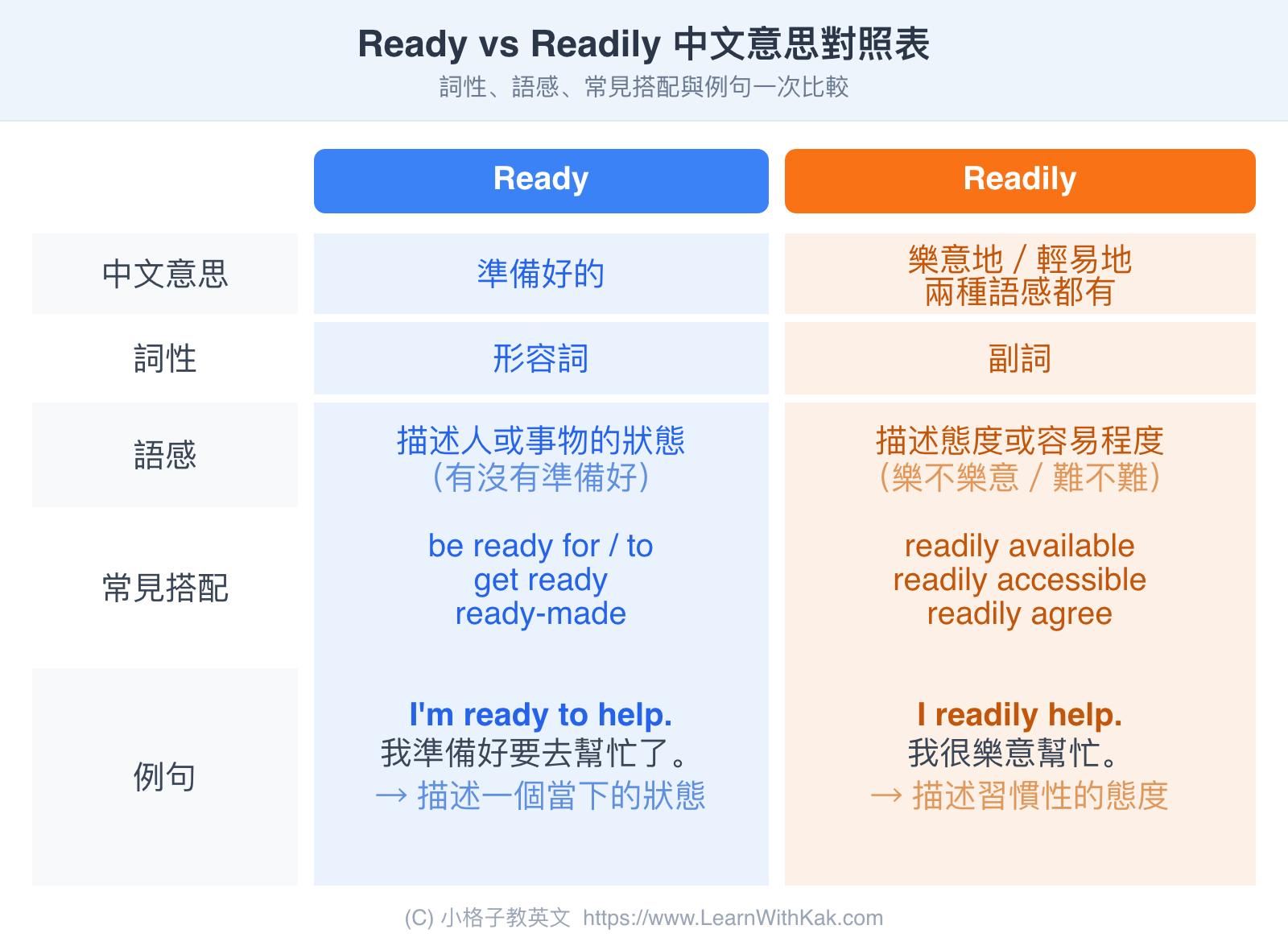
Readily 看起來只是 Ready 加個 -ly,但骨子裡藏了兩個完全不同的語感,一個講態度,一個講難易程度。下次看到這個字,先想它是在說「人願不願意」還是「事情容不容易」,答案就出來了,也不會再跟 Ready 搞混。
延伸閱讀:【老闆問 Is it doable?搞懂 Doable 中文意思和職場英文回答技巧】
如果你喜歡這篇文章的話,可以追蹤我們的 Threads 和 Facebook 唷!