
開完會,同事問你剛才討論什麼,用中文三秒就能說完,但換成英文好像突然不知道從哪下手。轉述別人說的話,在英文就是 reported speech 用法的範疇,不只日常對話會碰到,職場溝通和多益考試也常出現。時態要不要改、say 跟 tell 怎麼選、問句語序怎麼處理,這篇把規則和例句一起說清楚。
Direct Speech vs Reported Speech 有什麼不同
直接引語(direct speech)就是把對方說的話一字不漏引用,通常加引號;間接引語(indirect speech),也就是 reported speech,是用自己的話轉述,不加引號,動詞時態和人稱也會跟著調整。
(1)
A: “I’m totally swamped this week,” said Amy.
A: Amy 說:「我這週完全忙翻了。」
B: Amy said that she was totally swamped that week.
B: Amy 說她那週完全忙翻了。
(2)
A: “We already sent the invoice,” the sales team told us.
A: 業務團隊告訴我們:「我們已經寄出發票了。」
B: The sales team told us that they had already sent the invoice.
B: 業務團隊告訴我們他們已經寄出發票了。
(3)
A: “I can join the call at 3 PM,” said Marcus.
A: Marcus 說:「我三點可以加入通話。」
B: Marcus said that he could join the call at 3 PM.
B: Marcus 說他三點可以加入通話。
(4)
A: “The client wants to push back the deadline,” my manager told me.
A: 我主管告訴我:「客戶想把截止日期往後延。」
B: My manager told me that the client wanted to push back the deadline.
B: 我主管告訴我客戶想把截止日期往後延。
注意到了嗎?每一組例句都有幾個變化:引號消失了、人稱跟著調整(”I” 變成 “he/she/they”)、動詞時態往後推了一格。接下來就拆解時態後移的規則。
時態後移規則
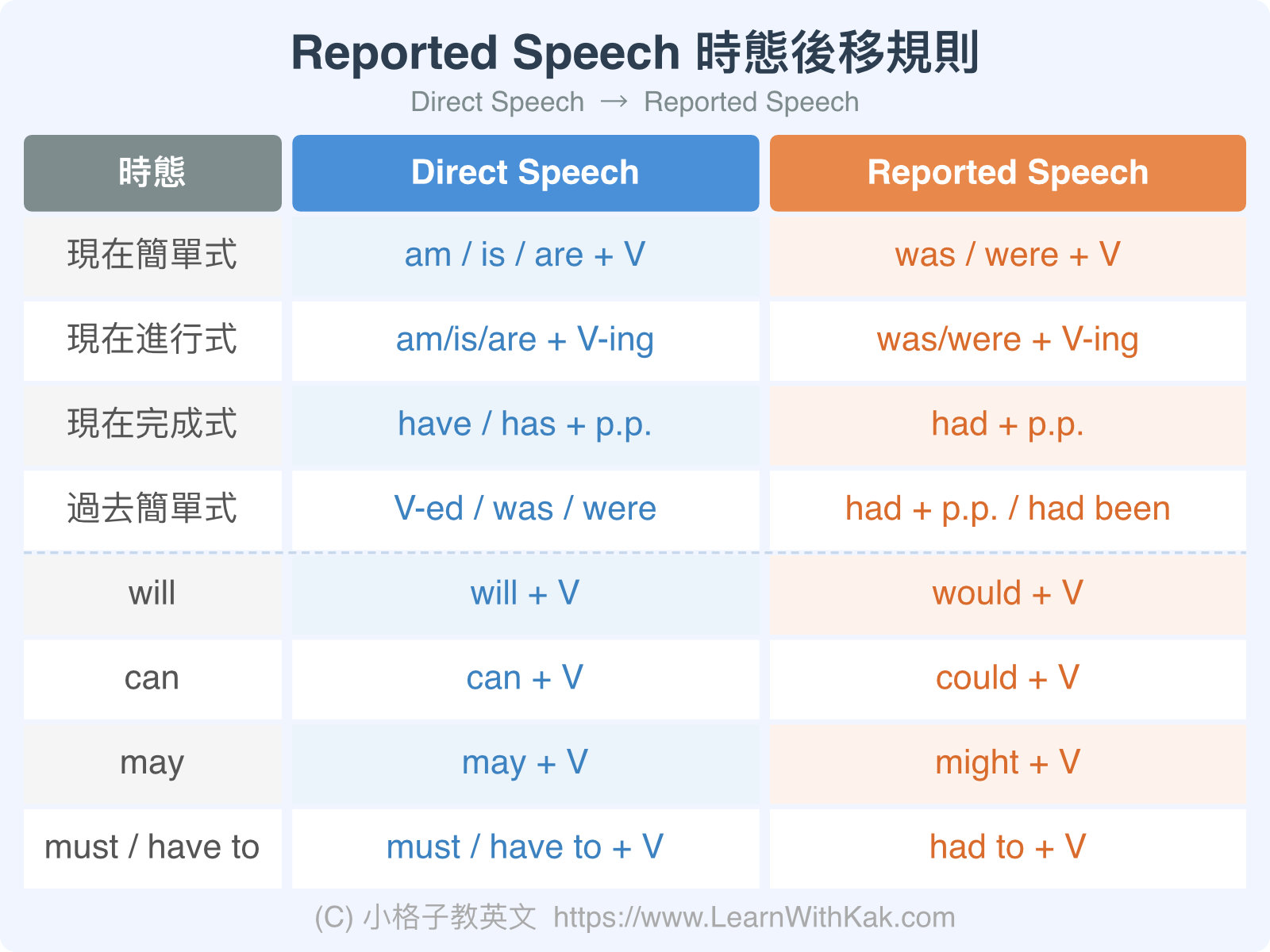
時態後移是 reported speech 用法裡最常被問到的規則。邏輯其實不難:你在轉述的當下,那件事已經是「過去說的話」,所以動詞要往過去推一格。

時間詞也要一起調整:
- now → then
- today → that day
- tomorrow → the next day / the following day
- yesterday → the day before
- last week → the week before / the previous week
(5)
A: “I can handle the presentation,” said Jess.
A: Jess 說:「簡報我可以搞定。」
B: Jess said that she could handle the presentation.
B: Jess 說簡報她可以搞定。
(6)
A: My teammate told me, “I’ve already talked to the client.”
A: 隊友跟我說:「我已經跟客戶講過了。」
B: My teammate told me that he had already talked to the client.
B: 隊友跟我說他已經跟客戶講過了。
現在完成式 “have talked” 在轉述時變成過去完成式 “had talked”。如果你想把現在完成式和過去式的差別搞清楚,那篇有詳細的圖解說明。
(7)
A: The director said, “We will announce the results next week.”
A: 主任說:「我們下週會公布結果。」
B: The director said that they would announce the results the following week.
B: 主任說他們隔週會公布結果。
will → would,next week → the following week,兩個都要調整。
(8)
A: My colleague told me, “I’m working on the budget right now.”
A: 同事告訴我:「我現在正在弄預算。」
B: My colleague told me that she was working on the budget then.
B: 同事告訴我她當時正在處理預算。
(9)
A: “I finished the draft last night,” Kevin told his manager.
A: Kevin 告訴主管:「我昨晚把草稿完成了。」
B: Kevin told his manager that he had finished the draft the night before.
B: Kevin 告訴主管他前一晚把草稿完成了。
過去式 “finished” 到了轉述句變成過去完成式 “had finished”,last night 則改成 the night before。
時態不用改的情況
不是所有情況都要時態後移,有兩種例外值得注意。
第一種:說的是事實或科學真理,現在仍然成立。
(10)
A: The teacher said, “The Earth orbits the Sun.”
A: 老師說:「地球繞著太陽轉。」
B: The teacher said that the Earth orbits the Sun.
B: 老師說地球繞著太陽轉。
這是永遠成立的事實,動詞保留現在式 orbits,不改成 orbited。
第二種:說的狀態在轉述當下仍然為真。
(11)
A: James told me, “I live in Tainan.”
A: James 告訴我:「我住台南。」
B: James told me that he lives in Tainan.(James 現在還是住台南)
B: James 告訴我他住台南。
如果你不確定 James 現在是否還住那裡,用過去式 “lived” 也沒問題,兩種都可以接受,差別只在你轉述時對現況的掌握程度。
(12)
A: The CEO said, “Our main office is in Taipei.”
A: CEO 說:「我們總部在台北。」
B: The CEO said that their main office is in Taipei.
B: CEO 說他們總部在台北。
公司現在仍在台北,所以動詞維持現在式。
(13)
A: She told me, “I love this café.”
A: 她告訴我:「我超喜歡這間咖啡廳。」
B: She told me that she loves this café.(她現在還是很愛)
B: 她告訴我她超喜歡這間咖啡廳。
Say、Tell、Ask 怎麼選
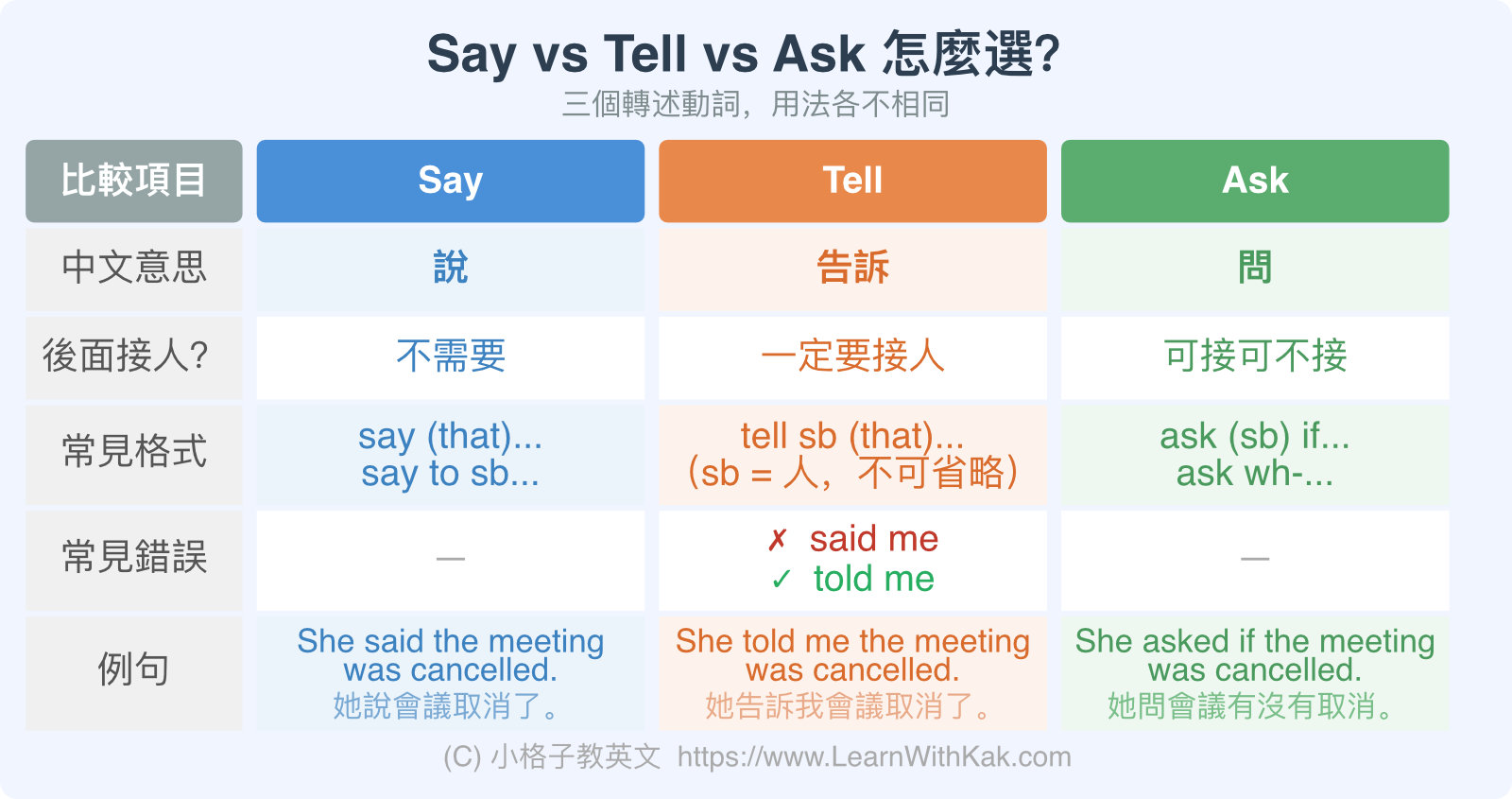
這三個動詞是多益文法題的常客,也是職場轉述英文最容易出錯的地方。核心差別是:
say:不需要指定對象,直接接內容
tell:一定要先接「人」,tell someone (that)…
ask:用於轉述問題或請求
最常見的錯誤是 “said me”,這在英文裡是不對的,要改成 “told me”。

(14)
A: My supervisor said that the meeting was moved to Thursday.
A: 我主管說會議改到星期四了。
(say 後面不接人,直接接內容)
(15)
A: My supervisor told me that the meeting was moved to Thursday.
A: 我主管告訴我會議改到星期四了。
(tell 後面要先接人:told me,才接內容。這兩句英文都對,重點是別寫成 “said me”)
(16)
A: “Did anyone contact the vendor?” the manager asked.
A: 主管問:「有人聯絡廠商嗎?」
B: The manager asked if anyone had contacted the vendor.
B: 主管問說有沒有人聯絡廠商。
(問題用 ask,不用 say)
(17)
A: The client told our team that they needed the proposal by Friday.
A: 客戶告訴我們團隊,他們需要在星期五前收到提案。
(tell + 人 + that…,標準職場轉述英文用法)
(18)
A: She said to me, “Are you free tomorrow afternoon?”
A: 她問我:「你明天下午有空嗎?」
B: She asked me if I was free the following afternoon.
B: 她問我隔天下午有沒有空。
一個記法:有明確告訴某人,用 tell;只是陳述說了什麼,用 say;問題或請求,用 ask。
轉述問句:Yes/No 問句 vs Wh- 問句
轉述問句有兩個關鍵變化容易被忽略:
- 問句語序要改成直述句語序,不能保留倒裝
- Yes/No 問句用 if 或 whether 帶入;Wh- 問句保留疑問詞
先看 Yes/No 問句:
(19)
A: “Did you send the contract?” my colleague asked.
A: 同事問:「你有把合約寄出去嗎?」
B: My colleague asked if I had sent the contract.
B: 同事問我有沒有把合約寄出去。
不是 “asked did I send”,語序要改成直述句:if I had sent。
(20)
A: The interviewer asked, “Have you managed a team before?”
A: 面試官問:「你之前有帶過團隊嗎?」
B: The interviewer asked if I had managed a team before.
B: 面試官問我之前有沒有帶過團隊。
再看 Wh- 問句:
(21)
A: “Where is the conference room?” the new staff member asked.
A: 新員工問:「會議室在哪裡?」
B: The new staff member asked where the conference room was.
B: 新員工問會議室在哪裡。
不是 “asked where was the conference room”,疑問詞保留,但語序要調整成直述句。
(22)
A: My friend asked, “What time does the show start?”
A: 朋友問:「節目幾點開始?」
B: My friend asked what time the show started.
B: 朋友問節目幾點開始。
(23)
A: “Why didn’t you tell me sooner?” she asked.
A: 她問:「你為什麼不早點告訴我?」
B: She asked why I hadn’t told her sooner.
B: 她問我為什麼沒有早點告訴她。
記法:把疑問詞(where / what / why)或 if 當成連接詞,後面的主詞和動詞照正常直述句順序排,就不會出錯。
多益必考重點
Reported speech 用法在多益裡主要出現在文法單選題和閱讀測驗兩個地方。文法題通常考 say 和 tell 的區別、時態後移是否正確、以及轉述問句的語序是否倒裝。閱讀題則是在 email 或報告中出現轉述內容,考你能不能判斷原句的語意。
兩個最常考的考點:
(24)
Choose the correct sentence:
(A) She said me that the budget was approved.
(B) She told me that the budget was approved.
答案是 (B)。say 後面不接人,告訴「某人」要用 tell。(A) 的 “said me” 是非常典型的錯誤選項,多益出題組很愛考這個。
(25)
Choose the correct sentence:
(A) He asked where was the report.
(B) He asked where the report was.
答案是 (B)。轉述問句語序要改成直述句,不能保留倒裝,(A) 的語序是直接問句格式,用在 reported speech 裡是不對的。
考試技巧:看到 reported speech 考題,先確認動詞(say / tell / ask),再確認語序,最後檢查時態後移是否正確。如果你正在備考多益,被動語態也是同樣類型的文法必考點,有空也可以一起看。
Reported speech 的規則看起來很多,但抓住三個核心就夠:時態往後推一格、say 和 tell 搞清楚有沒有接對象、問句語序改直述。這三點搞定,不管是職場轉述英文還是多益考題都能輕鬆應對。
延伸閱讀:【主動語態 vs 被動語態怎麼分?被動文法用法全解析 + 多益必考句型】