
寫英文 email 的時候,你有沒有覺得某些句子讀起來特別清楚、一句話就交代好所有資訊?那種「補充說明」的結構,很多時候背後用的就是同位語。它不難,但知道怎麼用之後,你的英文句子會整個不一樣。
同位語是什麼
同位語(appositive)的英文名字聽起來有點學術,但概念其實很簡單:就是一個名詞或名詞片語,放在另一個名詞旁邊,補充說明「那個名詞是什麼」或「那個人是誰」。
比如你想說「我同事 Jason 幫我處理了這件事」,英文可以這樣說:
My colleague Jason handled it for me.
「Jason」就是同位語,補充說明 my colleague 是誰。沒有 Jason 這個字,句子也成立,但加了之後,聽的人馬上知道在講誰。
這就是同位語在做的事:補充、說明、讓句子的資訊更完整。
(1)
A: Who approved the budget?
A: 誰批准預算的?
B: David Chen, the finance director, signed off on it this morning.
B: 財務總監 David Chen 今早批准了。
(2)
A: Have you met the new hire?
A: 你見過新人了嗎?
B: Yeah, Sarah, a UX designer from Taipei, just joined our team last week.
B: 有啊,來自台北的 UX 設計師 Sarah,上週剛加入我們團隊。
(3)
A: What’s the tool you kept mentioning?
A: 你一直提到的那個工具是什麼?
B: Notion, a productivity app, is what we use to manage all our projects.
B: Notion,一個生產力工具,是我們用來管理所有專案的軟體。
同位語可以放在前面,也可以放在後面
同位語最常出現在它補充說明的名詞「後面」,但其實也可以放在「前面」。兩種都正確,語感稍微不同。
後置是最自然的位置,先說人或事,再補充說明:
My roommate, a third-year med student, barely sleeps.
我室友是醫學系三年級,幾乎不睡覺。
前置則把補充資訊拉到前面,帶點強調的感覺,有時候也用在寫作裡製造節奏:
A third-year med student, my roommate barely sleeps.
作為醫學系三年級,我室友幾乎不睡覺。
(4)
A: Who’s the keynote speaker?
A: 主題演講者是誰?
B: The keynote speaker is Maya Lin, a well-known architect based in New York.
B: 主題演講者是 Maya Lin,一位在紐約的知名建築師。
(5)
A: I don’t know much about this author.
A: 我對這個作者不太熟。
B: A former journalist, she actually spent ten years reporting from Southeast Asia before she started writing novels.
B: 她是前記者,在開始寫小說之前在東南亞採訪了十年。
(6)
A: How do you know him?
A: 你怎麼認識他的?
B: We met at a conference. He’s Kevin, a product manager at a fintech startup in Hsinchu.
B: 我們在研討會上認識的,他是 Kevin,新竹一家金融科技新創的產品經理。
逗號加不加?這裡最容易搞錯
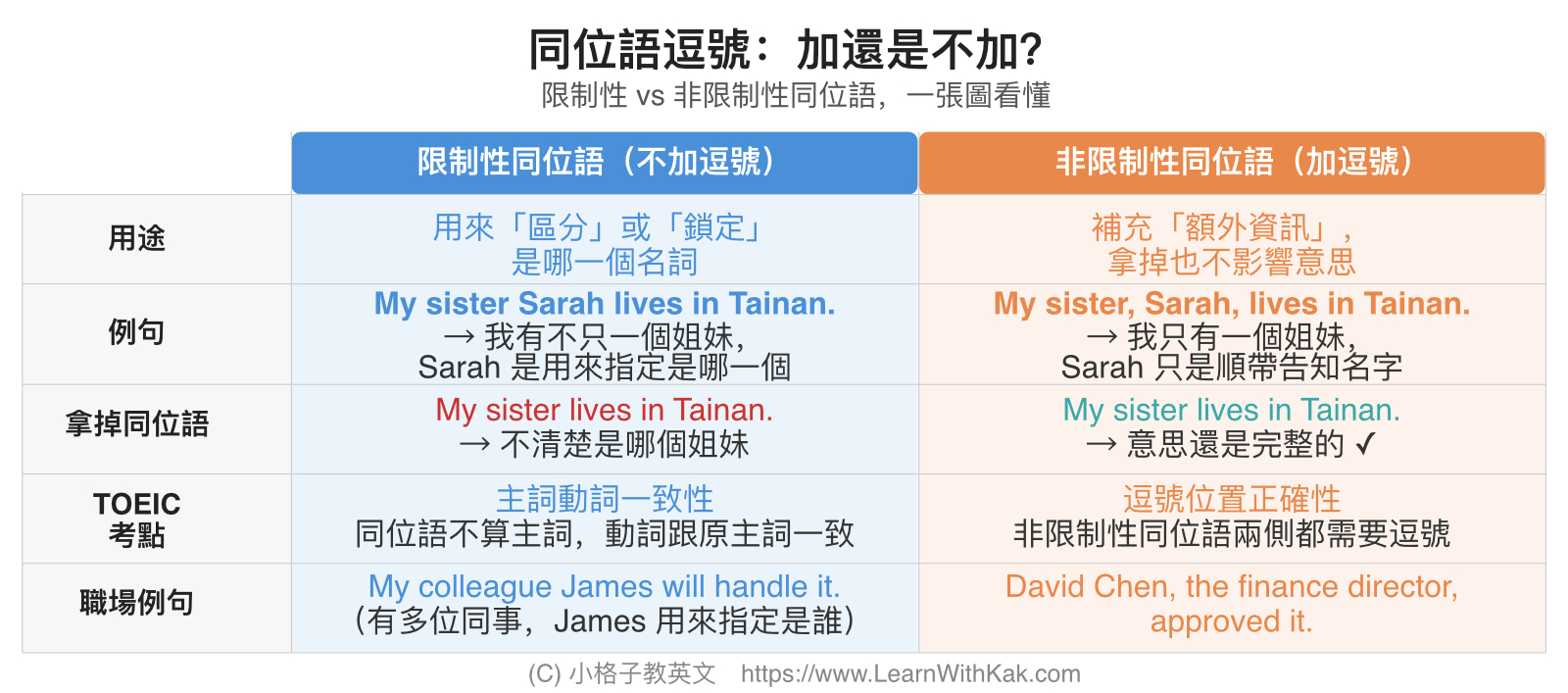
同位語要不要加逗號,是最多人不確定的地方,也剛好是 TOEIC Part 5 的考點之一。
規則其實不複雜:
- 有逗號 = 非限制性同位語。補充的資訊是「額外說明」,就算拿掉,句子意思還是完整的。
- 沒有逗號 = 限制性同位語。補充的資訊是「身份識別」,拿掉的話,讀者不知道在講誰。
舉個例子:
My sister Sarah lives in Tainan.(沒逗號)
意思:我有不只一個姐妹,這裡特別指 Sarah 那個。Sarah 這個名字是用來「限制範圍」的,所以不加逗號。
My sister, Sarah, lives in Tainan.(有逗號)
意思:我只有一個姐妹,她叫 Sarah。Sarah 只是順帶一提,拿掉也沒差,所以加逗號。
(7)
A: Which branch is having the sale?
A: 哪個分店在特賣?
B: The Zhongxiao branch, our flagship store, is having a 30% off event this weekend.
B: 忠孝分店,也就是我們的旗艦店,這週末有七折活動。
(有逗號,因為 “our flagship store” 是補充說明,不是用來區分哪個分店)
(8)
A: I got confused — which policy are you referring to?
A: 我搞混了,你說的是哪個政策?
B: The policy announced last quarter, a cost-cutting measure, affected three departments.
B: 上季公布的那項政策,是一項削減成本的措施,影響了三個部門。
(9)
A: Do you have siblings?
A: 你有兄弟姐妹嗎?
B: I have two brothers. My brother Tom works in finance, and my younger brother Kevin just started college.
B: 我有兩個兄弟。我哥 Tom 在金融業工作,我弟 Kevin 剛開始讀大學。
(Tom 和 Kevin 沒有逗號,因為用名字區分兩個不同的人)
(10)
A: Who sent this report?
A: 這份報告是誰送來的?
B: It was Jenny Liu, our data analyst, who caught the error in the numbers.
B: 是我們的數據分析師 Jenny Liu 發現了數字裡的錯誤。
職場英文裡,同位語用法比你想的更常見
職場英文裡的同位語用法其實隨處可見,只是你可能沒有特別注意到。寫商業 email、做簡報、會議裡介紹人,幾乎都在用這個結構。
商業 email 裡,同位語最常出現在介紹寄件人或某位聯絡人的時候。比起另外寫一句說明,用同位語把資訊整合進同一句話,讀起來更俐落,也更專業。很多人寫職場 email 的時候習慣把所有資訊拆成很多句,但一個簡單的同位語就可以讓句子緊湊很多。
(11)
A: How should I introduce you in the email?
A: 我在 email 裡要怎麼介紹你?
B: Just say “Please meet Jason Wu, our regional sales manager, who will be your main point of contact.”
B: 就說「請認識我們的區域業務經理 Jason Wu,他將是你的主要聯繫人。」
(12)
A: This proposal is getting long. Can we trim it?
A: 這份提案太長了,可以精簡嗎?
B: Sure. Instead of a whole paragraph, just write “We recommend Slack, a team communication tool, for this project.”
B: 可以。與其寫一整段,直接寫「我們建議這個專案使用 Slack,一個團隊溝通工具。」就好。
(13)
A: How do I mention the client’s company in my intro?
A: 我在開頭要怎麼提到客戶的公司?
B: Something like “I’m reaching out on behalf of GreenPath, a sustainability consulting firm based in Taipei.”
B: 類似這樣:「我代表 GreenPath 聯繫您,這是一家位於台北的永續發展顧問公司。」
(14)
A: Can you help me write the speaker bio for the slide?
A: 你能幫我寫簡報上的講者簡介嗎?
B: Sure. How about “Dr. Lin Wei, a neuroscientist at NTU, will share her latest research on sleep and memory.”
B: 好啊。「台大神經科學家林威博士將分享她最新的睡眠與記憶研究。」這樣如何?
TOEIC 怎麼考同位語
多益 Part 5 裡有一種題型,句子中間插了一段同位語,很多人一看就被繞進去,結果動詞選錯。關鍵是:同位語不是主詞,動詞要跟原本的主詞一致,不是跟同位語裡的名詞。另一個考點是逗號,非限制性同位語兩側都要有逗號,漏掉一個就是錯的,Part 6 改錯題裡會出現這種細節。
下面三個例句是這個結構在職場裡的自然使用方式,也是多益閱讀段落裡很常出現的句型:
(15)
A: The report, a summary of three studies, was released last Friday.
A: 那份報告,也就是三項研究的彙整,上週五發布了。
B: Oh good, I’ve been waiting for that. Is it on the shared drive?
B: 太好了,我一直在等。在共用雲端硬碟上嗎?
(16)
A: Did you get a chance to meet the new regional manager?
A: 你有機會見到新的區域經理嗎?
B: Yeah, Kevin Park, a former consultant from Seoul, seems really sharp.
B: 有,Kevin Park,之前在首爾做顧問的,感覺很厲害。
(17)
A: Who’s presenting the findings?
A: 誰要報告研究結果?
B: Dr. Huang, our lead researcher, will walk everyone through the data on Thursday.
B: 我們的首席研究員黃博士,週四會帶大家看數據。
這種句型在多益閱讀文章裡出現的頻率很高,能快速識別同位語的邊界,閱讀速度會快很多。
同位語搭配形容詞子句一起學,會更清楚什麼時候該簡化句子、什麼時候該保留完整結構。
把同位語用進你的英文裡,不用特別練習,寫 email 的時候試著把對方的頭銜或公司放進同一句話,就是最自然的起點。
延伸閱讀:【Reported Speech 用法完整攻略:時態怎麼改?Say 還是 Tell?多益也會考】
如果你喜歡這篇文章的話,可以追蹤我們的 Threads 和 Facebook 唷!