
「我改變主意了」、「他終於想通了」、「我慢慢接受了」——這些在中文裡看起來都是在說「改變想法」,但對應到英文,其實每種說法的語感差很多。改變想法英文到底怎麼說,才能說得精準又自然?這篇帶你把五個最常用的說法一次搞清楚。
Change one’s mind
這是最基本、最常用的說法,中文就是「改變主意」。口語、正式場合都可以用,適用範圍最廣。主詞可以是自己,也可以是別人。
用法是 change + one’s mind,one’s 換成對應的所有格,例如:change my mind、change his mind、change their mind。
(1)
A: I thought you were going to order the pasta.
A: 我以為你要點義大利麵。
B: I changed my mind. The risotto looked too good to pass up.
B: 我改變主意了,燉飯看起來太好吃,沒辦法放棄。
(2)
A: Did you end up applying for that job in Tainan?
A: 你最後有去應徵台南那份工作嗎?
B: No, I changed my mind at the last minute. The commute just didn’t make sense.
B: 沒有,我最後一刻改變主意了,通勤根本不划算。
(3)
A: The client said they wanted the blue version, right?
A: 客戶說他們要藍色版本,對吧?
B: They changed their mind again. Now they want the original design back.
B: 他們又改變主意了,現在說要改回原本的設計。
(4)
A: Are you still thinking of quitting?
A: 你還在考慮辭職嗎?
B: I haven’t changed my mind yet, but I’m giving it one more month.
B: 我還沒改變想法,但我再給自己一個月看看。
職場上也很常聽到主管或同事說 “We may need to change our minds on this approach”(我們可能需要重新考慮這個做法),算是非常實用的一句。
Have a change of heart
Have a change of heart 和 change one’s mind 都是「改變想法」,但情感重量不一樣。Change one’s mind 比較中性,可能只是換了個念頭;have a change of heart 強調的是「心態上的轉變」,通常牽涉到情感、價值觀或重要決定,語氣比較有分量。
在職場英文和正式書信裡,這個說法也很常出現,例如談合約、談合作關係的轉變。
(5)
A: I thought Lisa was dead set against moving abroad.
A: 我以為 Lisa 非常堅決不想出國。
B: She had a change of heart after visiting her friend in Berlin.
B: 她去柏林探訪朋友之後,想法完全不一樣了。
(6)
A: Is the deal still on?
A: 合約還算數嗎?
B: The other party had a change of heart. They’re pulling out.
B: 對方改變心意了,他們要退出。
(7)
A: You said you’d never adopt a dog.
A: 你說你永遠不會領養狗。
B: I had a change of heart after volunteering at the shelter last weekend.
B: 上週末去收容所當志工之後,我完全改觀了。
(8)
A: Did she agree to present at the conference?
A: 她答應在研討會上發表了嗎?
B: She had a change of heart and decided to do it after all.
B: 她改變了想法,最後還是決定要做。
Come around
Come around 是「慢慢被說服、慢慢接受某個想法或立場」的意思,重點在「過程」——不是立刻改變,而是花了時間之後轉變過來的。中文可以理解為「想通了」、「回心轉意」、「慢慢接受了」。
這個說法在職場上特別好用,因為很多時候同事或主管不是當場就接受新提案,而是需要時間消化。Come around 就完美描述這種情況。如果你平常要說服別人,也可以參考 talk into 的用法,兩個搭配起來用非常順。
Come around 的常見結構是 come around to + 名詞/動名詞,表示「接受了某個想法或做法」。
(9)
A: Did your parents ever come around to the idea of you studying design?
A: 你爸媽最後有接受你讀設計這件事嗎?
B: It took two years, but they finally came around.
B: 花了兩年,但他們最後還是想通了。
(10)
A: The team was really resistant to the new system at first.
A: 團隊一開始真的很抗拒新系統。
B: Most of them have come around now that they’ve had some training.
B: 接受培訓之後,大部分的人現在都接受了。
(11)
A: I wasn’t sure if Ken would come around to our proposal.
A: 我不確定 Ken 最後會不會接受我們的提案。
B: He did. He said he needed time to think it over.
B: 他接受了,他說他需要時間好好想清楚。
(12)
A: How do you feel about working weekends now?
A: 你現在對週末上班這件事有什麼感覺?
B: I’ve come around to it. The extra pay actually helps a lot.
B: 我接受了,額外的薪水其實真的很有幫助。
Come to terms with
Come to terms with 和前幾個說法有個關鍵差別:它不是「喜歡了」或「被說服了」,而是「接受了一個不容易接受的事實」。中文可以理解為「與某事和解」、「接受現實」、「想開了」。
語感上帶有一點沉重感,通常用在比較難消化的事情上,例如失去工作、關係結束、計畫失敗。在表達不同意或有保留的情境後,如果最後決定接受,用 come to terms with 語感很自然。
(13)
A: How’s your friend doing after getting laid off?
A: 你朋友被裁員之後還好嗎?
B: He’s slowly coming to terms with it. It wasn’t easy at first.
B: 他慢慢在接受了,一開始真的很難受。
(14)
A: Did you ever come to terms with not getting that promotion?
A: 你最後有接受沒升職這件事嗎?
B: It took a while, but yeah. I realized there’s more to life than a title.
B: 花了一段時間,但有。我發現頭銜不是人生的全部。
(15)
A: She seemed really upset about the project being cancelled.
A: 她看起來對專案被取消非常難過。
B: She’s coming to terms with it. I think she just needed to vent.
B: 她在慢慢接受了,我覺得她只是需要發洩一下。
(16)
A: Are you okay with moving to a smaller apartment?
A: 你可以接受搬去更小的公寓嗎?
B: I’ve come to terms with it. Rent in Taipei isn’t going down anytime soon.
B: 我接受了,台北租金短期內不會降的。
Grow on someone
Grow on someone 是這五個裡面語感最獨特的一個。它不是「被說服」,也不是「接受現實」,而是一種很自然、很緩慢的轉變——從一開始不喜歡,到慢慢覺得還不錯,最後甚至愛上。主詞通常是那個「讓人慢慢喜歡上的東西或人」,不是「感受改變的人」。
Grow on me 中文可以理解為「讓我越來越喜歡」、「我慢慢喜歡上了」。這是和前幾個最不同的地方——你不是主動決定改變想法,而是在不知不覺中被它「征服」了。
結構上:某事/某人 + grow on + 人,過去式是 grew on,現在完成式是 has/have grown on。
(17)
A: Do you like your new neighborhood?
A: 你喜歡新的居住環境嗎?
B: It’s growing on me. The night market nearby is actually really convenient.
B: 我越來越喜歡了,附近的夜市其實超方便。
(18)
A: I remember you said you hated jazz.
A: 我記得你說你討厭爵士樂。
B: It’s grown on me since I started working at that café.
B: 自從我開始在那間咖啡廳工作之後,我慢慢愛上它了。
(19)
A: What do you think of the new manager?
A: 你覺得新主管怎麼樣?
B: She’s growing on me. Her communication style is different, but it works.
B: 我越來越欣賞她了,她的溝通方式很不一樣,但很有效。
(20)
A: You seemed pretty skeptical about remote work at first.
A: 你一開始好像很懷疑遠距工作這件事。
B: It grew on me pretty fast once I stopped commuting two hours a day.
B: 一旦我不用每天通勤兩小時,我很快就愛上它了。
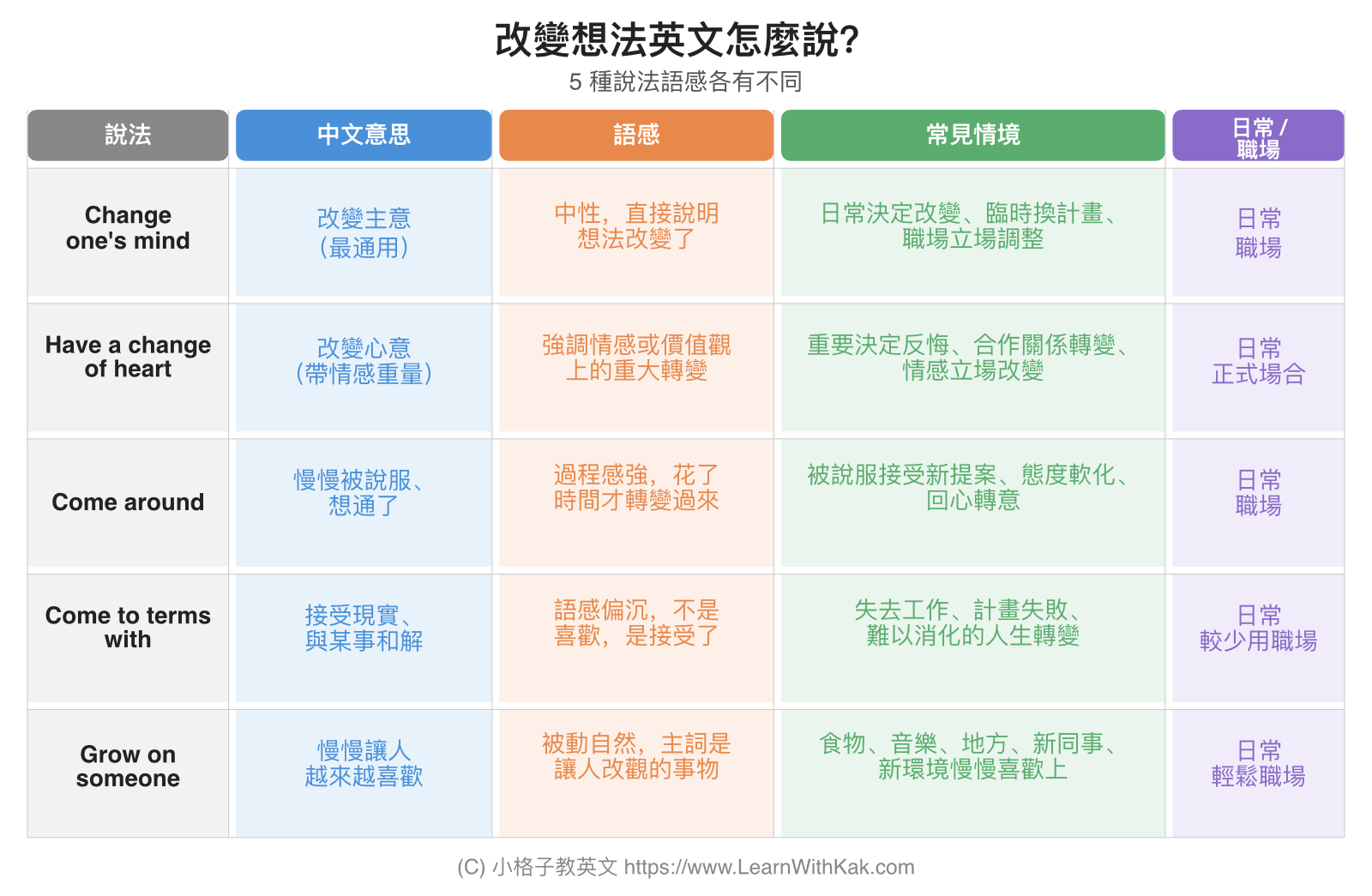
五種說法快速對比
這五個說法都和「改變想法」有關,但語感和使用情境各有不同。簡單整理如下:
Change one’s mind 是最中性、最通用的說法,適合任何日常和職場情境。Have a change of heart 帶有情感重量,通常用在重要決定或立場上的轉變。Come around 強調「花時間慢慢接受」,常見於被說服的情境。Come to terms with 不是喜歡,而是「與不容易接受的現實和解」,語感偏沉。Grow on someone 是最自然、最被動的轉變,從排斥到慢慢喜歡,主詞是那個讓人改觀的事物。
如果想知道在立場不同的情況下如何有禮貌地表達,可以參考 agree to disagree 的用法,在真的無法說服對方、也沒辦法被說服的時候,這句話特別好用。
改變想法這件事不是非黑即白,英文也一樣。選對說法,才能讓對方真正感受到你的語氣和立場。
延伸閱讀:【Talk into 和 Talk out of 差在哪?說服英文完整教學,一個勸做一個勸不做】
如果你喜歡這篇文章的話,可以追蹤我們的 Threads 和 Facebook 唷!