
朋友半夜傳訊息說 “I got stood up last night.”,字面上看起來像「我昨晚站起來了」,但他其實是在抱怨被放鴿子。Stand up 中文最常見的意思確實是「站起來」,可是後面多加一個 for 或 to,或是把人夾到中間,意思就整個翻轉:有時是挺你,有時是當面嗆回去,有時是讓你一個人在餐廳乾等。下面把這幾種用法拆開來講,以後聽到就知道對方在說哪一種。
Stand up 本身就不只一個意思
Stand up 中文最基本的意思就是「站起來」,從坐著或躺著變成站著,這個大家都會。不過在日常對話裡,它還有幾個很常見的延伸用法,沒聽過的話很容易會錯意。
很多公司每天早上都會開一個很短的會,大家站著講各自的進度,講完就散,這種會叫 stand-up meeting,同事之間常常直接簡稱 stand-up。另外,一個說法或理由 stand up,意思是「站得住腳」、經得起檢驗;如果說 won’t stand up,就是這個理由根本說不過去。
還有一個最近很多人在查的:stand-up comedy。Stand-up comedy 中文是「單口喜劇」,也就是一個人拿著麥克風站在台上講笑話的那種表演,台灣也很常直接叫它脫口秀。
所以看到 stand up 中文翻譯的時候,記得先看前後文,它不一定真的在講有人從椅子上站起來。
(1)
A: Whoa, are you okay?
A: 哇,你還好嗎?
B: My leg fell asleep. I stood up too fast.
B: 我腳麻了,站起來太快了啦。
(2)
A: What time is stand-up tomorrow?
A: 明天早上的站會幾點?
B: 9:15, but it never takes more than ten minutes.
B: 九點十五,不過每次都不會超過十分鐘。
(3)
A: Sorry I’m late. Traffic was crazy.
A: 抱歉遲到,路上超塞的。
B: That excuse won’t stand up. You live five minutes away.
B: 這理由站不住腳啦,你家走路五分鐘就到了耶。
(4) My friends and I are going to a stand-up comedy show this Friday.
我跟朋友這週五要去看單口喜劇。
Stand up for:站在你這邊
Stand up for 中文就是「挺」、「幫某人說話」、「捍衛」。有人被欺負、被冤枉,或是被當成軟柿子的時候,你跳出來替他講話,這就是 stand up for。
後面可以接人,例如 stand up for Sarah;可以接自己,stand up for yourself 就是「替自己發聲」,不要什麼都吞下去;也可以接比較抽象的東西,像是 stand up for your rights(捍衛自己的權利)、stand up for what you believe in(堅持自己相信的事)。不管後面接什麼,重點都一樣:你跟對方站在同一邊。
要注意的是,stand up for 的力道比「同意」重很多。如果只是開會時贊成某個提案,用不到這麼重的字,表達「我支持」的英文其實有很多更輕鬆的說法。Stand up for 比較像是在別人面前替對方出頭,通常有一點壓力或風險。
另外還有一個連很多英文老師都不一定會教的用法。有些美國人會說 “Will you stand up for me at my wedding?”,這不是要你在婚禮上幫他吵架,而是請你當伴郎或伴娘。因為伴郎伴娘在婚禮上真的就是站在新人旁邊,跟「站同一邊」的畫面完全一樣。
(5)
A: Did you see what happened in the meeting? Kevin blamed Sarah for the delay.
A: 你有看到剛剛開會的狀況嗎?Kevin 把延誤怪到 Sarah 頭上。
B: Yeah, I stood up for her. That delay was totally on his team.
B: 有啊,我有幫她講話。那個延誤明明就是他們組的問題。
(6)
A: My coworker keeps dumping his work on me.
A: 我同事一直把他的工作丟給我。
B: You need to stand up for yourself. Just tell him you’re swamped.
B: 你要替自己發聲啦,直接跟他說你手上的事已經爆了。
(7)
A: My parents still think switching to design is a waste of my degree.
A: 我爸媽還是覺得我轉去做設計是浪費我的學歷。
B: It’s your life. You have to stand up for what you believe in.
B: 這是你的人生,你覺得對的事就要堅持啊。
(8)
A: Jake, I have a favor to ask. Will you stand up for me at my wedding?
A: Jake,有件事想拜託你,你願意當我的伴郎嗎?
B: Dude, I’d be honored!
B: 兄弟,這是我的榮幸耶!
(9) When a customer started yelling at the new cashier, the manager came out and stood up for her.
客人開始對新來的收銀員大吼的時候,店長馬上出來挺她。
Stand up to:當面頂回去
把 for 換成 to,畫面就從「站在旁邊」變成「站在對面」。Stand up to 中文是「對抗」、「不退讓」、「勇敢面對」,對象通常是比你強勢的人或壓力,例如愛凹人的老闆、一直找你麻煩的同學,或是一群拼命勸酒的朋友。
被人 pick on,也就是被一直故意找麻煩的時候,stand up to them 就是不再忍氣吞聲,直接正面回應。語感上,stand up to 帶著一點勇氣,而且通常是對方比你大、比你兇,或比你有權力,所以做得到的人會被稱讚。
在職場上 stand up to 主管也不一定要拍桌吵架。很多時候是冷靜地說 no,或是用有技巧的方式表達不同意,只要你沒有因為對方的壓力就讓步,就算是 stand up to。
(10)
A: Is your boss asking everyone to work Saturday again? Unpaid?
A: 你老闆又要大家週六加班?還沒有加班費?
B: Yep. This time I’m going to stand up to him.
B: 對啊,這次我要跟他硬起來。
(11)
A: How did you deal with that kid who kept picking on you in middle school?
A: 國中那個一直找你麻煩的同學,你後來怎麼處理?
B: One day I just stood up to him in front of everyone. He never bothered me again.
B: 有一天我直接在大家面前嗆回去,他之後就再也沒來煩我了。
(12)
A: They kept pushing me to take another shot, but I said no.
A: 他們一直叫我再乾一杯,但我拒絕了。
B: Good for you for standing up to them.
B: 你很可以耶,敢跟他們說不。
(13)
A: That guy at the counter was yelling for like five minutes.
A: 櫃檯那個人吼了快五分鐘。
B: I know, but the new girl stood up to him really calmly. I was impressed.
B: 對啊,可是新來的女生超冷靜地回他,我真的很佩服。
(14) It took her two years to finally stand up to her controlling ex.
她花了兩年,才終於敢對控制慾超強的前任說不。
Stand up to 還能形容東西很耐操
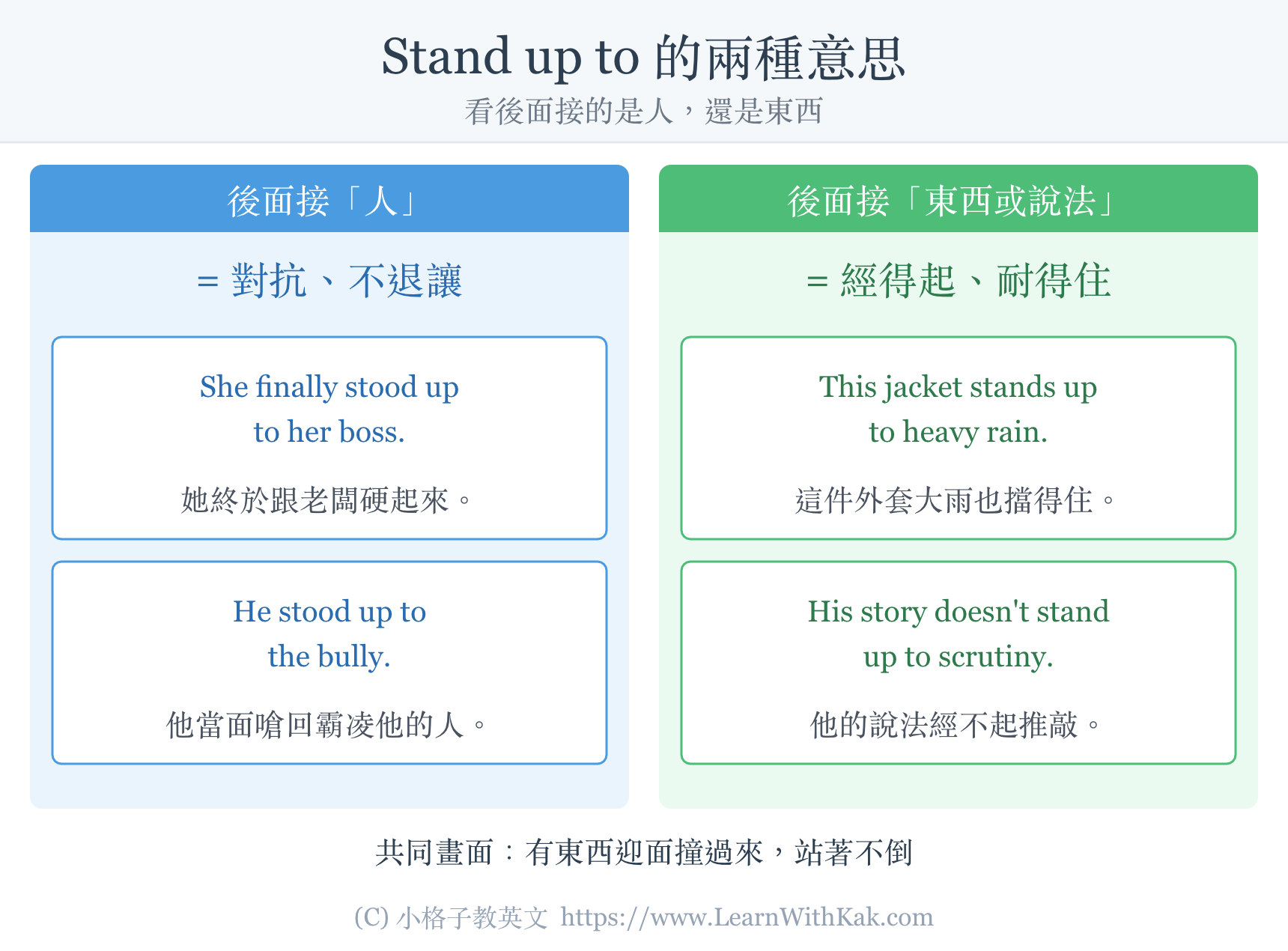
Stand up to 後面不一定要接人。接的如果是摔、雨、時間這類東西,意思就變成「經得起」、「耐得住」,用來形容一個東西很耐用。
接的如果是一個說法或理由,例如 stand up to scrutiny,就是「經得起檢驗」、「禁得起推敲」。反過來說,doesn’t stand up to scrutiny 就是一查就露餡。
其實畫面跟前面一樣:有個東西迎面撞過來,它站著不倒。只是這次站著的不是人,而是一支手機、一件外套,或是某個人的說詞。很多中文解釋只寫到「對抗」,看到 This tent stands up to strong wind 這種句子就會一頭霧水。
(15)
A: You’ve dropped that phone like a hundred times.
A: 你那支手機至少摔過一百次了吧。
B: I know. This thing can stand up to anything.
B: 對啊,這支根本怎麼摔都摔不壞。
(16)
A: Is this jacket good for hiking in the rain?
A: 這件外套適合下雨天爬山嗎?
B: Definitely. It stands up to heavy rain, no problem.
B: 當然,大雨也擋得住,完全沒問題。
(17)
A: He says he was home all night, but his car was parked outside the bar.
A: 他說他整晚都在家,可是他的車停在酒吧外面。
B: Yeah, his story doesn’t really stand up to scrutiny.
B: 對啊,他的說法根本經不起推敲。
(18) These pans are pricey, but they stand up to years of daily cooking.
這幾個鍋子雖然不便宜,但天天煮也能用好多年。
For 還是 to,看你站哪一邊
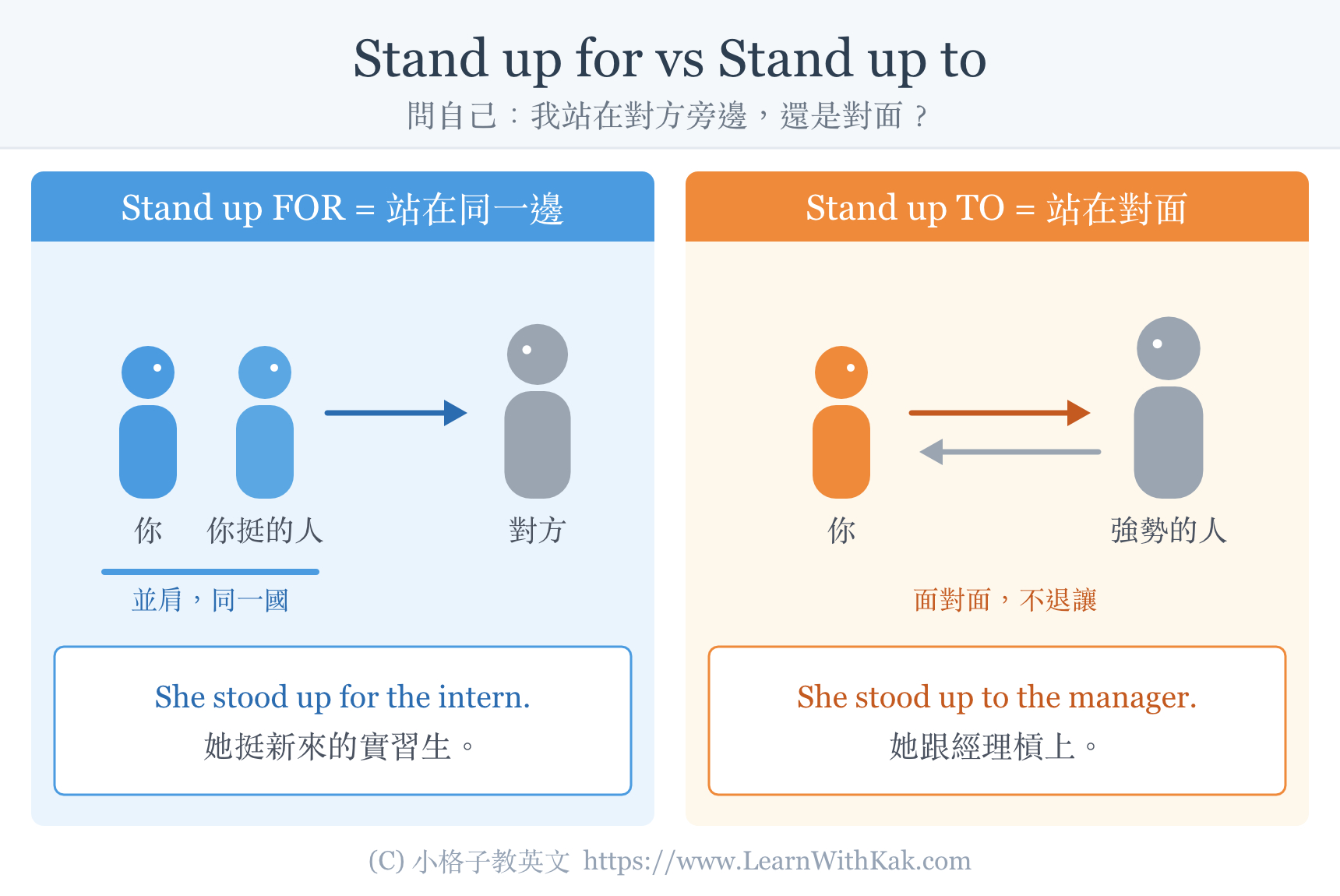
如果還是會搞混,有個很簡單的判斷方法:先問自己「我是站在對方旁邊,還是對面?」
站在旁邊,跟對方同一國,就用 for;站在對面,正面跟對方槓上,就用 to。所以 stand up for 中文記成「站同一邊」,stand up to 記成「站對面」,基本上就不會用反。
有趣的是,這兩個常常在同一個場景一起出現。有人被欺負的時候,你挺被欺負的那個人,是 stand up for;你同時頂回欺負人的那個人,是 stand up to。對象不一樣,介系詞就跟著換。這跟 accountable to 和 accountable for 的道理很像,介系詞換一個,整句話的重點就跑到另一個人身上。
最常見的錯誤是把「權利」接在 to 後面。你要捍衛權利,是站在權利那一邊,不是要跟權利對抗,所以一定是 for。
(19)
A: Why is everyone talking about Mia today?
A: 大家今天怎麼都在講 Mia?
B: The manager was yelling at the new intern, and Mia stood up to him.
B: 經理在罵新來的實習生,Mia 直接頂回去。
A: So she stood up for the intern. That’s awesome.
A: 所以她是在挺實習生,也太帥了吧。
(20) He always stands up for his teammates.
他一定會挺自己的隊友。
(21) He finally stood up to the coach who kept benching him for no reason.
教練一直莫名其妙不讓他上場,他終於跟教練槓上了。
(22) 錯誤用法:I’ll stand up to my rights.
正確用法:I’ll stand up for my rights.
我會捍衛自己的權利。
少一個 up,意思差很多
把 up 拿掉變成 stand for,意思又是另一回事了。Stand for 中文主要有三個意思:「代表」,最常用在縮寫;「主張」、「理念」,講一個人或品牌在乎什麼;還有用在否定句裡的「不能容忍」。
第三個用法跟前面的 stand up to 有點像,但還是有差。I won’t stand for this 是在表態「這個我不接受」,比較接近 put up with(忍受)的否定說法;stand up to 則是真的站出來,跟對方正面對抗。一個是嘴上畫底線,一個是實際行動。
(23)
A: My boss keeps writing “EOD” in his emails. What does that stand for?
A: 我老闆 email 一直寫 EOD,那是什麼的縮寫?
B: End of day. He wants it before you leave.
B: End of day 啦,他要你下班前交。
(24)
A: Why do you like this brand so much?
A: 你為什麼這麼喜歡這個牌子?
B: I like what they stand for. They actually care about the environment.
B: 我喜歡他們的理念,他們是真的有在顧環保。
(25)
A: Did the manager say anything about the fight?
A: 經理對那次吵架有說什麼嗎?
B: Yeah, he said he won’t stand for that kind of behavior in the office.
B: 有,他說辦公室裡絕對不容許那種行為。
(26) She won’t stand for anyone talking trash about her friends.
誰敢講她朋友壞話,她絕對不會讓對方好過。
Stood up 不一定是站起來
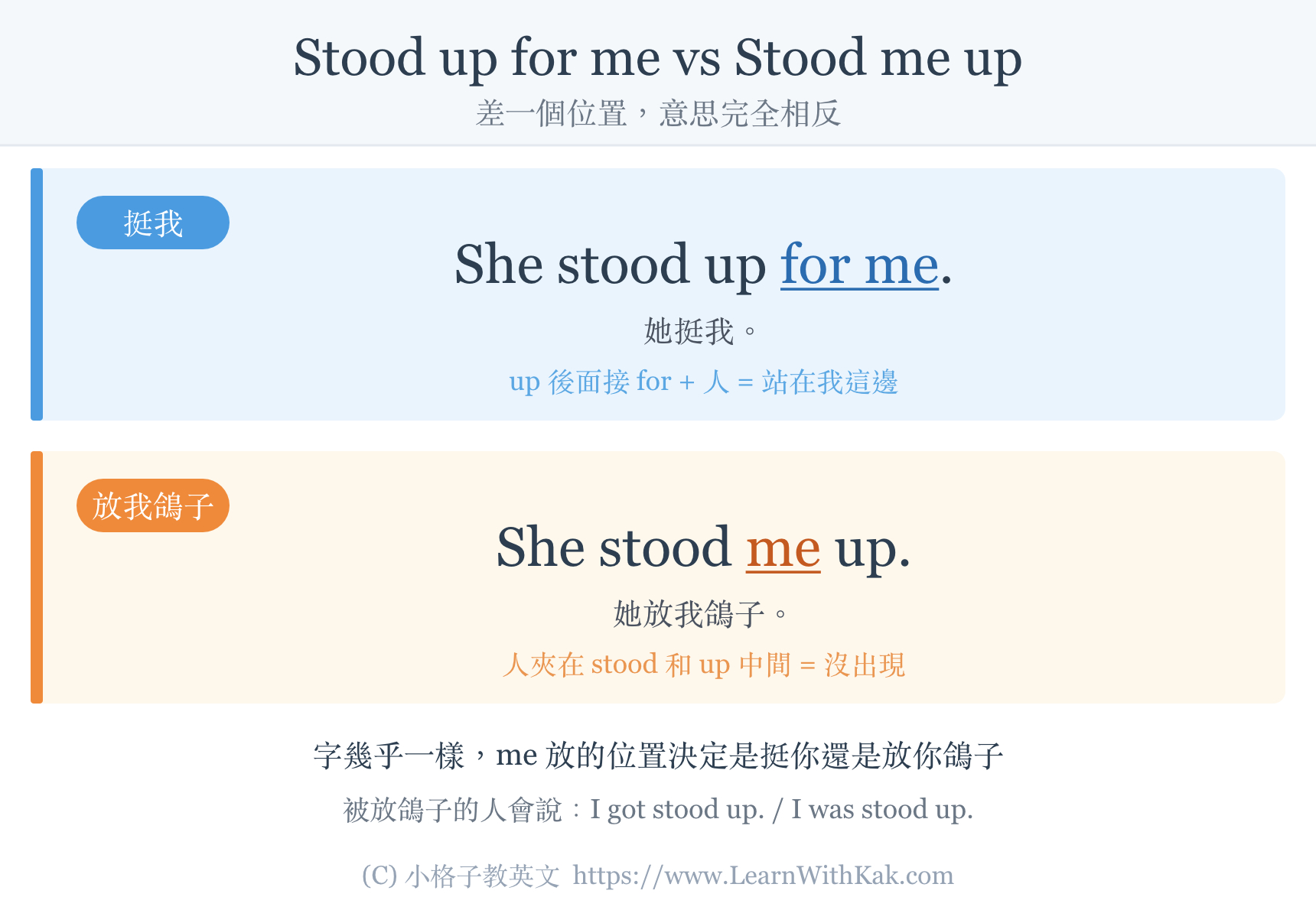
Stood up 中文最容易被誤會的地方,就是它可以是「放鴿子」。關鍵在人放在哪裡:如果 stand 跟 up 中間夾了一個人,stand someone up,意思就是跟對方約好了卻沒出現,讓對方白等。最常用在約會,但約朋友、約客戶都可以用。
被放鴿子的那一方會說 I got stood up 或 I was stood up。所以朋友說 I got stood up last night,請不要回他「站起來很好啊」。
這邊有個超容易看錯的語序陷阱。She stood up for me 是「她挺我」,She stood me up 是「她放我鴿子」,字幾乎一模一樣,只差 me 放的位置,意思卻完全相反。
還有一個常被混在一起的說法是 bail on。Bail on 比較像是臨時說不來,至少有通知一聲;stand someone up 則是連通知都沒有,時間到了人就是沒出現,所以聽起來更讓人火大。
(27)
A: How was your first date?
A: 第一次約會怎麼樣?
B: There was no date. I waited an hour and got stood up.
B: 根本沒約成,我等了一個小時,被放鴿子了。
(28)
A: Where’s Leo? I thought he was coming.
A: Leo 呢?他不是說要來?
B: He stood us up again. Not even a text.
B: 他又放我們鴿子了,連個訊息都沒有。
(29)
A: How did the client meeting go?
A: 跟客戶開會還順利嗎?
B: They stood us up. We sat in the conference room for forty minutes.
B: 他們根本沒出現,我們在會議室乾等了四十分鐘。
(30)
A: So Mike stood up for you at the party?
A: 所以在派對上 Mike 有挺你喔?
B: No, Mike stood me up. He never showed.
B: 沒有啦,Mike 是放我鴿子,他根本沒來。
(31) Amy bailed on us the night before, so technically she didn’t stand us up.
Amy 前一天晚上就說不來了,所以嚴格來說不算放我們鴿子。
Stick up for、stand by 也是挺
想表達「挺某人」,除了 stand up for,還有幾個美國人很常講的說法。
Stick up for 跟 stand up for 意思幾乎一樣,都是幫某人說話,但聽起來更口語、更生活化,很常用在家人、朋友之間,例如從小幫你擋爸媽怒氣的兄弟姊妹。
Stand by someone 的重點則不太一樣。它不是指在某個當下替人出頭,而是不管發生什麼事都陪在對方身邊,比較長期,很常出現在失戀、生病、失業這種低潮的時候。
還有一個更口語的說法是 I’ve got your back,意思是「有我在」、「我罩你」,朋友之間、同事之間都超常聽到。
(32)
A: Thanks for always sticking up for me when Mom got mad.
A: 謝謝你每次媽生氣的時候都幫我講話。
B: That’s what big sisters are for.
B: 姊姊本來就是要做這個的啊。
(33)
A: I can’t believe she just left like that.
A: 我不敢相信她就這樣走了。
B: I know it hurts, but I’ll stand by you, okay?
B: 我知道很痛,但我會陪著你,好嗎?
(34)
A: I’m so nervous about the presentation.
A: 簡報我超緊張的。
B: Don’t worry, I’ve got your back. If they ask anything tricky, I’ll jump in.
B: 別擔心,有我在。他們如果問什麼刁鑽的問題,我會幫你接。
(35) When people started trolling her online, her friends stuck up for her right away.
她在網路上被酸的時候,朋友馬上就跳出來幫她說話。
常見問題
Stand up 和 stand-up 差在哪?
Stand up 是動詞片語,例如 Please stand up(請站起來)。中間加了連字號的 stand-up(也常寫成 standup)是形容詞或名詞,例如 stand-up comedy、stand-up meeting,或直接把站會叫做 stand-up。
(36) Let’s talk about it after stand-up.
我們站會開完再聊。
Stood up 中文是站起來還是放鴿子?
看人放在哪裡。後面沒有接人,或 up 後面才接其他東西,通常就是「站起來」;如果人夾在 stood 和 up 中間,或是用 I got stood up 這種被動說法,就是放鴿子。
(37) Everyone stood up when the bride walked in.
新娘進場的時候,大家都站了起來。
Stand up to 中文只有對抗的意思嗎?
不只。後面接人的時候是對抗、不退讓;後面接天氣、磨損或檢驗的時候,意思是「經得起」,用來形容東西很耐用,或說法禁得起推敲。
(38) Will this tent stand up to strong wind?
這頂帳篷擋得住強風嗎?
Stick up for 和 stand up for 可以互換嗎?
大部分情況可以,兩個都是幫某人說話。Stick up for 比較口語,朋友家人之間很常用;如果講的是權利、原則這種比較正式的東西,用 stand up for 會比較自然。
(39) My brother always sticks up for me.
我哥一直都很挺我。
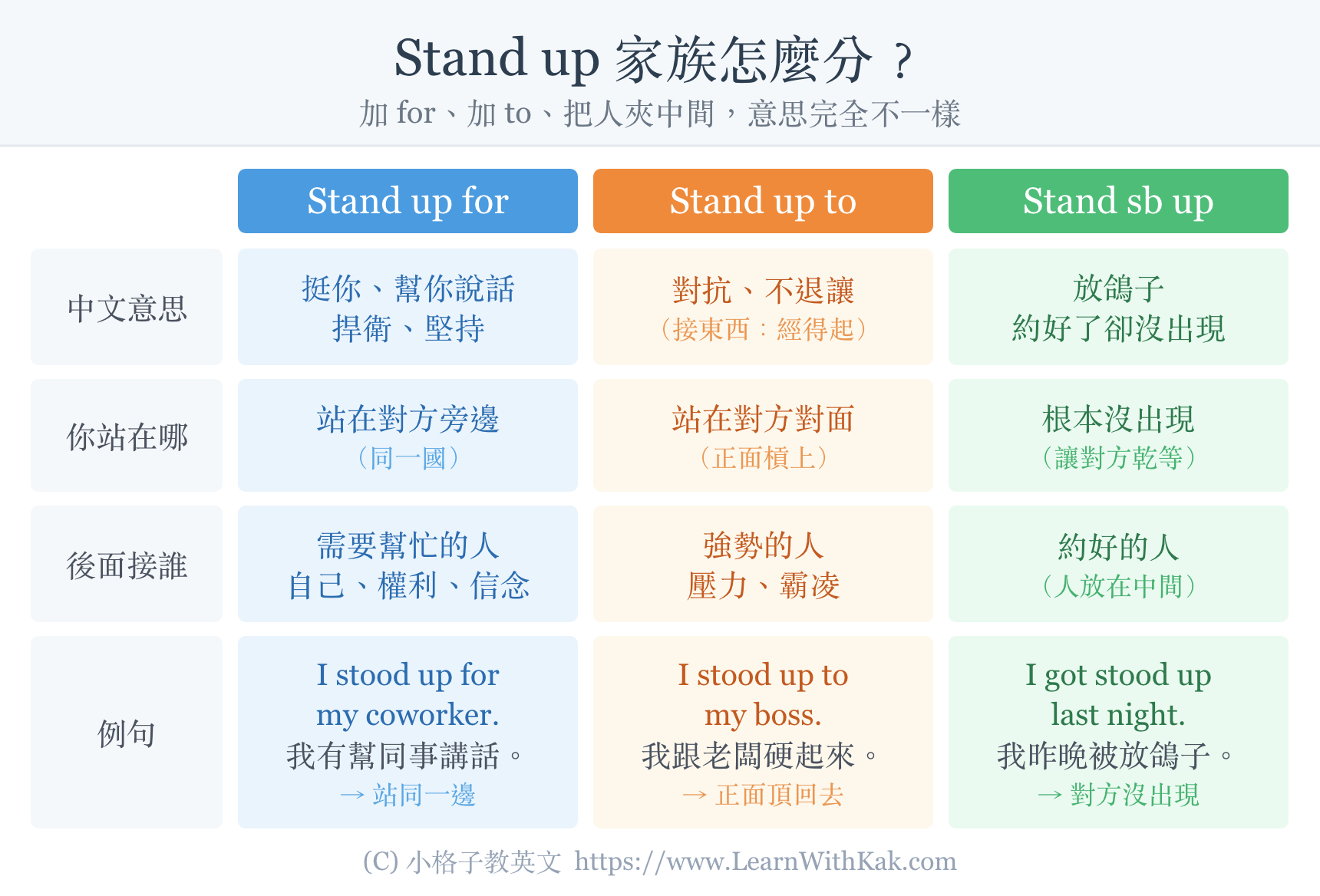
Stand up 中文到底是什麼意思,看的是後面接什麼、人放在哪裡。加 for 是挺你,加 to 是頂回去,人夾在中間就是放鴿子。下次朋友傳 “I got stood up”,先安慰他比較實在。
延伸閱讀:【Put up with 中文是「忍受」,Put up to 是「慫恿」,一個字差超多,別搞混啦!】
如果你喜歡這篇文章的話,可以追蹤我們的 Threads 和 Facebook 唷!