
I hope this email finds you well 大概是職場上最常見的 email 開場白,客戶寫、主管寫、廠商也寫,打開信箱十封有八封都長這樣。這句沒有錯,也很有禮貌,但用久了就很像罐頭訊息,收件人的眼睛通常直接跳過,寫的人自己也覺得有點膩。這篇從這句的中文意思講起,再聊收到要怎麼回、哪些寫法其實是錯的,最後整理 10 種依熟悉度挑選的替代說法,寫給客戶或熟同事都用得上。
I hope this email finds you well 中文是什麼意思
I hope this email finds you well 中文意思就是「希望你一切安好」,口語一點可以想成「近來好嗎」。
字面上拆開來看,find 在這裡不是「找到」,而是「信寄到的時候,發現你處於某種狀態」。所以整句的意思是:希望這封信到你手上的時候,你一切都好。
以美國人的角度來說,這句就跟中文信裡的「您好」差不多,禮貌、安全、不會出錯,但大家都知道它是客套話。收件人不會真的停下來想自己好不好,通常眼睛掃過就直接看下一行了。
(1)
A: I hope this email finds you well. I’m reaching out about next month’s shipment schedule.
A: 希望你一切安好。我寫信是想問一下下個月的出貨時程。
B: Thanks for checking in. I’ve attached the latest schedule.
B: 謝謝你來信,最新的時程表我放在附件了。
(2)
I hope this email finds you well and that you’re settling into the new office.
希望你一切都好,新辦公室也待得習慣。
(3)
A: Do people actually expect a reply to “I hope this email finds you well”?
A: 收到這句,對方真的期待你回嗎?
B: Not really. It’s basically a polite way of saying hi.
B: 不太會啦,它其實就是比較禮貌的打招呼而已。
(4)
A: Why does every email I get start with “I hope this email finds you well”?
A: 為什麼我收到的每封 email 都用這句開頭?
B: Because it’s safe. No one’s ever been offended by it.
B: 因為很安全啊,從來沒有人因為這句不高興過。
什麼時候用還 OK,什麼時候該換掉
這句會變成商業 email 開頭的預設句,就是因為它什麼場合都不太會出錯。第一次寫信給客戶、寄給不熟的廠商、收件人是高層主管,或是很久沒聯絡的合作對象,用這句都很合理。
但有幾種情況換掉會比較好。像是一天來回好幾封信的同事,早上才剛聊過,下午又寫一次「希望你一切安好」,就有點像在演戲。在 Slack、Teams 這種即時訊息裡用也會很怪,太正式了。另外,如果是在回對方的信,對方明明幾分鐘前才寫信給你,直接謝謝對方的回覆會自然很多。
(5)
A: Should I start my email to the new client with “I hope this email finds you well”?
A: 寫給新客戶的 email,開頭可以用這句嗎?
B: Sure. It’s your first time reaching out, so it sounds polite.
B: 可以啊,這是你第一次聯絡對方,聽起來很有禮貌。
(6)
A: I already emailed Jason this morning. Do I need the “hope this finds you well” line again?
A: 我早上已經寄過信給 Jason 了,這封還要再寫一次那句嗎?
B: Nah, skip it. You literally talked to him three hours ago.
B: 不用啦,你三個小時前才跟他講過話欸。
(7)
A: Hey, I hope this message finds you well!
A: 嘿,希望你一切安好!
B: Uh, it’s me. We sit right next to each other.
B: 呃,是我啦,我們座位就在隔壁欸。
在 Slack 上跟隔壁同事這樣寫,對方大概只會覺得你在搞笑。
(8)
Thanks for your quick reply. I’ve attached the revised quote.
謝謝你這麼快回覆,修改後的報價我放在附件了。
回信的時候,直接謝謝對方的回覆,比再寫一次「希望你一切安好」自然很多。
Finds 還是 find?這幾種寫法要注意
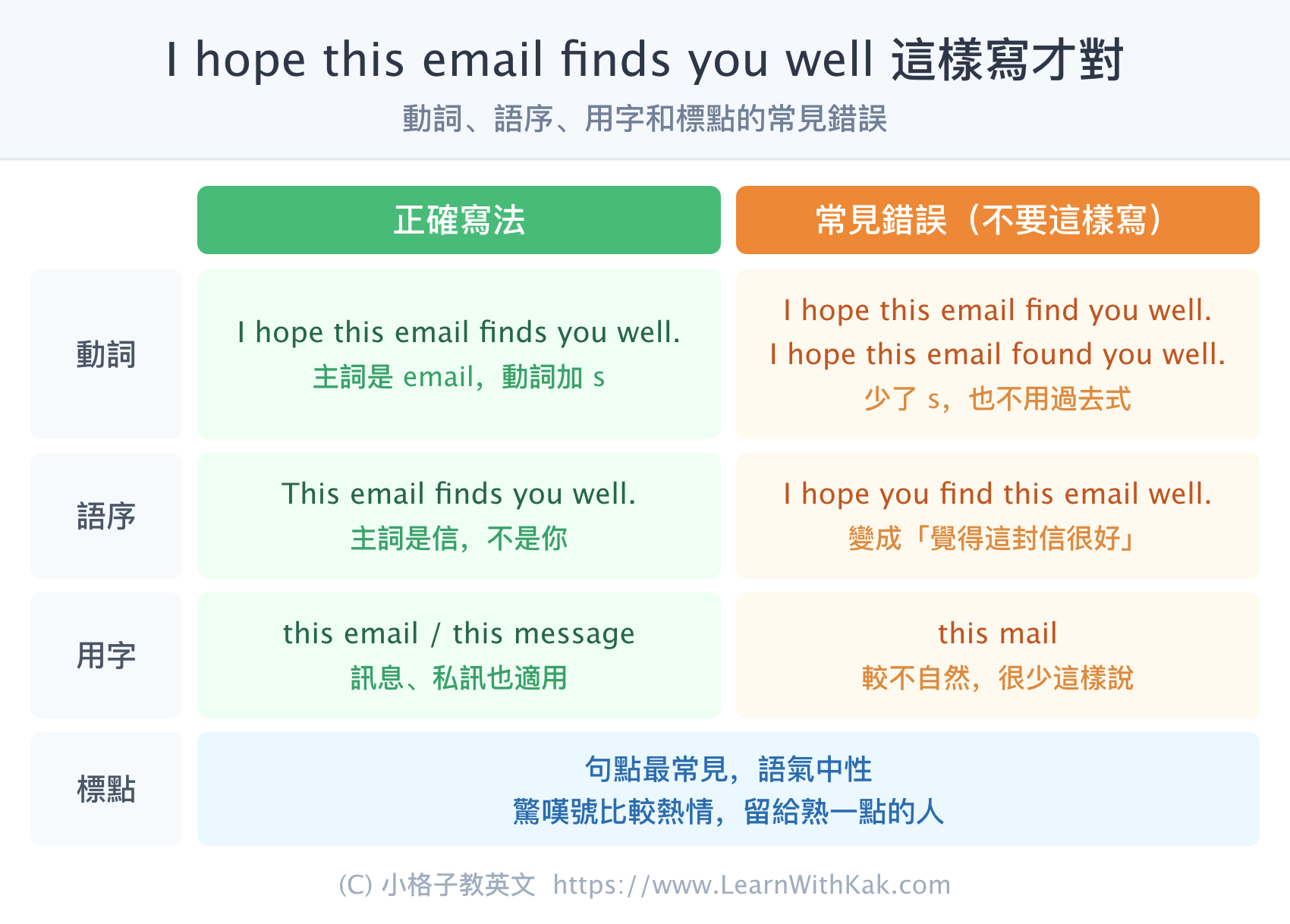
這句最常見的錯誤就在動詞。主詞是 this email,第三人稱單數,所以一定是 finds。寫成 I hope this email find you well 是錯誤的寫法,老外一看就知道少了 s。
時態用現在式就好。I hope this email found you well 也是錯誤寫法,因為你寫信的當下,信還沒寄到對方手上。
還有一種是語序整個搞反:I hope you find this email well,這同樣是錯誤寫法,意思會變成「希望你覺得這封信寫得很好」,跟原本的祝福完全沒關係。
email 也可以換成 message,傳訊息、LinkedIn 私訊都適用。至於 this mail,英文的 mail 比較常指整體的郵件,口語上很少這樣說,建議直接用 email 或 message。
標點的部分,後面接句點最常見,語氣中性;想多一點熱情可以用驚嘆號,但比較適合已經有點熟的對象。用公司名義寄信,例如活動通知或客服信,就會把 I 換成 We,這跟代表公司寫 email 的邏輯一樣,主詞是整個團隊。
(9)
A: Wait, is it “find” or “finds”?
A: 等等,是 find 還是 finds?
B: “Finds.” The subject is “this email,” so you need the S.
B: finds,主詞是 this email,所以要加 s。
(10)
We hope this email finds you well. Our office will be closed on Monday for the holiday.
希望您一切安好。本公司週一因國定假日休息。
(11)
I hope this message finds you well. I just wanted to confirm our call on Thursday.
希望你一切都好,想跟你確認一下週四的電話會議。
(12)
A: Can I put an exclamation mark after it?
A: 這句後面可以加驚嘆號嗎?
B: You can, but it sounds pretty cheerful. I’d save it for people you already know.
B: 可以,但會顯得很熱情,我會留給已經認識的人。
收到這句,要怎麼回
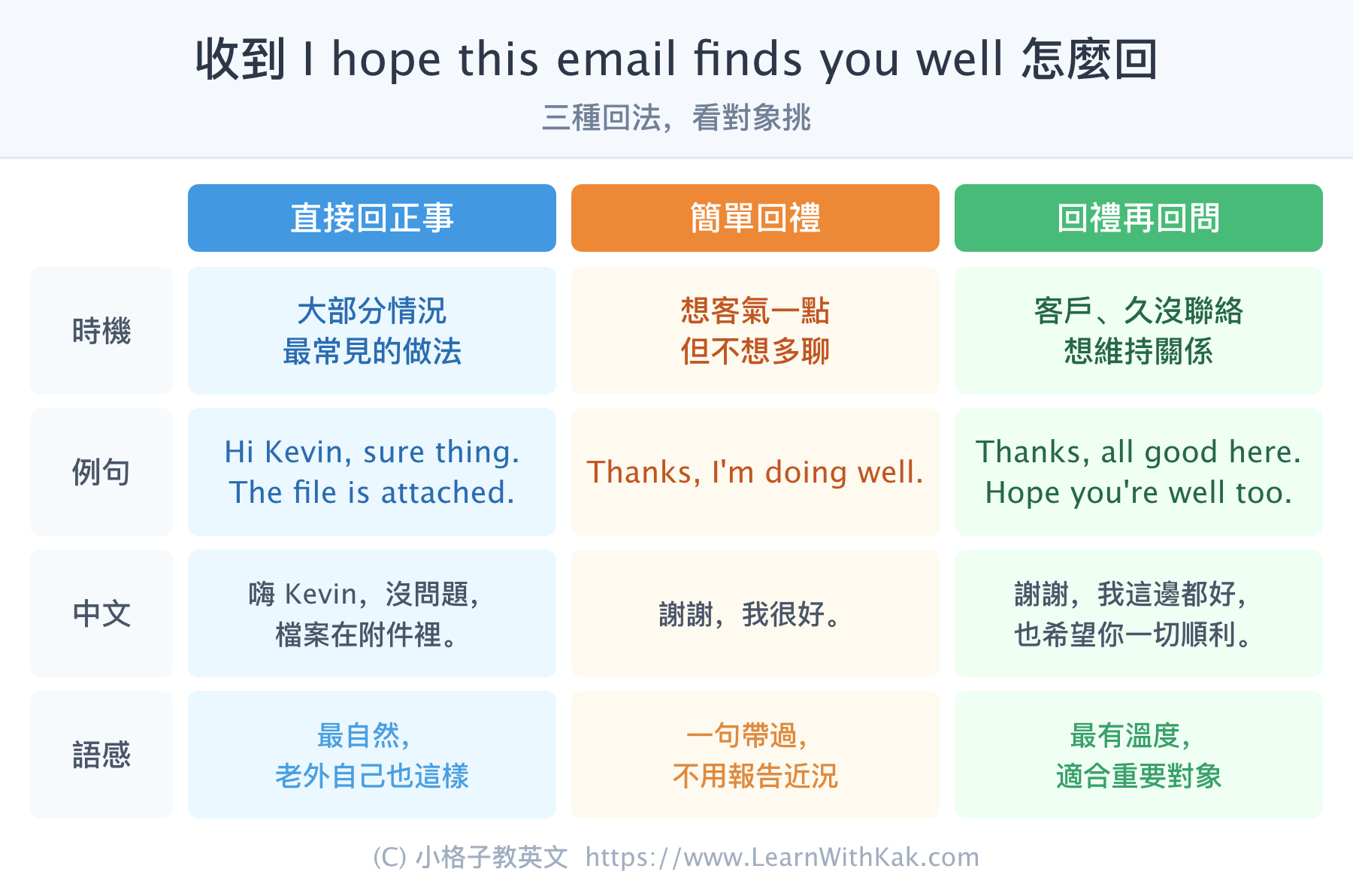
老實說,大部分時候不用特別回。直接回應對方信裡的正事,就是最自然的做法,老外自己也都這樣。
如果你想客氣一點,在開頭放一句簡短的回禮就好,例如 Thanks, I’m doing well. 或 Hope you’re well too.,不用真的報告近況。對方寫的如果是 Hope you are well,回覆方式也一樣,一句帶過就夠了,重點還是放在信裡要處理的事情。
(13)
A: I hope this email finds you well. Could you send me the updated contract?
A: 希望你一切安好。可以把更新後的合約寄給我嗎?
B: Hi Kevin, sure thing. The file is attached.
B: 嗨 Kevin,沒問題,檔案在附件裡。
(14)
A: Hope you are well! Just checking if the samples arrived.
A: 希望你一切都好!想確認一下樣品到了沒。
B: Thanks, all good here. Yes, they arrived yesterday.
B: 謝謝,我這邊都好。有喔,昨天就收到了。
(15)
A: I hope this email finds you well.
A: 希望你一切安好。
B: I’m doing well, thank you. I hope you’re having a great week too.
B: 我很好,謝謝。也希望你這週過得很順利。
(16)
A: She wrote “I hope you are well.” Do I have to tell her how I’m doing?
A: 她寫了「I hope you are well」,我要跟她說我最近怎麼樣嗎?
B: Nope. A quick “Thanks, I’m well” is plenty.
B: 不用,簡單回一句「謝謝,我很好」就夠了。
寫給客戶或第一次聯絡的替代說法
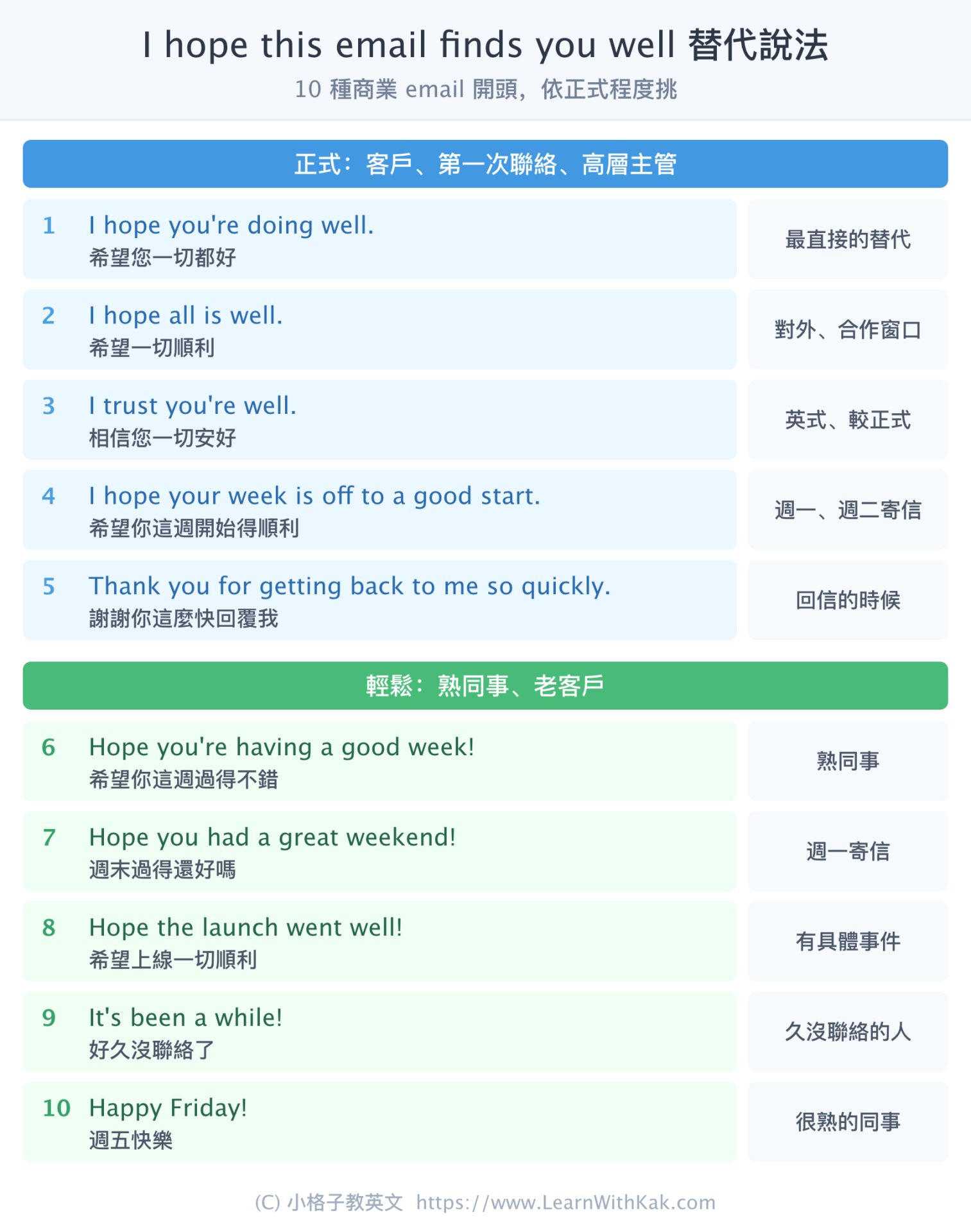
下面這五句是比較正式的 I hope this email finds you well 替代說法,語氣一樣有禮貌,但不會像每封信都長得一模一樣的開場白。
(17)
A: Hi Ms. Chen, I hope you’re doing well. I’m following up on the quote we sent last week.
A: 陳小姐您好,希望您一切都好。想跟您確認我們上週寄出的報價。
B: Thanks, Daniel. I’m still going over it with my team.
B: 謝謝你,Daniel,我還在跟團隊一起看。
這句是最直接的替代說法,意思幾乎一樣,但讀起來比較像真人在講話。
(18)
I hope all is well with you and the team. I wanted to share a quick update on the project.
希望你和團隊一切順利,想跟你們更新一下專案進度。
加上 and the team,寫給合作公司的窗口特別適合。
(19)
I trust you’re well. Please find the agenda for Monday’s meeting attached.
相信您一切安好,週一會議的議程請見附件。
這句比較英式,也比較正式,跟英國、香港或新加坡的客戶往來時很常看到。美國人用得比較少,聽起來會有點老派。
(20)
A: I hope your week is off to a good start. Do you have time for a quick call on Wednesday?
A: 希望你這週開始得順利。週三有空簡短通個電話嗎?
B: It has, thanks! Wednesday afternoon works for me.
B: 很順利,謝謝!週三下午我可以。
週一或週二寄信用這句很自然,而且馬上就能接到正題。
(21)
A: Thank you for getting back to me so quickly. I’ve made the changes you suggested.
A: 謝謝你這麼快回覆我,我已經照你的建議修改了。
B: Great, I’ll take a look this afternoon.
B: 太好了,我下午來看。
回信的時候,用感謝對方回覆取代客套的開場,有禮貌又不多餘。
寫給熟同事的替代說法
跟每天合作的同事或很熟的老客戶,開頭可以輕鬆一點。最好用的技巧是加入具體內容,提到週末、提到對方剛完成的專案,都比空泛的「希望你一切安好」有溫度很多。
(22)
A: Hope you’re having a good week! Just a reminder that the report is due Friday.
A: 希望你這週過得不錯!提醒一下報告週五要交喔。
B: Thanks for the reminder. I’m almost done.
B: 謝謝提醒,我快完成了。
先暖場再接一句提醒對方的話,聽起來就不會像在催人。
(23)
A: Hope you had a great weekend! Did you get a chance to look at the slides?
A: 週末過得還好嗎?你有空看一下簡報了嗎?
B: I did! I left a few comments in the file.
B: 看了!我在檔案裡留了一些意見。
(24)
A: Hope the launch went well! I saw the announcement on LinkedIn.
A: 希望上線一切順利!我在 LinkedIn 上看到公告了。
B: It did, thanks! It was a crazy week, but everything went smoothly.
B: 很順利,謝謝!那週超忙,但一切都很順。
有具體事件的祝福,對方會知道你真的有在關注,這種開頭最有溫度。
(25)
A: It’s been a while! Hope things are going well on your end.
A: 好久沒聯絡了!希望你那邊一切都好。
B: They are! Good to hear from you. What’s up?
B: 都很好!很高興收到你的消息,怎麼了嗎?
(26)
A: Happy Friday! Here are the numbers you asked for.
A: 週五快樂!這是你要的數字。
B: You’re the best. Have a good weekend!
B: 你最棒了,週末愉快!
這句只適合很熟的同事,寫給客戶就太隨興了。
商業 email 開頭不一定要暖場
在美國職場,很多人寫信根本不暖場,第一句就直接講重點。對方每天收幾十封信,你越快說明來意,對方越感謝你。這種直接進正題的商業 email 開頭,寫給同事或客戶都適用。
如果想清楚點出這封信在講哪件事,也可以用 regarding 這類點題句型,語氣會再正式一點。
(27)
A: I’m writing to follow up on the proposal we sent last Tuesday.
A: 我寫信是想跟進我們上週二寄出的提案。
B: Thanks for following up. We should have a decision by the end of the month.
B: 謝謝你來信確認,我們月底前應該會有結論。
(28)
A: Quick question: do you have the latest sales numbers for Q3?
A: 快速問一下,你有第三季最新的業績數字嗎?
B: Yep, I’ll send them over in a few minutes.
B: 有,我等一下寄給你。
(29)
A: Just wanted to loop you in on the budget discussion we had this morning.
A: 想把你加進來,同步一下我們今天早上討論的預算。
B: Thanks for adding me. I’ll read through the thread.
B: 謝謝你加我,我來看一下前面的信。
Loop someone in 就是把某人拉進這個話題,在職場 email 裡超常見。
(30)
A: Circling back on my email from last week. Did you get a chance to look it over?
A: 想再確認一下我上週寄的信,你有空看了嗎?
B: Sorry, it’s been a crazy week. I’ll get back to you by tomorrow.
B: 抱歉,這週超忙,我明天前回你。
對方遲遲沒回信,用 circling back 這種禮貌的跟進說法,比直接問「你怎麼還沒回」舒服多了。
(31)
I’m reaching out about the partnership we talked about at the trade show.
我寫信是想聊聊我們在展覽上談到的合作。
結尾怎麼收比較自然
開頭換掉之後,結尾也可以跟著調整。署名前最常見的是這三種 regards:
- Best regards:最通用,正式但不冷淡,對外 email 首選
- Kind regards:比 Best regards 稍微暖一點,有往來一陣子之後很適合
- Warm regards:最有溫度,適合很熟的合作對象
想輕鬆一點,也可以用 All the best 或 Take care 收尾。正式的信常會寫 I look forward to hearing from you,這裡的 to 是介系詞,後面要接 hearing,這也是多益很愛考的 look forward to 陷阱。
(32)
A: Let me know if you have any questions. Happy to help!
A: 有任何問題再跟我說,很樂意幫忙!
B: Will do, thanks!
B: 好,謝啦!
(33)
A: Thank you for your time. I look forward to hearing from you.
A: 謝謝您撥空,期待您的回覆。
B: Thanks for your patience. I’ll get back to you by Friday.
B: 謝謝你耐心等候,我週五前回覆你。
(34)
A: Let me know what you think when you get a chance.
A: 有空的時候再跟我說你的想法。
B: Sure, I’ll take a look over the weekend.
B: 好,我週末來看看。
(35)
A: Talk soon!
A: 再聊!
B: Sounds good. Take care!
B: 好喔,保重!
(36)
A: Should I sign off with “Best regards” or “Kind regards”?
A: 結尾要寫 Best regards 還是 Kind regards?
B: Either works. “Best regards” is the safe default, and “Kind regards” feels a bit warmer.
B: 都可以。Best regards 最保險,Kind regards 稍微溫暖一點。
I hope this email finds you well 本身沒有錯,只是不必每封信都用。看對象、看熟不熟,換一句更有溫度的開頭,對方讀起來的感覺就差很多。
延伸閱讀:【All the best 中文意思和用法:Email 結尾、當面道別、收到怎麼回,還有拒絕信裡的那一句】
如果你喜歡這篇文章的話,可以追蹤我們的 Threads 和 Facebook 唷!