
忽略英文怎麼說,不只是查一個字就結束的事。Ignore、overlook、neglect、disregard——光是這幾個字,語感就差很多,用在職場上更是不能亂換。這篇把這幾個容易混淆的說法全部拆開來看,順便帶上幾個實用片語。
Ignore
先從最熟悉的 ignore 開始。Ignore 指的是故意不理、主動無視,背後有一種「我知道你在,但我選擇不回應」的感覺。這是一個主動的決定,不是不小心沒看到。
日常生活很常用,比如滑手機看到前任傳來訊息直接不讀,或是開會有人提出不成熟的想法,主管直接跳過不回應。這些都是 ignore 的典型情境。
(1)
A: Did you see my message this morning?
A: 你有看到我今天早上傳的訊息嗎?
B: I saw it, but honestly I just ignored it. I needed some time to think before responding.
B: 我有看到,但老實說我直接跳過了。我需要一點時間想清楚再回。
(2)
A: Why didn’t you say anything when Kevin brought up that idea in the meeting?
A: 凱文在會議上提出那個想法的時候,你為什麼都沒說話?
B: Because it wasn’t worth addressing. Sometimes the best move is to just ignore it.
B: 因為根本不值得回應。有時候最好的做法就是直接不理。
(3)
A: The client keeps emailing us about that minor issue. What should we do?
A: 那個客戶一直寄信來問那個小問題,我們該怎麼辦?
B: Don’t ignore it. Even if it seems minor, we should at least acknowledge it.
B: 不要不回應。就算問題小,我們也應該讓對方知道我們有收到。
(4)
A: He’s been ignoring my calls all week.
A: 他這整個星期都不接我的電話。
B: Maybe he’s just busy. Or maybe he really is avoiding you.
B: 也許他只是很忙。也許他真的在躲你。
Neglect
Neglect 的中文可以翻成「疏忽、怠忽、沒有盡到責任」。跟 ignore 最大的不同在於,neglect 通常帶有責任層面的意味,指的是一個人應該做某件事,但沒有做,或者應該照顧某個人/某件事,但沒有好好照顧。
在職場英文裡,neglect 很常出現在描述員工沒有履行職責的情境,比如 neglect one’s duties(怠忽職守)。多益 TOEIC 的閱讀和情境題也會出現這個字,通常是在描述工作職責或管理責任的段落裡。
(5)
A: Why did the project fall apart?
A: 這個專案為什麼會搞砸?
B: Honestly, the project manager neglected several key deadlines in the early stages. By the time we noticed, it was too late.
B: 說實話,專案經理在前期疏忽了幾個關鍵的截止日期,等我們發現的時候已經來不及了。
(6)
A: You’ve been working non-stop lately. Are you okay?
A: 你最近一直在加班,還好嗎?
B: Not really. I feel like I’ve been neglecting everything outside of work, including my health.
B: 不太好。我覺得我把工作以外的事情全都荒廢了,包括自己的健康。
(7)
A: The report said the building had been neglected for years.
A: 報告說這棟建築已經荒廢多年了。
B: That explains why it’s in such bad shape.
B: 難怪狀況這麼糟。
(8)
A: Did you remind him to submit the form?
A: 你有提醒他交表格嗎?
B: I did, but he neglected to do it anyway. Now we’re all stuck waiting.
B: 有提醒,但他還是沒去做。現在我們大家都卡在那裡等。
這裡的 neglect to do something 是個很實用的句型,意思是「沒有去做某件應該做的事」,在正式的職場寫作和多益考試裡都很常出現。
Overlook
Overlook 是三個裡面最容易跟 ignore 搞混的,但語感差很多。Overlook 指的是非故意的忽略,通常是因為粗心、太快、資訊量太大,所以漏掉了某個細節。不是故意不理,而是真的沒注意到。
在職場上,overlook 特別常出現在跟文件、數字、流程有關的情境,比如看報告看太快漏掉了一個錯誤,或是審核合約的時候沒注意到某個條款。
(9)
A: There’s a typo on page three of the proposal.
A: 提案的第三頁有個錯字。
B: Oh no, I can’t believe I overlooked that. I read through it three times.
B: 天啊,我不敢相信我漏掉了。我明明讀了三遍。
(10)
A: Did anyone catch the discrepancy in the budget?
A: 有人發現預算表裡的差異嗎?
B: No, it was overlooked during the review. We only noticed it after the client pointed it out.
B: 沒有,審核的時候漏掉了。我們是在客戶指出來之後才發現的。
(11)
A: Should I bring up the issue with the timeline?
A: 我應該提一下時間軸的問題嗎?
B: Yes, please do. I don’t want it to be overlooked again.
B: 應該,麻煩你說一下。我不想這個問題又被漏掉。
(12)
A: The inspector said the wiring was fine.
A: 檢查員說電路沒問題。
B: I think he overlooked a few things. I’d get a second opinion.
B: 我覺得他漏掉了一些東西。我建議再找人看一次。
Overlook vs. Miss
說到 overlook,就一定要提 miss,因為這兩個字在「漏掉、沒注意到」這個意思上非常接近,很多人會搞混。
Overlook 通常用在「本來應該要仔細看、但還是漏掉了」的情境,帶有一點「疏忽」的感覺,多用於文件、細節、錯誤。
Miss 則更廣泛,可以是沒趕上、沒參加、沒看到、沒聽到,語感比較中性,不一定有「應該要注意但沒注意」的含意。
(13)
A: Did you catch the part where he mentioned the revised pricing?
A: 你有注意到他提到修改後的定價那個部分嗎?
B: No, I missed it. Can you recap?
B: 沒有,我沒聽到。可以幫我說一下嗎?
(14)
A: I missed that clause in the contract.
A: 我漏掉了合約裡那個條款。
B: That’s a big one to miss. We need to address it before signing.
B: 那個條款漏掉影響很大。我們在簽之前要先處理。
這裡如果換成 overlook,也是可以的:I overlooked that clause. 但語感上 overlook 更強調「本來應該要仔細審查、但沒做到」,而 miss 只是陳述「沒看到」這個事實,語氣相對中性。
(15)
A: You overlooked the error on page five.
A: 你漏掉了第五頁的錯誤。(應該要抓到但沒抓到)
B: You missed the error on page five.
B: 你沒看到第五頁的錯誤。(比較中性,不一定有責怪的意味)
細微差別在於:overlook 有時候帶一點點的隱含責怪,miss 則比較像是在陳述事實。
Disregard
Disregard 是「忽略英文」這個主題裡最正式的一個字,日常對話比較少用,但在書面文件、法律條款、公告聲明、職場正式溝通裡非常常見。意思是「無視、不予理會、置之不理」。
跟 ignore 的差別在於,disregard 更正式,而且常帶有「明知道某件事但選擇不去理它」的含意,有時候甚至帶有一種「蓄意忽視」的感覺。多益 TOEIC 的閱讀測驗常在商業信件或公告段落裡出現這個字。
(16)
A: The memo clearly stated that expenses over $500 need prior approval.
A: 備忘錄裡清楚說明超過五百美元的費用需要事先審批。
B: I know, but he completely disregarded it and made the purchase anyway.
B: 我知道,但他完全無視那個規定,還是去買了。
(17)
A: Please disregard the previous email. There was an error in the attachment.
A: 請忽略之前那封信,附件有錯誤。
B: Okay, I’ll wait for the updated version.
B: 好的,我等更新版本。
(18)
A: Why did the team proceed without client approval?
A: 為什麼團隊沒有取得客戶同意就繼續進行?
B: They disregarded the protocol. I’m not sure why.
B: 他們沒有遵循流程,我也不清楚原因。
(19)
A: Should we follow the original plan or the revised one?
A: 我們應該按照原本的計畫還是修改後的版本走?
B: Disregard the original. The revised version is what we’re going with.
B: 不用管原本的了,我們按修改後的版本走。
在正式職場英文寫作裡,”please disregard my previous email” 是非常標準的說法,比 “please ignore my previous email” 聽起來更專業、更書面。
Dismiss
Dismiss 的意思是「不當一回事、打發掉、否定」,語感跟其他幾個字很不一樣。重點不是「漏掉」或「沒注意到」,而是主動把某件事或某個人的想法否定掉、覺得不值得認真對待。
在職場上,dismiss 很常出現在開會或討論的場景,比如有人提出一個想法,但被主管或同事一句話就打發走了。這種行為在職場人際關係上其實挺傷感情的。
(20)
A: I suggested a new workflow to my manager, but she just dismissed it without even listening.
A: 我向主管提了一個新的工作流程,但她連聽都沒聽完就直接否定了。
B: That’s frustrating. Did she give any reason?
B: 那很讓人洩氣耶。她有說原因嗎?
(21)
A: The committee dismissed all three proposals.
A: 委員會否決了全部三個提案。
B: Really? Even the one from the marketing team?
B: 真的嗎?連行銷團隊那個也被否了?
(22)
A: A lot of people dismissed his concerns about the safety risks.
A: 很多人對他提出的安全風險顧慮一笑置之。
B: And then what happened?
B: 然後呢?
A: And then exactly what he predicted came true.
A: 結果他預測的事情全都發生了。
(23)
A: Don’t dismiss the idea just because it sounds unconventional.
A: 不要只因為聽起來不太傳統就否定這個想法。
B: You’re right. Let’s at least hear it out.
B: 你說得對,我們至少把它聽完。
值得注意的是,dismiss 也可以用在「解雇」或「駁回(法律案件)」的意思上,例如 The case was dismissed.(案件被駁回。)或 He was dismissed from his position.(他被解除職務。)這些用法在職場英文和法律語境裡都很常見。
Brush off / Brush aside
Brush off 和 brush aside 是比較口語的片語,意思很接近 dismiss,都是「敷衍帶過、把某事輕描淡寫地跳過」,但語氣更日常,少了 dismiss 的正式感。
Brush off 通常用在有人的擔憂、問題或建議被輕描淡寫地忽視的情況。Brush aside 語感上差不多,有時候更強調「掃開、略過不提」的感覺。這兩個片語在日常對話和非正式職場討論都很實用。
(24)
A: I told him the deadline was unrealistic, but he just brushed it off.
A: 我告訴他這個截止期限不實際,但他就是一副無所謂的樣子帶過去了。
B: Classic. No one listens until things fall apart.
B: 就是這樣。沒出事之前沒人聽。
(25)
A: She brushed aside my concerns and went ahead with the original plan.
A: 她把我的顧慮輕描淡寫地帶過,然後繼續按原本的計畫走。
B: Did it work out?
B: 結果還好嗎?
A: Barely. We had to do a lot of damage control at the end.
A: 勉強過關。最後花了很多力氣善後。
(26)
A: Why does he always brush off feedback from the junior staff?
A: 他為什麼總是把資淺員工的回饋敷衍帶過?
B: I think he doesn’t take them seriously. It’s a real problem.
B: 我覺得他就是不把他們當回事,這其實是個問題。
(27)
A: When I brought up the budget concern, the director just brushed it aside and changed the subject.
A: 我提到預算問題的時候,主任直接帶過去然後換話題了。
B: That’s not a good sign.
B: 這不是好現象。
Turn a blind eye to
Turn a blind eye to 這個片語字面上是「把眼睛轉開、視而不見」,意思是明明知道某件事有問題,但選擇故意裝作沒看到、不去處理。跟 ignore 類似,但 turn a blind eye to 多了一層道德或責任上的含意,通常帶有「這件事其實不太對,但有人選擇不追究」的感覺。
在描述公司文化、政策執行、職場倫理的時候,這個片語特別常出現。
(28)
A: Did HR know about the harassment complaints?
A: 人資知道那些騷擾投訴嗎?
B: They knew, but they turned a blind eye to it for years.
B: 他們知道,但他們多年來都在裝作沒看到。
(29)
A: The manager keeps turning a blind eye to people coming in late.
A: 主管一直對員工遲到這件事睜一隻眼閉一隻眼。
B: That’s going to create a bigger problem down the line.
B: 長期下來會造成更大的問題。
(30)
A: Should we report what we saw?
A: 我們應該舉報我們看到的事嗎?
B: We have to. We can’t just turn a blind eye to it.
B: 我們必須這樣做。我們不能就這樣假裝沒看到。
(31)
A: Some companies turn a blind eye to minor violations as long as the numbers look good.
A: 有些公司只要數字好看,就會對小違規睜一隻眼閉一隻眼。
B: That’s a dangerous attitude. It usually catches up with them eventually.
B: 那是很危險的態度,最後通常都會出事。
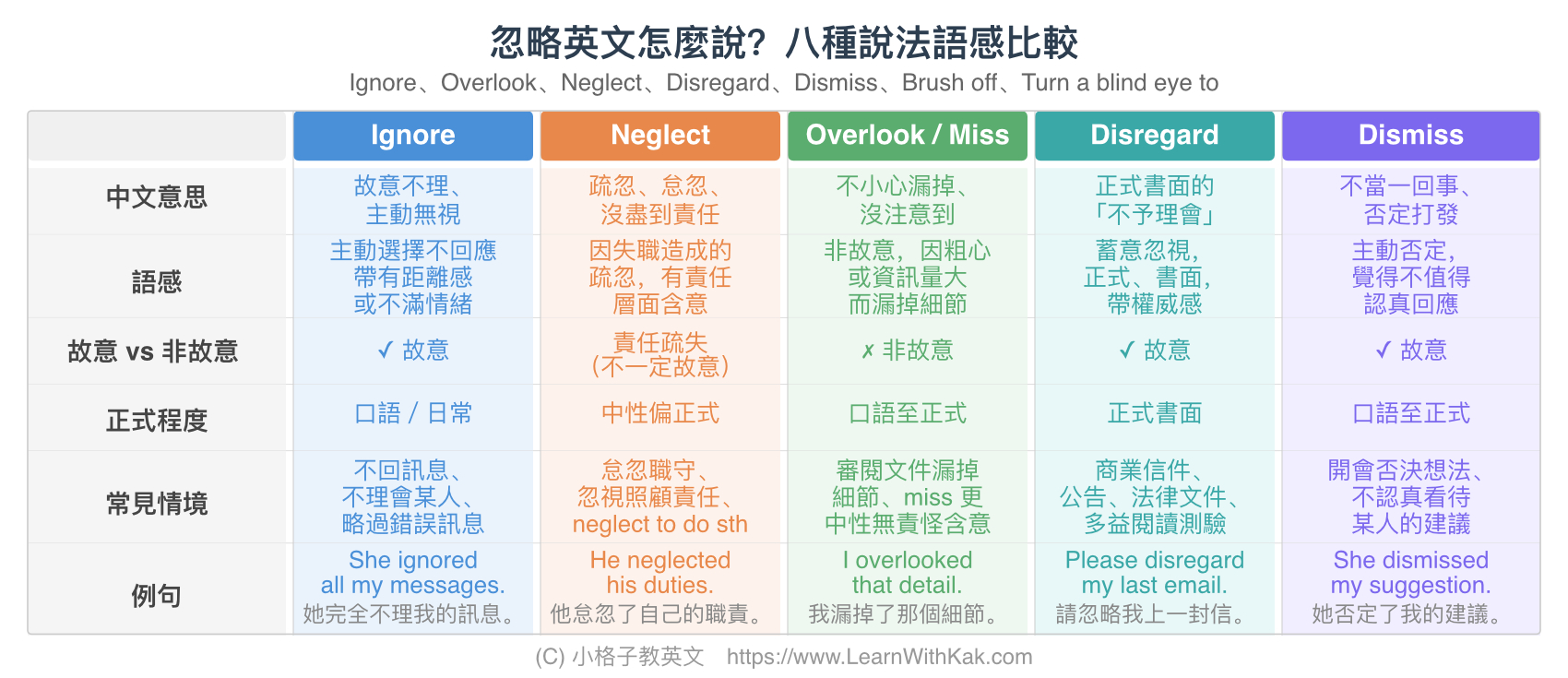
在職場英文或多益考試裡,這幾個字出現的頻率都不低,尤其是 overlook、neglect、disregard 在 TOEIC 閱讀測驗的商業語境裡都是常客。像「please disregard my previous email」或是「several issues were overlooked during the review」這類句子,在真實職場裡也是隨時都會出現的。把每個字的語感記清楚,下次用起來就會自然很多。
下次想說「忽略」的時候,先想一秒:你是故意不理?還是不小心漏掉?還是敷衍帶過?每個情境都有最對的那個字。
延伸閱讀:【「我不小心的」英文怎麼說?Accidentally 中文用法,你可能一直說錯】
如果你喜歡這篇文章的話,可以追蹤我們的 Threads 和 Facebook 唷!