
Made of、made from、made with,這三個大家大概都知道是「用什麼做的」意思,但真的要開口用,很多人還是會猶豫——到底哪個才對?中文翻起來幾乎一樣,但英文的語感其實差很多,用錯了句子聽起來就是怪怪的。這篇把 made of 中文意思和用法說清楚,made from、made with 也一起解釋。
Made of — 一眼看得出來
先來說 made of,這是三個裡面日常最常遇到的。
Made of 的意思是「由⋯製成的」,用來說一樣東西是用什麼材料做的。重點在於:看這個完成品,你還是可以直接看出它的原料是什麼,原料的形態基本上還在。
最好理解的例子:一張木頭桌子,你一眼就看得出是木頭做的,這就是 made of wood。一枚金戒指,明顯看得到是金的,就是 made of gold。
核心邏輯就是:原料的形態還在,眼睛看得到,就用 made of。
常見場景包括:家具、飾品、建築材料、日常物品,這些東西的材質通常都很直觀。如果你在逛家具店或手工藝品市場,made of 是你最常聽到的說法。說到描述物品材質,made of 可以說是三個裡面最基礎、最常用的一個。
(1)
A: This bracelet is so pretty. What is it made of?
A: 這個手鍊好漂亮,它是什麼做的?
B: It’s made of silver. My sister got it for me in Japan.
B: 是銀的。我姊姊在日本買給我的。
(2)
A: Why is this bag so expensive?
A: 這個包包為什麼那麼貴?
B: Because it’s made of genuine leather. That’s why it’s so durable.
B: 因為是真皮的。所以才那麼耐用。
(3)
A: Is this table solid or hollow inside?
A: 這張桌子是實心的還是空心的?
B: It’s solid. It’s made of oak, so it’s pretty heavy too.
B: 實心的。是橡木做的,所以也蠻重的。
(4) The fence around the garden is made of bamboo.
花園的圍欄是竹子做的。
(5) The bridge was made of steel and concrete.
那座橋是鋼鐵和混凝土建的。
Made from — 原料已經變身了
再來說 made from,中文意思一樣是「由⋯製成的」,但跟 made of 有一個很關鍵的差別。
Made from 是指原料經過製造或加工之後,已經完全「變身」了——看成品完全看不出原料的樣子,原料的形態改變得很徹底。
最經典的兩個例子:
塑膠是用石油做的——你看塑膠瓶,完全看不到石油的樣子,這就是 made from petroleum。起司是用牛奶做的——起司的樣子跟牛奶完全不同,也是 made from milk。
所以 made from 的核心邏輯是:原料完全轉化,成品看不出來了。
Made from 中文跟 made of 翻起來幾乎一樣,但使用場合很不同。Made from 最常出現在工業產品、加工食品的描述,或是要強調「某樣東西的原料來源是什麼」的時候。如果你在做英文簡報或描述製作過程,這個說法非常實用。
(6)
A: What is tofu made from?
A: 豆腐是用什麼做的?
B: It’s made from soybeans. The process completely changes the texture.
B: 是黃豆做的。製作過程會完全改變它的質感。
(7)
A: I never knew paper came from trees.
A: 我不知道紙是來自樹木的。
B: Yeah, paper is made from wood pulp. You really can’t tell just by looking at it.
B: 對啊,紙是用木漿做的。光看外表根本看不出來。
(8)
A: Is red wine made from red grapes or white grapes?
A: 紅酒是紅葡萄還是白葡萄做的?
B: Red wine is always made from red grapes. White wine is made from white grapes.
B: 紅酒都是紅葡萄做的。白酒則是白葡萄做的。
(9) Plastic bags are made from petroleum.
塑膠袋是用石油製成的。
(10) This fabric is made from recycled plastic bottles.
這塊布料是用回收塑膠瓶製成的。
記住關鍵:原料看不到了,就用 made from。
Made with — 通常在說食物
輪到 made with 了。
Made with 的中文意思也是「用⋯做的」,但這個說法最常出現在食物和飲品上,重點是「裡面用了哪些食材或成分」。
跟 made from 最大的不同是:made with 不是在說原料如何轉化,而是在說「有加了什麼東西進去」。可以理解為,made with 更像是在列食材清單,讓對方知道一道菜或飲品的組成。
常見場景包括:點餐問食材、看食譜、咖啡店客製化飲品,以及確認食物過敏原。如果你常去咖啡廳客製飲料,或在餐廳詢問菜色內容時想確認成分,made with 就是你需要的說法。
(11)
A: What’s in this cocktail? It tastes amazing.
A: 這個調酒裡面有什麼?好好喝。
B: It’s made with lime juice, mint, and rum. It’s a mojito.
B: 是用萊姆汁、薄荷和蘭姆酒做的。是莫希托。
(12)
A: Is this soup vegetarian? I don’t eat meat.
A: 這個湯是素的嗎?我不吃肉。
B: Yes, it’s made with vegetables and tofu only. Completely vegetarian.
B: 是的,只有蔬菜和豆腐。完全素食。
(13)
A: What makes this cake so moist?
A: 這個蛋糕為什麼那麼濕潤?
B: It’s made with sour cream. That’s the secret ingredient.
B: 是加了酸奶油。那是秘密食材。
(14) This smoothie is made with banana, oat milk, and peanut butter.
這杯思慕雪是用香蕉、燕麥奶和花生醬做的。
(15) The pasta sauce is made with garlic, olive oil, and fresh herbs.
這個義大利麵醬是用大蒜、橄欖油和新鮮香草做的。
三個放在一起,這樣比就清楚了
Made of 中文是「由⋯製成」,用在可以直接看出材料是什麼的物品;made from 是原料已經完全轉化、成品看不出來;made with 通常是說食物裡有哪些食材或成分。
最容易搞混的還是 made of 和 made from,因為中文翻起來幾乎一樣。記住最簡單的原則:眼睛看得到原料用 made of,看不到用 made from。
另外,在比較口語的情況下,made of 和 made from 的界線有時候不是那麼嚴格,有些人會混用,特別是食物類(像是「起司是牛奶做的」,兩種說法都有人用)。但正式寫作或需要精準表達的時候,照上面的規則走就對了。
順帶一提 Made in——這個完全不同,是「在某地製造」的意思,跟材料沒關係。最有名的就是 MIT = Made in Taiwan,台灣製造,相信大家都很熟悉。
(16) The wine is made from Taiwanese grapes, and it is made with traditional methods.
這款酒是用台灣葡萄釀製的,以傳統工法製作。
(17) The jacket is made of recycled polyester, but it is made with sustainable dyes.
這件夾克是回收聚酯纖維做的,但使用了永續染料。
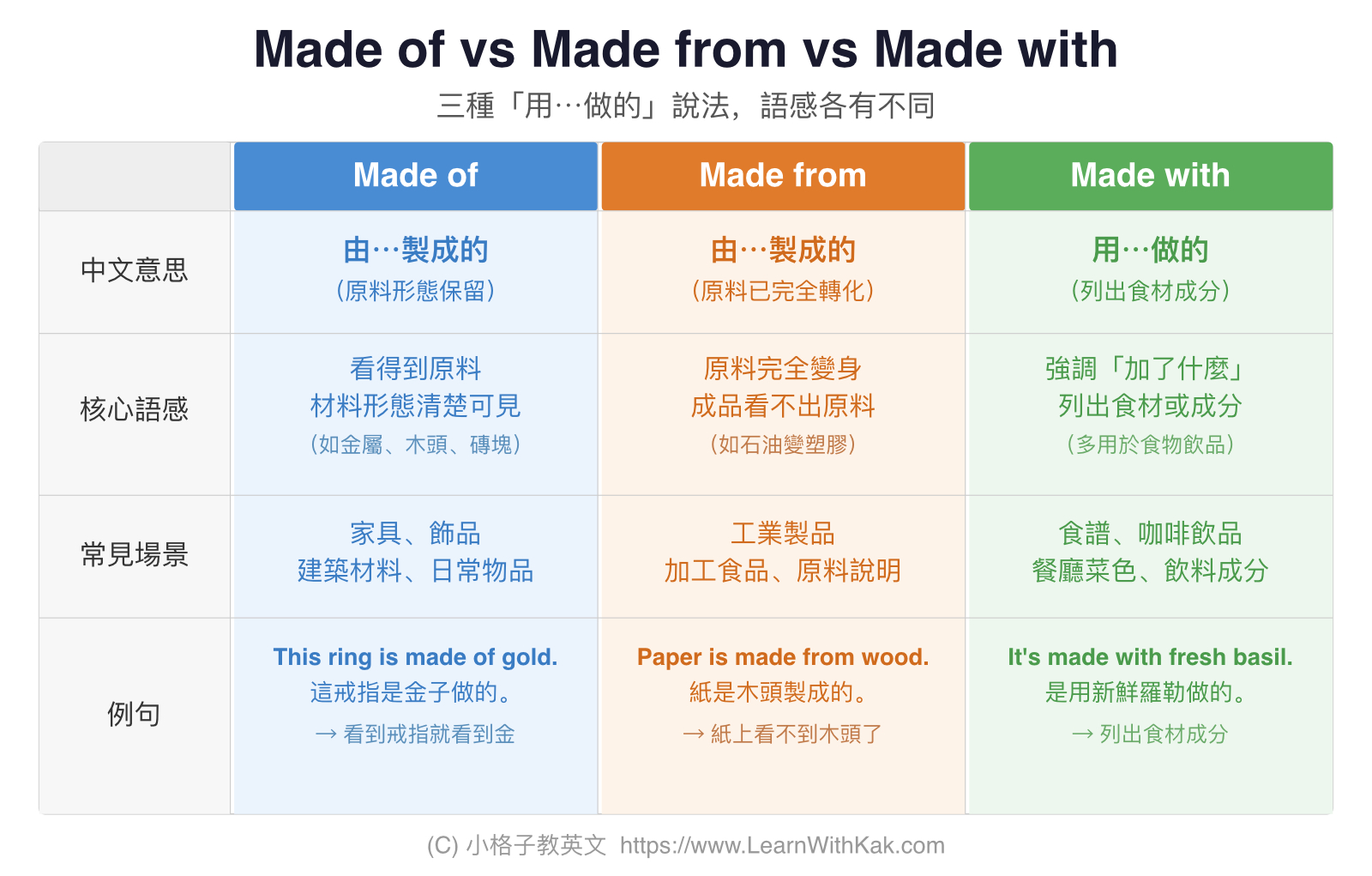
Made of、made from、made with,三個中文翻起來都是「用⋯做的」,但語感差很多。最快的記法:看得到原料用 made of,看不到用 made from,說食材成分用 made with。下次買東西、逛超市或看英文食譜,注意一下哪個說法出現了,印象會深很多。
如果你喜歡這篇文章的話,可以追蹤我們的Threads和Facebook唷!