
開會時老闆問你覺得這個方案怎樣,你心裡其實有點保留,但又不知道怎麼開口。這種時候,老實說英文怎麼表達,真的很重要。光靠一句 “I think…” 有時候撐不起那個「說實話」的語氣。這篇整理了 6 種母語者最常用的說法,從最日常到職場都能用。
To Be Honest
To be honest 是最常見的「老實說英文」說法,to be honest 中文意思就是「老實說、說實話、坦白講」,用來在說出真實想法前先打個招呼,讓對方知道你接下來說的是真心話。
這個說法非常口語,日常對話和職場都適用。有時候你也會聽到 “to be honest with you”,加上 “with you” 之後語氣多了一點親近感,像是特別把真心話說給這個人聽。
(1)
A: What did you think of Mark’s presentation?
A: 你覺得 Mark 的簡報怎麼樣?
B: To be honest, I think he rushed through the second half.
B: 老實說,我覺得他後半段講太快了。
(2)
A: Do you think we should go ahead with this project?
A: 你覺得這個案子應該繼續嗎?
B: To be honest with you, I’m not sure the budget makes sense.
B: 說實話,我不太確定這個預算合不合理。
(3)
A: How was the team dinner last night?
A: 昨晚的團隊聚餐怎麼樣?
B: To be honest, I was exhausted and just wanted to go home.
B: 老實說,我那時候超累,只想回家。
(4)
A: You think the new office layout works?
A: 你覺得新的辦公室配置還行嗎?
B: To be honest with you, it’s a bit noisy near my desk.
B: 跟你說實話,我位置附近有點吵。
Honestly / Honestly Speaking
Honestly 是副詞,可以放在句首當插入語,效果跟 to be honest 非常接近,但更簡短俐落。Honestly speaking 則是稍微完整一點的說法,語感上跟「坦白說英文」的感覺很像,直接又不失禮貌。
這個用法在 TOEIC 聽力和多益閱讀測驗中都會出現,特別是在對話場景裡,說話者用 honestly 來表達個人立場或給出評價。多益考生記起來會很有用。
(5)
A: Do you think Lisa is ready for a promotion?
A: 你覺得 Lisa 準備好升職了嗎?
B: Honestly, I think she needs a bit more time.
B: 說實話,我覺得她還需要再磨練一下。
(6)
A: Was the training session useful?
A: 那個培訓課程有用嗎?
B: Honestly speaking, most of it I already knew.
B: 坦白說,大部分的內容我都已經知道了。
(7)
A: Did you enjoy the movie?
A: 你喜歡那部電影嗎?
B: Honestly? I fell asleep in the middle.
B: 說真的?我看到一半睡著了。
(8)
A: What do you think of the new manager?
A: 你覺得新主管怎麼樣?
B: Honestly speaking, it’s too early to say.
B: 坦白說,現在評價還太早。
Frankly / Frankly Speaking
Frankly 跟 honestly 一樣是副詞,但語氣稍微正式一點,在職場書面溝通和會議中很常見。Frankly speaking 是「坦白說英文」另一個非常道地的說法,frank 這個字本身就是「直率、坦誠」的意思。
這個說法在職場英文裡特別好用,尤其是在給反饋或提出反對意見的時候,可以讓你聽起來很專業又直接。在多益 TOEIC 的書信和對話題型中,frankly 也是常見的插入語之一。
(9)
A: Is the current system working for the team?
A: 現在這個系統對團隊來說運作還好嗎?
B: Frankly, I think we need something more efficient.
B: 坦白說,我覺得我們需要更有效率的工具。
(10)
A: What do you think of my proposal?
A: 你覺得我的提案怎麼樣?
B: Frankly speaking, the timeline looks a bit tight.
B: 老實說,時間表看起來有點趕。
(11)
A: Should we tell the client about the delay?
A: 我們應該告訴客戶延誤的事嗎?
B: Frankly, yes. It’s better they hear it from us first.
B: 老實說,應該要說。讓他們先從我們這裡知道比較好。
(12)
A: Do you think the launch event went well?
A: 你覺得發布活動辦得順利嗎?
B: Frankly speaking, the venue was too small for the crowd.
B: 說實話,場地對這個人數來說太小了。
To Tell You the Truth / To Be Frank with You
這兩個說法語感都帶有「跟你說真心話」的感覺,比 to be honest 更直接,也更有親密感,像是在告訴對方:我現在說的是不一定每個人都會說出口的話。
To tell you the truth 比較口語,常出現在朋友之間或比較輕鬆的職場氛圍中。To be frank with you 語氣更直接,在開會給意見或跟主管溝通時用,聽起來很專業。這兩個在表達不同立場的場合特別好用。
(13)
A: What do you really think about Ken’s idea?
A: 你說真的,你覺得 Ken 的想法怎麼樣?
B: To tell you the truth, I don’t think it’s practical.
B: 說真的,我覺得不太實際。
(14)
A: Are you happy with how the project turned out?
A: 你滿意這個案子最後的結果嗎?
B: To tell you the truth, I think we could have done better.
B: 老實說,我覺得我們可以做得更好。
(15)
A: Do you have any concerns about the new policy?
A: 你對新政策有什麼疑慮嗎?
B: To be frank with you, I think it might affect team morale.
B: 跟你坦白說,我覺得這可能會影響團隊士氣。
(16)
A: Should we cut the marketing budget?
A: 我們應該削減行銷預算嗎?
B: To be frank with you, I don’t think that’s a good idea right now.
B: 坦白跟你說,我覺得現在這樣做不太好。
用這些說法的時候要注意什麼
這些片語雖然都是在表達「誠實」,但不代表可以隨便說。在職場英文裡,說出真心話之前加這些開場白,是為了讓對方有心理準備,不是讓你可以說更重的話。
如果後面接的是批評或負面評價,通常建議搭配 softening language,也就是緩衝語氣的說法,這樣整體聽起來比較有建設性,而不是直接「開炮」。這個概念跟用英文委婉給建議的思維是一樣的。
(17)
直接版(語氣可能太重):
A: To be honest, your report is really bad.
A: 老實說,你的報告真的很糟。
緩衝版(更適合職場):
B: To be honest, I think there are a few areas we could improve together.
B: 老實說,我覺得有幾個地方我們可以一起改進。
(18)
直接版:
A: Frankly, I don’t think this plan will work at all.
A: 坦白說,我完全不覺得這個計劃行得通。
緩衝版:
B: Frankly, I have some concerns about whether this plan is the right fit for us right now.
B: 坦白說,我對這個計劃現在是不是最適合我們這件事有一些疑慮。
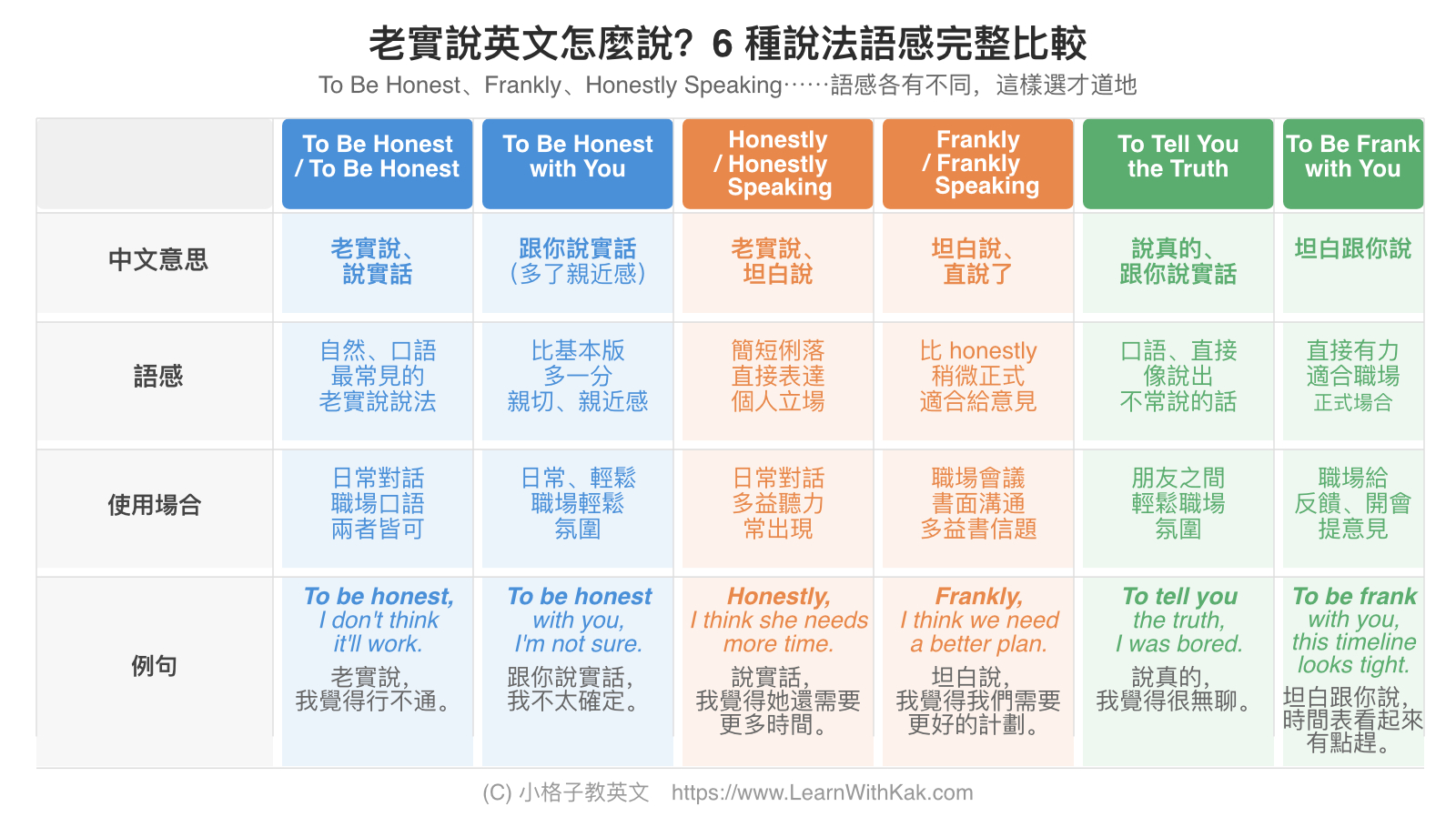
說實話是好事,但在職場裡,怎麼說跟說什麼一樣重要。這幾個片語用得好,你說出的真心話,對方才真的聽得進去。如果你想表達不同意見又不傷和氣,可以參考「我沒意見」英文怎麼說這篇,裡面有不少在職場上很好用的說法。
下次開會被問意見,不用再只靠 “I think…” 撐場面,試試看這幾個說法,說話的重量感會完全不一樣。
延伸閱讀:Agree to Disagree 中文是什麼?不是放棄,是最聰明的結束爭論法
如果你喜歡這篇文章的話,可以追蹤我們的 Threads 和 Facebook 唷!