
你有沒有遇過這種場景:你幫了朋友一個忙,他回你一句 “Thanks for nothing”,你還在猶豫他是不是在謝你?其實根本不是。thanks for nothing 中文的真正意思是諷刺,是那種「你根本沒幫上忙」的不爽感。英文裡有不少這樣的句子,字面上寫著「謝謝」,實際上是在嗆人,這篇來一口氣把它們搞清楚。
Thanks for nothing 到底是什麼意思
拆開來看,”thanks for nothing” 的字面意思是「謝謝你給了我……什麼都沒有」,聽起來很怪,但這正是它帶來的諷刺感:你什麼忙也沒幫到,甚至還幫了倒忙,而我要對你說「謝謝」。
這句話通常在對方沒幫上忙、說錯話、或搞砸某件事之後說出來,語氣帶著不滿和挫折感,不會是平靜地說出口的。職場、朋友之間都很常見,特別是那種「你本來不應該多管閒事」的情境。
Thanks for nothing 中文可以理解成「謝謝你什麼都沒做到」,有時候也帶有「謝謝你添亂」的意思。
(1)
A: Why did you tell my boss I took a long lunch break?
A: 你幹嘛跟我老闆說我午餐休息很久?
B: I just mentioned it in passing. It wasn’t a big deal.
B: 我只是順口提一下,沒什麼大不了。
A: Thanks for nothing! Now he wants to talk to me tomorrow morning.
A: 真是太感謝你了!他現在要找我明天早上談話。
(2)
A: I asked James to proofread my email before I sent it.
A: 我傳出去之前有請 James 幫我校對那封 email。
B: And? Did he catch anything?
B: 然後呢?他有找到什麼問題嗎?
A: He said it looked fine. Then the client replied pointing out three typos. Thanks for nothing, James.
A: 他說看起來沒問題。結果客戶回信指出了三個錯字。James,真的謝謝你喔。
(3)
A: I thought you said the meeting was at 3.
A: 我以為你說會議是三點。
B: I said 2. I’m pretty sure I said 2.
B: 我說的是兩點,我很確定我說的是兩點。
A: I heard 3, and now I missed the whole thing. Thanks for nothing.
A: 我聽到的是三點,現在整個會議都錯過了。感謝你的幫忙。
(4)
A: Did the GPS help you get there?
A: GPS 有幫你找到地方嗎?
B: It took me to a parking lot in the middle of nowhere. Thanks for nothing.
B: 它帶我去了一個不知道在哪的停車場。真是太謝謝了。
Thanks a lot — 真心還是嗆你,差在一個語氣
“Thanks a lot” 本來是非常正常的感謝說法,thanks a lot 意思就是「非常感謝」。大多數情況下,你聽到有人說 “Thanks a lot!” 都是真心的。
問題是,同一句話,語氣一變,意思就完全不一樣了。
如果語氣是往上揚的,帶著輕快感,那就是真心感謝。但如果語氣是往下沉的、平的、甚至帶點誇張的冷淡,那就是在嗆人了——意思大概是「好喔,謝謝你害我這樣」。特別是前面加上一個 “Oh”,變成 “Oh, thanks a lot.”,幾乎可以確定是諷刺。
在文字上判斷 thanks a lot 意思是否為反話,可以看前後文:如果對方剛剛做了一件讓你麻煩的事,後面接 “Thanks a lot.” 就幾乎是反話了。
(5)
A: Thanks a lot for helping me move last weekend! I really couldn’t have done it without you.
A: 非常感謝你上週末幫我搬家!沒有你真的搞不定。
B: Of course! Anytime.
B: 當然!隨時都可以。
(6)
A: I accidentally CC’d your boss on that email chain.
A: 我不小心把你老闆 CC 進那個 email 串了。
B: Oh, thanks a lot. That was supposed to be confidential.
B: 喔,真是謝謝你。那個本來是機密的。
(7)
A: I told everyone at the party that you have a crush on Kevin.
A: 我在派對上跟大家說你喜歡 Kevin。
B: You WHAT? Oh, thanks a lot!
B: 你做了什麼?!喔,真的非常感謝你!
(8)
A: I borrowed your charger and I think I left it at home.
A: 我借了你的充電線,然後我覺得我忘在家裡了。
B: Thanks a lot. My phone is at 3%.
B: 謝謝你喔。我手機剩 3%。
(9)
A: I mentioned your name as a reference without asking you first. Hope that’s okay.
A: 我沒先問你就把你的名字寫成推薦人,希望沒關係。
B: Oh, thanks a lot. They already called me and I had no idea what to say.
B: 喔,太謝謝了。他們已經打電話給我了,我完全不知道要說什麼。
Well, thank you very much
“Well, thank you very much” 聽起來非常有禮貌、非常正式,但在很多情況下,這句話是滿滿的白眼。
開頭的 “Well” 是關鍵。這個字加在句首,帶出一種「好喔,是這樣啊」的語感,就是那種深吸一口氣、忍住情緒再說話的感覺。再加上 “thank you very much” 如果語氣拉長或刻意加重,反話效果就非常到位了。
在英式英文裡特別常見,但美式英文完全聽得懂。通常在對方說了讓你難堪的話、或做了一件讓你很不爽的事之後說出來。
(10)
A: You look really tired today. Did you not sleep well?
A: 你今天看起來好累喔,你沒睡好嗎?
B: Well, thank you very much. I thought I looked fine.
B: 嗯,真的謝謝你。我以為我看起來還不錯。
(11)
A: I told the whole team that your presentation last week wasn’t your best work.
A: 我跟整個團隊說你上週的簡報不是你最好的表現。
B: Well, thank you very much for sharing that. Very helpful of you.
B: 好,非常感謝你跟大家分享這件事。你真的很有幫助。
(12)
A: I kind of told your date that you were really nervous before you two met up.
A: 我有點不小心跟你的約會對象說你在見面前超緊張。
B: Well, thank you very much! Now he’s definitely going to think I’m weird.
B: 好,非常感謝你!現在他一定會覺得我很奇怪。
(13)
A: Your sister mentioned you used to be terrible at cooking. I asked her about you.
A: 你姐姐說你以前煮飯很難吃。我問她你小時候是什麼樣子。
B: Well, thank you very much, sis. Really appreciate it.
B: 好,姊,真的非常感謝。真的很感激你。
Much appreciated、Oh, how helpful、What would I do without you
除了上面幾句,還有幾個常見的諷刺感謝語:
“Much appreciated” 本來是很正式的感謝,意思是「非常感謝」。但如果語氣扁平、帶點冷淡,尤其是對方剛做了一件讓你麻煩的事,這句話就會有濃濃的諷刺感,像在說「好喔,謝謝你這個神操作。」
“Oh, how helpful.” 和 “So helpful.” 幾乎每次都是反話,中文可以理解成「哇,真有用喔」——意思是對方根本一點用都沒有。”Oh” 拉得越長,白眼感越強。
“What would I do without you?” 字面上是「沒有你我怎麼辦」,可以是真心的,也可以是完全的反話,帶著「少了你我日子不知道多好過」的意思。關鍵看情境:如果剛發生了一件讓你不爽的事,後面接這句幾乎就是諷刺。
(14)
A: I moved all your files into a new folder to make things more organized.
A: 我把你所有的檔案移到一個新資料夾,讓東西更整齊。
B: I had my own system. Now I can’t find anything. Much appreciated.
B: 我有我自己的系統。現在什麼都找不到了。非常感謝。
(15)
A: I told the client you’d have the report ready by Friday. That should be fine, right?
A: 我跟客戶說你週五前會把報告準備好,這樣沒問題吧?
B: Oh, how helpful. I’m already working on three other deadlines this week.
B: 哇,真的好有幫助喔。我這週已經有三個其他的截止日期了。
(16)
A: I rearranged your desk to make more room for your new monitor.
A: 我幫你重新整理了桌子,讓你新螢幕有地方放。
B: Where did you put my notebook? I need it right now.
B: 你把我的筆記本放哪了?我現在就需要用。
A: Somewhere on the shelf, I think?
A: 我想是在架子上某個地方?
B: So helpful. Truly.
B: 真的好有幫助。真的。
(17)
A: What would I do without you? You always know how to make a bad situation worse.
A: 少了你我不知道怎麼辦。你總是知道怎麼讓情況更糟。
B: I was trying to help!
B: 我是在嘗試幫忙!
(18)
A: You forgot to save the document before the computer crashed?
A: 電腦當機之前你忘了存檔?
B: What would I do without you reminding me of that? Truly.
B: 少了你提醒我這件事我真不知道怎麼辦。真的。
Oh, what a surprise / Oh, great / Congratulations
這三句本來都是正面表達,但在對的情境下,意思就完全反過來了。
“Oh, what a surprise.” 字面上是「什麼大驚喜」,但如果說話的人一點都不意外,這句話就是在說「果然,廢話」。通常用在結果明顯可預期、但說話人想表達「我就知道」的時候。語氣越平,諷刺感越強。
“Oh, great. Just great.” 疊字在英文裡反而常常是負面信號。”Just great” 說出來,意思不是「太棒了」,而是「完蛋了」或「真是夠了」。這句話適合在事情突然變得一團糟的時候說,效果非常傳神。
“Congratulations.” 本來是恭喜,但語氣完全平淡、沒有任何興奮感的時候,就是在冷嘲熱諷,帶著「好喔,你很厲害喔,掌聲給自己」那種感覺。
這種語氣改變意思的現象,在英文裡非常常見。就像 yeah, right 中文意思,字面上「對,沒錯」,但幾乎每次都是在白眼,意思是「才怪」。
(19)
A: He’s late again.
A: 他又遲到了。
B: Oh, what a surprise. He’s only been late every single day this week.
B: 喔,什麼大驚喜。他這週每天都遲到而已。
(20)
A: The client just pushed the deadline back again.
A: 客戶又把截止日期往後推了。
B: Oh, great. Just great. We already told the vendor we’d deliver by Friday.
B: 好,太好了。我們已經跟廠商說週五會交貨了。
(21)
A: I think I left the presentation file at home.
A: 我覺得我把簡報檔案忘在家裡了。
B: Oh, great. Just great. The meeting starts in fifteen minutes.
B: 好,太棒了。會議再十五分鐘就開始了。
(22)
A: I finally figured out how to use the new expense system.
A: 我終於學會用新的費用報帳系統了。
B: Congratulations. The rest of us figured it out three weeks ago.
B: 恭喜你。我們其他人三週前就搞清楚了。
(23)
A: You were late by a whole hour this time. That’s a new record.
A: 你這次整整遲到一個小時,這是你的新紀錄。
B: Congratulations to me, I guess.
B: 那就恭喜我自己囉。
真心還是在嗆你,怎麼判斷
以上這些句子放在不同語氣和情境下,意思可以差非常多。那要怎麼分辨?
最直接的方式是看情境。對方剛做了一件讓你不高興的事、或者事情剛出了什麼差錯,後面接的「謝謝」幾乎就是反話。語氣也是很大的線索——諷刺的謝謝通常語調比較平或往下沉,真心的感謝語氣比較輕快、稍微往上揚。
在文字上判斷,可以看前後句子的情緒。對方前一句在抱怨或解釋了什麼麻煩,後面接 “Thanks a lot.” 或 “Much appreciated.” 幾乎是反話。有時候大寫或驚嘆號也是提示——”Thanks A LOT.” 或 “Well, thank you VERY much!” 通常帶著諷刺意味。
這個概念其實跟英文客套話的邏輯有點像——不是每句看起來正面的話都是字面意思,英文的語感很多時候要靠情境去讀。
(24)
A: Thanks so much for staying late to help me finish the project. You really saved me.
A: 非常感謝你留下來幫我趕完專案。你真的救了我。
B: Of course! Happy to help anytime.
B: 當然!隨時都可以幫忙。
(25)
A: I told HR about your salary expectations without asking you first. Sorry about that.
A: 我沒先問你就跟 HR 說了你的薪水期望值。不好意思。
B: Thanks so much. Now they think I’m asking for way too much.
B: 真的非常感謝你。現在他們覺得我要求太高了。
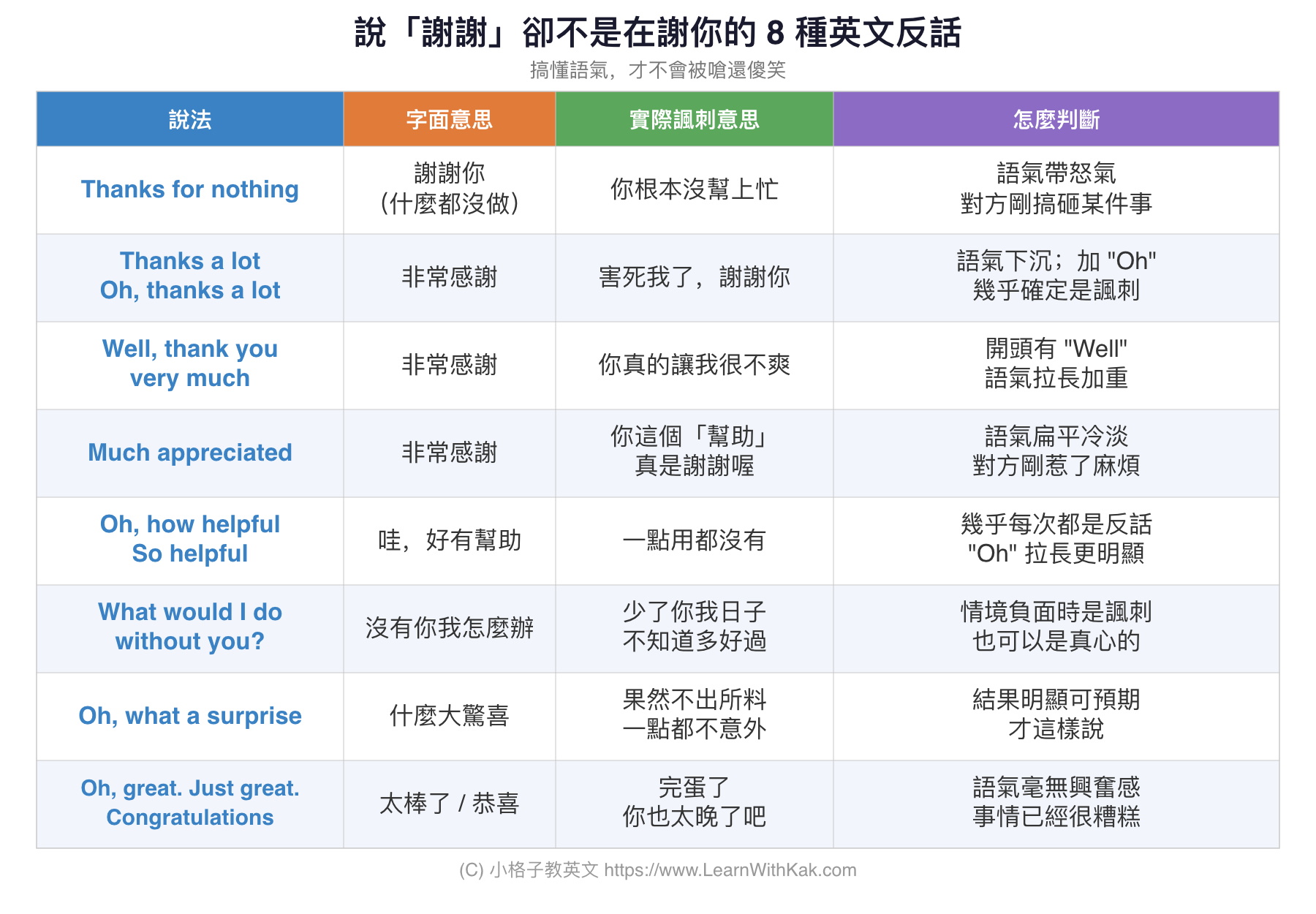
從 thanks for nothing 中文意思開始,到 thanks a lot、well, thank you very much——這些句子背後藏著語氣和情緒,才是真正的主角。搞懂這些反話用法,聽英文更準,說英文也能用得剛剛好,語感自然道地很多。
延伸閱讀:【Yeah, right 中文意思是什麼?不只是「對,沒錯」!聽懂英文裡的「諷刺白眼」語氣】
如果你喜歡這篇文章的話,可以追蹤我們的Threads和Facebook唷!