
學英文學到一半,遇到「有沒有人要喝水」這種句子,腦袋突然當機——到底要說 “Does someone want water?” 還是 “Does anyone want water?”?感覺兩個好像都可以?其實不定代名詞(indefinite pronouns)這組有套很清楚的選擇邏輯,不是靠語感猜,是有規則的。搞懂一次,之後遇到這類句子,自然選對。
什麼是不定代名詞?
不定代名詞,英文叫 indefinite pronouns,用一句話解釋就是:「你不確定、或不想指定是哪個人的時候用的代名詞」。比如說「有個人在找你」,你不知道是誰,就用 someone;「你去問任何人都行」,用 anyone。因為不指特定對象,所以叫「不定」。
這篇主要講四個最常用的:
- someone — 某人、有人
- anyone — 任何人
- everyone — 每個人、大家
- no one — 沒有人
聽起來不難?但很多人遇到 someone 和 anyone 還是靠感覺選,然後搞錯。其實這組有一個很直觀的判斷方法,往下看你就懂了。
(1)
A: Hey, there’s a package at the front desk with your name on it.
A: 嘿,前台有一個包裹是你的名字。
B: Really? Someone must have sent it as a surprise.
B: 真的嗎?一定是有人偷偷寄的。
(2)
A: Is anyone available to help me move some furniture?
A: 有沒有人可以幫我搬一些家具?
B: I can help! What time?
B: 我可以!幾點?
(3)
Everyone is welcome to join the team lunch.
大家都歡迎來參加團隊午餐。
(4)
No one mentioned the meeting had been moved.
沒有人提到會議時間改了。
肯定句的主角:Someone
肯定句,也就是正常的陳述句(不是問句、也沒有否定詞),主角通常是 someone。為什麼?因為 someone 帶有「我相信或預期有這個人存在」的語感,只是不確定是誰。
比如你下班回到家,桌上有一束花,你不知道是誰放的,但你確定「有個人」放了,你就會說 “Someone left these for you.”,而不是 “Anyone left these for you.”
Someone 可以當主詞,也可以當受詞,用法很彈性。口語可以換成 somebody,意思完全一樣,只是稍微更日常。
(5)
A: The kitchen light is on. Did you leave it on?
A: 廚房的燈是開著的,是你忘記關的嗎?
B: No, someone must have forgotten to turn it off.
B: 不是我,一定是有人忘記關。
(6)
A: I heard a knock. Are you expecting anyone?
A: 我聽到敲門聲,你有在等人嗎?
B: No, but someone is definitely at the door. Let me check.
B: 沒有,但肯定有人在門口,我去看看。
(7)
A: I need help with the presentation slides before Friday.
A: 我在簡報投影片這裡需要人幫忙,最晚星期五之前。
B: I’ll ask someone on the design team if they have time.
B: 我去問問設計團隊有沒有人有空。
(8)
I’m looking for someone who can proofread this report.
我在找人幫我校對這份報告。
(9)
A: There’s already someone sitting in that seat.
A: 那個位子已經有人坐了。
B: Oh, I didn’t see. I’ll find another one.
B: 喔,我沒看到,我去找別的位子。
問句和否定句,換 Anyone
重點來了。當你說「有沒有人…?」或「沒有任何人…」,要換成 anyone,不是 someone。
規則很簡單:
- 疑問句 → anyone
- 否定句(搭配 not、never、without 等) → anyone
原因是疑問句和否定句的語境是「開放的、不確定的」,anyone 帶有「任何一個都算」的感覺,和這種語境最搭。口語可以換成 anybody,意思一樣。
但這裡有個有趣的例外——如果你的問句是「帶有期待」的,可以用 someone。比如你在敲門,你很確定裡面有人,你會說 “Is someone in there?”,這比 “Is anyone in there?” 多了一點「我預期你在」的語感。細微差別,說出來很道地。
(10)
A: Did anyone call while I was in the meeting?
A: 我開會的時候有沒有人打電話來?
B: Yes, someone from the client’s office called twice.
B: 有,客戶那邊的人打了兩次。
(11)
A: Can anyone explain what happened at the meeting?
A: 有沒有人可以解釋一下會議上發生了什麼事?
B: I’ll try. It was a bit chaotic.
B: 我來試試,情況有點混亂。
(12)
A: I went around the whole floor but couldn’t find anyone.
A: 我繞了整層樓,但找不到任何人。
B: They might all be in the conference room.
B: 他們可能都在會議室裡。
(13)
A: We managed to leave the event without anyone noticing.
A: 我們成功在沒有人發現的情況下離開活動。
B: Smooth exit. Well done.
B: 溜得很漂亮,做得好。
帶有期待的問句,用 someone:
(14)
A: Is someone picking you up after work today?
A: 今天下班有人來接你嗎?(你預期有人來)
B: Yes, my roommate is coming.
B: 有,我室友要來。
中性疑問句,用 anyone:
(15)
A: Is anyone giving you a ride home?
A: 有沒有人載你回去?(單純在問,沒有預期)
B: Not sure yet. I might just take the MRT.
B: 還不確定,可能直接搭捷運。
Everyone 是全部人,但動詞用單數
Everyone 的意思很直觀,就是「每個人、大家」。但這裡有個很多人會踩的文法地雷:everyone 後面要接單數動詞,不是複數。
直覺上會覺得「每個人」代表很多人,應該用 are。但英文的邏輯是把所有人當成「一個整體」在說,所以動詞用 is,不是 are。
這個邏輯和 Everybody 到底是單數還是複數是一樣的道理,因為 everyone 和 everybody 意思完全相同,可以互換,兩個都是單數。
(16)
Everyone is required to attend tomorrow’s briefing.
所有人明天都必須出席簡報。
(17)
A: Should I send the update to the whole team?
A: 我應該把更新傳給整個團隊嗎?
B: Yes, please. Everyone needs to be on the same page.
B: 對,麻煩你,每個人都要掌握最新情況。
(18)
A: Is everyone ready to go?
A: 大家都準備好了嗎?
B: Almost! Give us two more minutes.
B: 快了!再給我們兩分鐘。
(19)
A: How did the new employee take the feedback?
A: 新員工對那個回饋有什麼反應?
B: Everyone reacted differently, which is expected.
B: 每個人的反應都不一樣,這很正常。
(20)
Not everyone agrees with the new schedule.
不是每個人都認同新的時間安排。
No one 用法:沒有人,先搞清楚怎麼拼
先說一個很多人不知道的事:no one 是兩個分開的字,不是 noone。Noone 不是英文,這樣拼是錯的。
No one 用法整理起來有幾個重點:
- 後面接單數動詞(和 everyone 一樣)
- 句子裡不能再加 not,不然變成雙重否定,意思全反掉
- No one 和 nobody 意思完全一樣,可以互換,但 nobody 更口語;正式場合或書面寫作選 no one 比較穩
(21)
No one knows what really happened that day.
沒有人知道那天到底發生了什麼事。
(22)
A: Why is the office so quiet this morning?
A: 今天早上辦公室怎麼這麼安靜?
B: No one came in. Everyone is working remotely today.
B: 沒有人進來,大家今天都遠端工作。
(23)
A: Did anyone complain about the new system?
A: 有沒有人抱怨新系統?
B: No, no one said anything negative so far.
B: 沒有,到目前為止沒有人說什麼負面的話。
(24) no one 和 nobody 互換,意思一樣:
Nobody told me the deadline had changed.
No one told me the deadline had changed.
沒有人告訴我截止日期改了。
(25)
A: Has no one responded to the email yet?
A: 還沒有人回信嗎?
B: Not yet. I’ll send a follow-up.
B: 還沒,我再去催一下。
(26)
No one is perfect, and that’s completely fine.
沒有人是完美的,這完全沒關係。
另外補充一點:someone / somebody、anyone / anybody、everyone / everybody、no one / nobody,每對意思完全一樣,-body 結尾更口語,-one 結尾書面和口語都適合,正式場合選 -one 最穩。
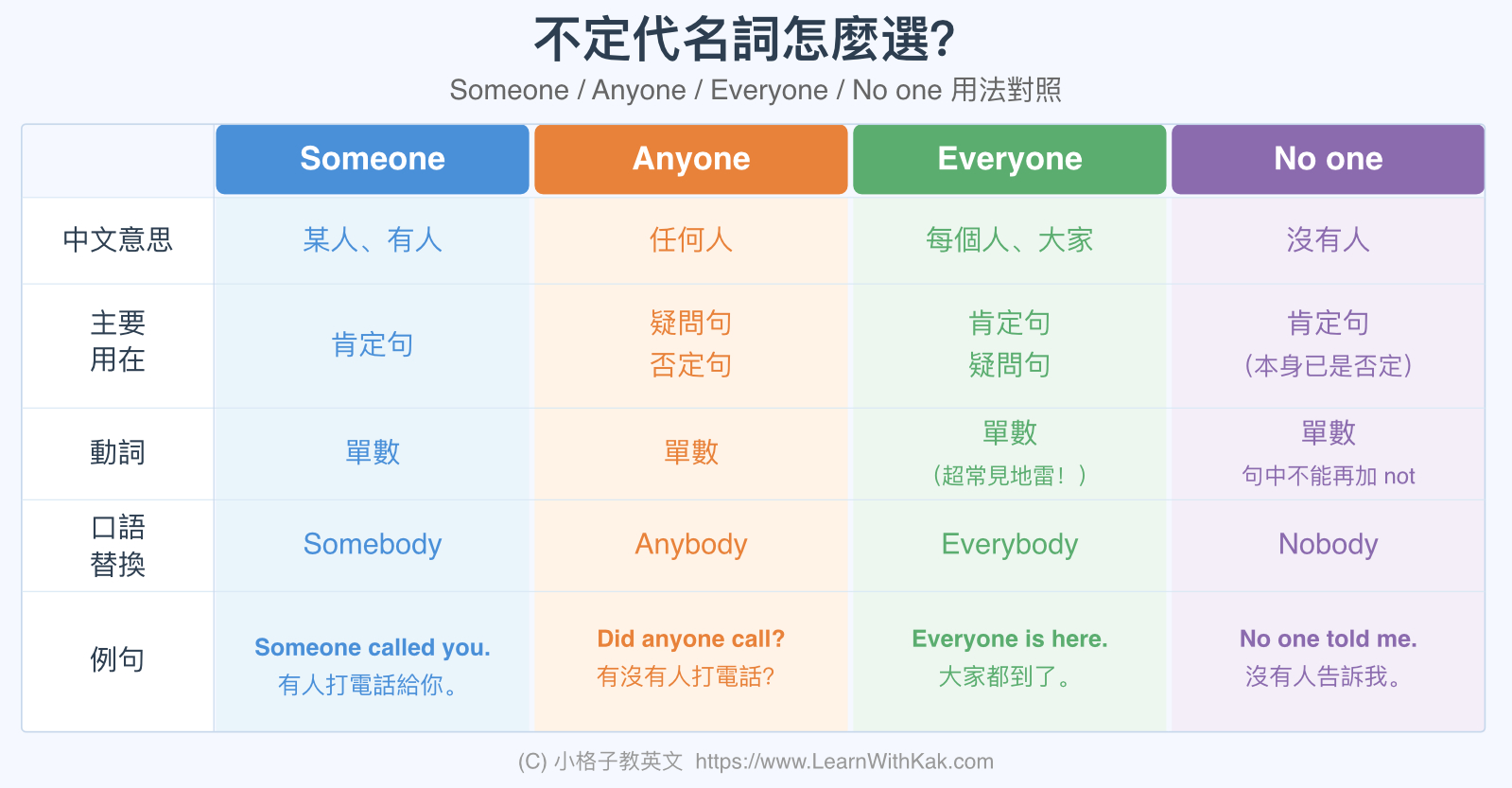
Someone、anyone、everyone、no one 這四個不定代名詞,背後的邏輯其實很直觀,只是沒有人幫你整理過。下次遇到,先想想句子是肯定還是否定、是問句還是陳述,選法自然就出來了。
延伸閱讀: 【Everybody 到底是單數還是複數?解析「每個人」的文法邏輯】
如果你喜歡這篇文章的話,可以追蹤我們的Threads和Facebook唷!