
「聽不懂」英文和「不明白」英文,中文裡其實是兩種狀況,換成英文卻常常兩個都用 I don’t understand 帶過。聽不懂通常是耳朵跟不上,講太快、口音重都算;不明白則是邏輯跟不上,單字都聽懂了連起來卻搞不清楚。這篇把兩種情境分開講清楚,從聽力卡關到邏輯打結,10 種英文說法通通教你,讓你不管卡在哪個環節都能自然表達。
聽不懂英文到底要說什麼
聽不懂通常不是內容太難,是耳朵真的沒接收到,可能是對方講太快、口音太重,或是環境太吵。這種狀況跟「內容看得懂但邏輯不懂」不一樣,用對說法對方才會知道要放慢速度,而不是換句話再解釋一次。
常見情境:
- 對方講話速度太快
- 口音跟你熟悉的不一樣
- 背景太吵聽不清楚
- 單字都認識但連在一起就跟不上
(1)
A: Could you email me the report by end of day?
A: 你可以今天下班前把報告寄給我嗎?
B: Sorry, could you say that slower? I’m having trouble understanding your accent.
B: 抱歉可以講慢一點嗎?我聽不懂你的口音。
(2)
A: We need to touch base before the client call.
A: 我們要在跟客戶通話前先對一下。
B: Sorry, I couldn’t understand what you said, could you repeat it?
B: 抱歉我聽不懂你說什麼,可以再說一次嗎?
(3)
A: The flight’s been delayed, we’re now boarding at gate 22.
A: 班機延誤了,現在改在 22 號登機門登機。
B: I’m sorry, I don’t understand English very well, could you write it down?
B: 抱歉我聽不太懂英文,可以幫我寫下來嗎?
(4)
A: Just merge the two branches and push it live.
A: 把兩個分支合併後上線就好。
B: I understand the words but I can’t follow what you’re actually asking me to do.
B: 每個字我都懂,但連起來我聽不懂你要我做什麼。
(5)
A: Can I get you a flat white with oat milk?
A: 需要一杯燕麥奶的 flat white 嗎?
B: Sorry, I didn’t catch that, my English listening isn’t great.
B: 抱歉我沒聽懂,我的英文聽力不太好。
不明白英文最直接的說法:I don’t understand
跟聽不懂不一樣,I don’t understand 是內容邏輯上真的不明白,最基本也最直接的說法,朋友、家人之間用完全沒問題。
(6)
A: Just follow the instructions on the screen.
A: 照著螢幕上的指示做就好。
B: I don’t understand the instructions, they’re too complicated.
B: 我不明白這些指示,太複雜了。
(7)
A: The meeting is at 3 PM.
A: 會議在下午 3 點。
B: I don’t understand, I thought it was at 2 PM?
B: 我不明白,我以為是 2 點?
(8)
A: You need to submit the form by Friday.
A: 你需要在週五前繳交表格。
B: I don’t understand which form you’re talking about.
B: 我不明白你說的是哪個表格。
I don’t get it 是口語版的不明白
I don’t get it 比 I don’t understand 更口語,get 在這裡是抓到重點的意思,可以用在聽不懂邏輯,也可以用在不懂對方為什麼這樣做。
(9)
A: If you add A to B, then multiply by C, divide by D, and subtract E, you’ll get the answer.
A: 你把 A 和 B 加起來,乘以 C,除以 D,再減掉 E,就能得到答案。
B: I don’t get it, that’s way too complicated.
B: 我不明白,太複雜了吧。
(10)
A: Let’s take the long way, it’s more scenic.
A: 我們走遠一點的路吧,風景比較好。
B: I don’t get it, I thought you were in a hurry?
B: 我不懂欸,你不是很趕嗎?
(11)
A: The password is your birthday backwards with every third letter capitalized.
A: 密碼是你的生日倒著寫,每第三個字母大寫。
B: I don’t get it, can you just tell me the password?
B: 我搞不懂,你可以直接告訴我密碼嗎?
(12)
A: We’re having a barbecue in December.
A: 我們十二月要辦烤肉。
B: I don’t get it, won’t it be freezing?
B: 我不懂欸,不會很冷嗎?
(13)
A: He quit his job to become a professional gamer.
A: 他辭職去當職業玩家。
B: I don’t get it, how is he going to pay rent?
B: 我不懂,他要怎麼付房租?
邏輯跟不上時怎麼說:I don’t follow
I don’t follow 字面是我跟不上,用在對方講的內容邏輯太複雜,或是一連串步驟中你已經迷路。I don’t follow 是整體都跟不上,I’m not following 則是現在這句跟不上,前面可能還聽得懂。
(14)
A: Turn left at the church, then right at the second light, then left again after the gas station.
A: 在教堂左轉,第二個紅綠燈右轉,過了加油站再左轉。
B: I don’t follow, can you just send me the address?
B: 我聽不懂,你能直接傳地址給我嗎?
(15)
A: If we reallocate resources from Project A to Project B while maintaining the timeline for Project C.
A: 如果我們把資源從專案 A 調到專案 B,同時維持專案 C 的時程。
B: Sorry, I’m not following, can you slow down?
B: 抱歉,我跟不上,你能說慢一點嗎?
(16)
A: The derivative of x squared is 2x, so if we integrate.
A: x 平方的微分是 2x,所以如果我們積分。
B: I don’t follow, I never took calculus.
B: 我聽不懂,我沒修過微積分。
(17)
A: We need to pivot our strategy while maintaining stakeholder engagement.
A: 我們需要調整策略,同時維持利害關係人的參與。
B: I’m not following, what exactly are we changing?
B: 我跟不上,我們到底要改什麼?
(18)
A: John’s sister is married to Alice’s brother, so that makes them.
A: John 的姐姐嫁給 Alice 的哥哥,所以他們就是。
B: I don’t follow, can you draw a family tree?
B: 我搞不懂,你可以畫個家族圖嗎?
完全搞不清楚方向:I’m lost
I’m lost 字面是我迷路了,用來表達聽完一長串解釋還是完全不清楚,找不到重點在哪,比 I don’t follow 更嚴重,通常是完全放棄跟上邏輯了。
(19)
A: First, you preheat the oven, then you mix the dry ingredients separately from the wet ingredients.
A: 首先預熱烤箱,然後把乾的材料和濕的材料分開混合。
B: I’m lost, can we just order pizza?
B: 我不清楚英文食譜在講什麼,我們直接叫披薩好嗎?
(20)
A: You take the train to Station A, transfer to Line B, get off at Station C, then take the bus.
A: 你搭火車到 A 站,轉 B 線,在 C 站下車,再搭公車。
B: I’m lost, let’s just take a taxi.
B: 我搞不懂,我們直接搭計程車吧。
(21)
A: You need to submit Form A before Form B, but only after completing Form C.
A: 你要先繳交 A 表格再繳交 B 表格,但要先完成 C 表格。
B: I’m lost, which form do I start with?
B: 我搞糊塗了,我要從哪個表格開始?
職場委婉版的不明白:I’m not sure I understand
I’m not sure I understand 是很委婉的說法,字面是我不確定我理解,職場對上司、對客戶用這句比直接說 I don’t understand 得體很多,也不會顯得理解力差。
(22)
A: We need to leverage our core competencies to maximize synergies.
A: 我們需要運用核心能力來最大化綜效。
B: I’m not sure I understand, could you give me a specific example?
B: 我不太確定我理解,你能給我一個具體例子嗎?
(23)
A: The policy change will affect all stakeholders moving forward.
A: 政策改變會影響所有未來的利害關係人。
B: I’m not sure I understand who exactly is affected.
B: 我不太確定到底誰會受影響。
(24)
A: Your performance review indicates room for improvement in key areas.
A: 你的績效評估顯示在關鍵領域有改進空間。
B: I’m not sure I understand which areas you’re referring to.
B: 我不太確定你指的是哪些領域。
(25)
A: The deadline has been moved up to accommodate the client’s schedule.
A: 截止日期提前了以配合客戶的時程。
B: I’m not sure I understand the new timeline, when is it due now?
B: 我不太確定新的時程,現在什麼時候要交?
想追問清楚時:What do you mean?
What do you mean 是你什麼意思,用問句的方式要求對方解釋。語氣要注意,好奇的語氣沒問題,但如果用質疑或不耐煩的降調講出來,聽起來會像在挑戰對方,反而不禮貌。
(26)
A: We need to think outside the box.
A: 我們需要跳脫框架思考。
B: What do you mean by that?
B: 你這是什麼意思?
(27)
A: Just handle it the usual way.
A: 就用平常的方式處理。
B: What do you mean? What’s the usual way?
B: 你說什麼意思?平常是怎麼處理?
(28)
A: You’ll need to take care of it.
A: 你要處理一下。
B: What do you mean take care of it? What exactly should I do?
B: 你說處理一下是什麼意思?我到底要做什麼?
(29)
A: The project is a bit behind schedule.
A: 專案進度有點落後。
B: What do you mean by a bit? How far behind are we?
B: 你說有點是什麼意思?我們落後多少?
更禮貌一點的版本可以說 Sorry, what do you mean,或是 I’m not sure what you mean,一樣是追問,語氣柔和很多。
禮貌請對方解釋:Could you explain?
Could you explain 是禮貌地請對方解釋,比 What do you mean 正式很多,對上司、對客戶、正式場合都適用。
(30)
A: We need to optimize the workflow.
A: 我們需要優化工作流程。
B: Could you explain what specific changes you have in mind?
B: 你能解釋一下你想到哪些具體改變嗎?
(31)
A: The budget allocation will be adjusted.
A: 預算分配會調整。
B: Could you explain how this will affect our department?
B: 你能解釋這會如何影響我們部門嗎?
(32)
A: The meeting went well.
A: 會議進行得很順利。
B: Could you go over what was discussed?
B: 你能講一下討論了什麼嗎?
不是不懂,是沒聽清楚:I didn’t catch that
這句跟前面的聽不懂又不太一樣,I didn’t catch that 是沒聽清楚、漏聽了,通常是內容你其實聽得懂,只是這一秒沒聽到,跟語言隔閡造成的聽不懂是兩回事,職場上很常用來爭取對方重複一次。
(33)
A: The meeting is scheduled for 3:30 PM.
A: 會議安排在下午 3:30。
B: Sorry, I didn’t catch that, what time?
B: 抱歉我沒聽清楚,幾點?
(34)
A: You need to submit Form 27B by Friday.
A: 你要在週五前繳交 27B 表格。
B: I didn’t quite catch that, which form?
B: 我沒聽清楚,哪個表格?
(35)
A: The password is Charlie-7-Delta-9.
A: 密碼是 Charlie-7-Delta-9。
B: Could you say that again? I want to make sure I got it right.
B: 可以再說一次嗎?我想確認我聽對了。
正式場合請求澄清:Could you clarify?
Could you clarify 是要求澄清、說明,語氣非常正式專業,正式會議、對上司客戶需要明確資訊時很適合。
(36)
A: The timeline needs adjustment.
A: 時程需要調整。
B: Could you be more specific about the changes?
B: 你能更具體說明要改什麼嗎?
(37)
A: There are some concerns about the proposal.
A: 對這個提案有些疑慮。
B: Could you clarify what the concerns are?
B: 你能說明疑慮是什麼嗎?
確認自己理解對不對的三種說法
好像懂了但不太確定的時候,可以用這幾種說法回確認自己的理解對不對,避免自己會錯意還沒發現。
(38)
A: We need to postpone the meeting.
A: 我們要延後會議。
B: Do you mean we should reschedule for next week?
B: 你的意思是我們應該改到下週嗎?
(39)
A: The project is on hold.
A: 專案暫停了。
B: Does that mean we should stop working on it?
B: 意思是我們要停止做這個專案嗎?
(40)
A: We’re restructuring the team.
A: 我們要重組團隊。
B: If I understand correctly, some people will be reassigned?
B: 如果我理解正確,有些人會被調動?
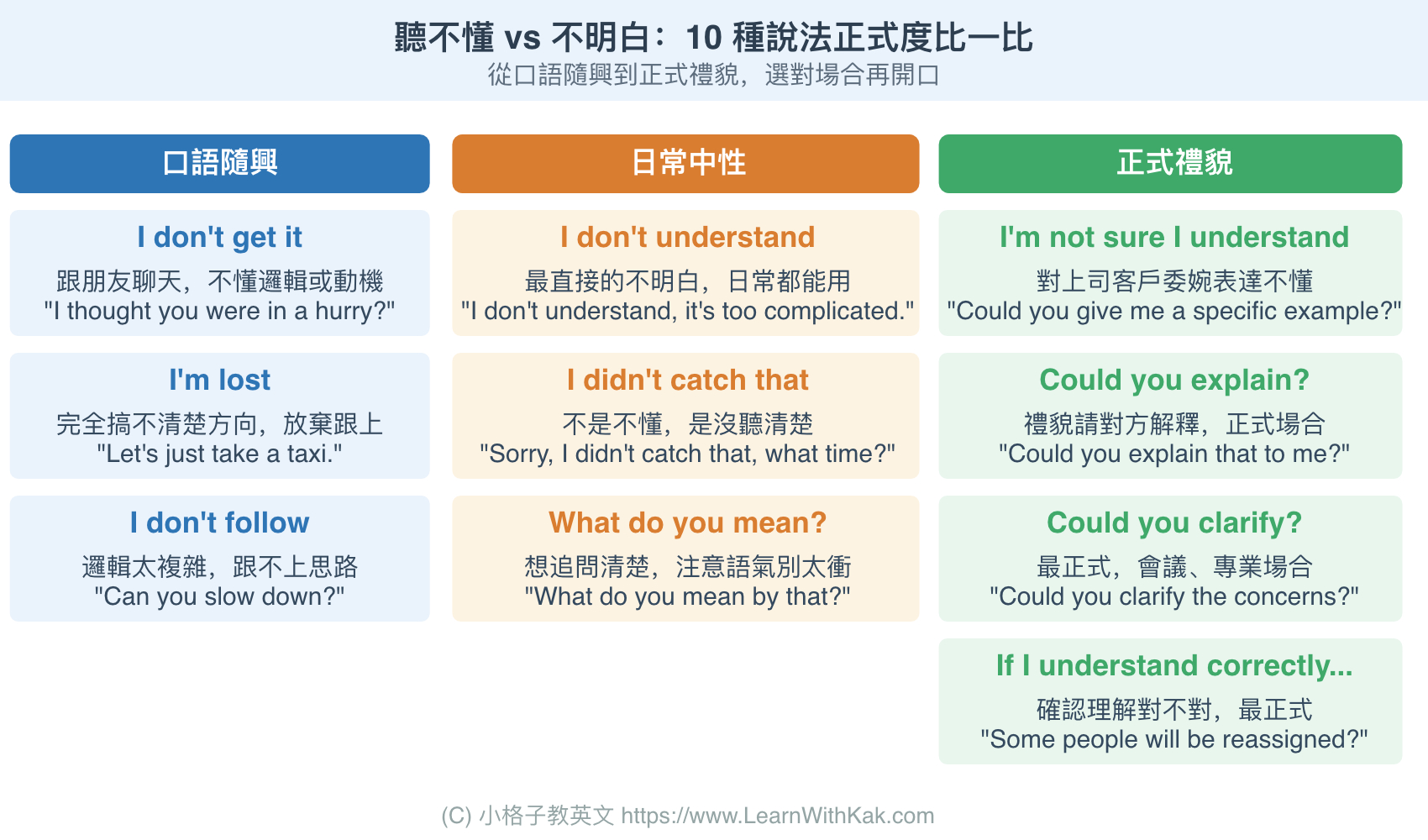
搞清楚聽不懂和不明白的差別,下次卡住的時候就知道要對方放慢速度,還是換個方式解釋。這 10 種說法從聽力卡關到邏輯打結都覆蓋到了,記住場合對了,表達也會跟著自然,溝通不再卡卡的。
延伸閱讀:複雜英文搞懂了嗎?Complex 跟 Complicated 傻傻分不清,用錯真的超尷尬
如果你喜歡這篇文章的話,可以追蹤我們的 Threads 和 Facebook 唷!