
美劇裡有人說 “Oh great, another Monday”,字面上是在稱讚,語氣卻明顯是在嗆。這算是 irony 還是 sarcasm?很多人說不清楚,因為 irony 中文翻成「諷刺」,sarcasm 也翻成「諷刺」,查了字典等於沒查。其實這兩個字根本不是同一件事。
Irony 中文到底是什麼意思?
很多人查字典,看到 irony 中文寫「諷刺」,就以為自己搞清楚了。但其實 irony 的範圍比「諷刺」大很多。
Irony 的核心是「表面跟實際不符」——可能是說的話跟真正的意思相反,也可能是發生的事跟預期的結果完全不同。正因為這樣,irony 主要分成兩大類:
- Verbal irony(口語反諷):說的話跟心裡想的相反
- Situational irony(情境反諷):實際發生的跟預期的相反
這兩種在日常生活裡都超常見,只是以前不知道英文是這樣說的。
(1)
A: I spent the whole weekend preparing for this meeting and they just cancelled it.
A: 我整個週末都在準備這個會議,他們就這樣取消了。
B: Wow. The irony.
B: 哇。真是諷刺。
(2)
A: Did you hear? The parking inspector got a parking ticket.
A: 你聽說了嗎?停車稽查員被開了停車罰單。
B: That’s a perfect example of irony.
B: 這是 irony 的完美範例。
(3)
A: The tech company that makes antivirus software just got hacked.
A: 那家做防毒軟體的科技公司剛剛被駭客入侵了。
B: You honestly couldn’t write a more ironic story.
B: 這比任何故事都還要諷刺。
(4)
A: My dentist told me to cut back on sugar. Then I saw him eating a candy bar in the parking lot.
A: 我牙醫叫我少吃糖,然後我在停車場看到他在吃巧克力棒。
B: Ha. That’s irony if I’ve ever seen it.
B: 哈,這就是標準的 irony。
Verbal Irony:嘴巴說一套,心裡想另一套
Verbal irony 是最日常的一種 irony,簡單說就是「嘴巴說的跟心裡想的相反」。
說的話字面上是一個意思,但真正想表達的是另一回事,通常靠語氣、表情或上下文讓對方知道你在說反話。這種說法在聊天、吐槽時特別常見,英美劇裡更是滿天飛。
要注意的是,諷刺英文說法裡,verbal irony 和 sarcasm 看起來很像,但還是有差別,這個後面會說清楚。
(5)
A: It’s raining again on our hiking day.
A: 我們健行那天又下雨了。
B: Oh perfect. Couldn’t have asked for better weather.
B: 哦,太完美了。要更好的天氣也不可能了。
(6)
A: You just spilled coffee all over my report.
A: 你把咖啡灑在我的報告上了。
B: Oh brilliant. Really helpful, thank you.
B: 哦,太聰明了。真是幫了大忙,謝謝你。
(7)
A: The WiFi went down right before the online presentation.
A: 網路在線上簡報開始之前剛好斷掉了。
B: Oh wonderful. Couldn’t have timed that better.
B: 哦,太棒了。時機不可能選得更好了。
(8)
A: They announced the overtime work on a Friday at 5pm.
A: 他們在週五下午五點宣布要加班。
B: Oh, fantastic news to end the week with.
B: 哦,替週末畫上了一個完美的句點。
Situational Irony:現實比劇本還戲劇
Situational irony 不是關於「說話方式」,而是關於「事情本身」。現實發生的結果跟大家預期的恰恰相反,讓人覺得「這也太諷刺了吧」。
這類 irony 最常出現在新聞、電影,或是朋友分享的那種「你不會相信剛剛發生了什麼事」的情況。
(9)
A: The swimming instructor can’t swim?
A: 那個游泳教練不會游泳?
B: Apparently not. The irony is almost too much.
B: 好像真的不會。這個諷刺程度有點太高了。
(10)
A: Did you know the man who invented the life jacket drowned?
A: 你知道嗎,發明救生衣的人是淹死的。
B: That’s the kind of irony that makes you question everything.
B: 這種 irony 會讓你開始懷疑人生。
(11)
A: A police car was parked illegally outside the courthouse.
A: 一台警車在法院外面違規停車。
B: The irony of that is just beautiful.
B: 這個 irony 美得令人心碎。
(12)
A: The hospital that specializes in breathing treatments has no-smoking signs everywhere, but someone left an ashtray right by the entrance.
A: 那家做呼吸治療的醫院到處都是禁菸標誌,但有人在入口旁邊放了菸灰缸。
B: That’s a little ironic, don’t you think?
B: 這有點 ironic,你不覺得嗎?
Ironic 怎麼用?
看完 irony 的兩種類型之後,來快速看一下形容詞 ironic 和副詞 ironically 怎麼用。
最常見的幾個句型:
- It’s ironic that…(諷刺的是⋯⋯)
- How ironic!(真是諷刺!)
- The irony is that…(諷刺之處在於⋯⋯)
- Ironically, …(諷刺的是⋯⋯)—— 副詞,常放句首
(13)
A: Ironically, the person who always says “be on time” was the last one to arrive.
A: 諷刺的是,那個老是說「要準時」的人,是最晚到的那個。
B: You’d think they’d be the first one there.
B: 你會以為他會是第一個到的。
(14)
A: It’s ironic that the most popular coffee shop in town doesn’t actually serve good coffee.
A: 諷刺的是,城裡最受歡迎的咖啡廳,咖啡其實不好喝。
B: Yet the queue goes around the block.
B: 但是排隊的人還是繞了一整條街。
(15)
A: How ironic that the biggest advocate for healthy eating just opened a fried chicken restaurant.
A: 真的很諷刺,最大力推廣健康飲食的人剛開了一家炸雞店。
B: People contain multitudes, I guess.
B: 我想,人本來就是很複雜的。
(16)
A: The irony is that I bought travel insurance for the first time and didn’t need it, but the one trip I skipped it, my luggage got lost.
A: 諷刺的是,我第一次買旅遊保險,完全沒用到,但那次沒買的旅行,行李就弄丟了。
B: That’s the kind of thing that makes you believe in Murphy’s Law.
B: 這種事會讓你開始相信墨菲定律。
Irony vs. Sarcasm:都說反話,但不一樣在哪
這兩個字是最多人搞混的組合。
先記住一句:sarcasm 是 irony 的一種,但 irony 不等於 sarcasm。
關鍵差別在意圖:
- Irony 本身是中性的,可以只是在觀察一個矛盾或意外的情況,不帶攻擊性。你說 “That’s ironic” 不一定有嘲諷任何人的意思。
- Sarcasm 則一定帶有「嘲諷、讓對方知道你在嗆他」的意圖。諷刺英文說法裡,sarcasm 是最有刺的那種,語氣上通常更犀利、更直接。
有個容易記住的方式:如果說反話讓你聽了有點不舒服、感覺被嗆,那大概就是 sarcasm。如果只是客觀說出一件矛盾的事,那更可能只是 irony。
英文裡有些說法本身就充滿 sarcasm,像是 Thanks for nothing,字面說謝謝,實際是嗆對方什麼都沒做,還有 “You wish!” 這種帶著強烈嘲諷的短句,都是 sarcasm 的經典代表,而不只是 irony。
(17)
A: Oh, so you’ve finally decided to show up.
A: 哦,你終於決定出現了。
(語氣帶刺,有明顯嘲諷意圖,這是 sarcasm)
B: Sorry, the train was delayed.
B: 抱歉,火車誤點了。
(18)
A: He said “nice job” right after I spilled coffee all over the client’s laptop.
A: 我把咖啡灑在客戶的筆電上,他馬上說了句「幹得好」。
B: Oh that’s pure sarcasm. He wanted you to feel it.
B: 那是純 sarcasm,就是要你尷尬。
(19)
A: I love how you always know everything.
A: 我超喜歡你什麼事都知道。
(如果說給一個愛裝懂的人聽,這就是 sarcasm)
B: I honestly can’t tell if you’re being sincere or sarcastic.
B: 我真的搞不清楚你是真心的還是在諷刺我。
(20)
A: Did you just roll your eyes?
A: 你剛剛翻白眼了嗎?
B: No, that was just… situational irony.
B: 沒有,那只是⋯⋯situational irony。(用 irony 替自己的翻白眼開個玩笑)
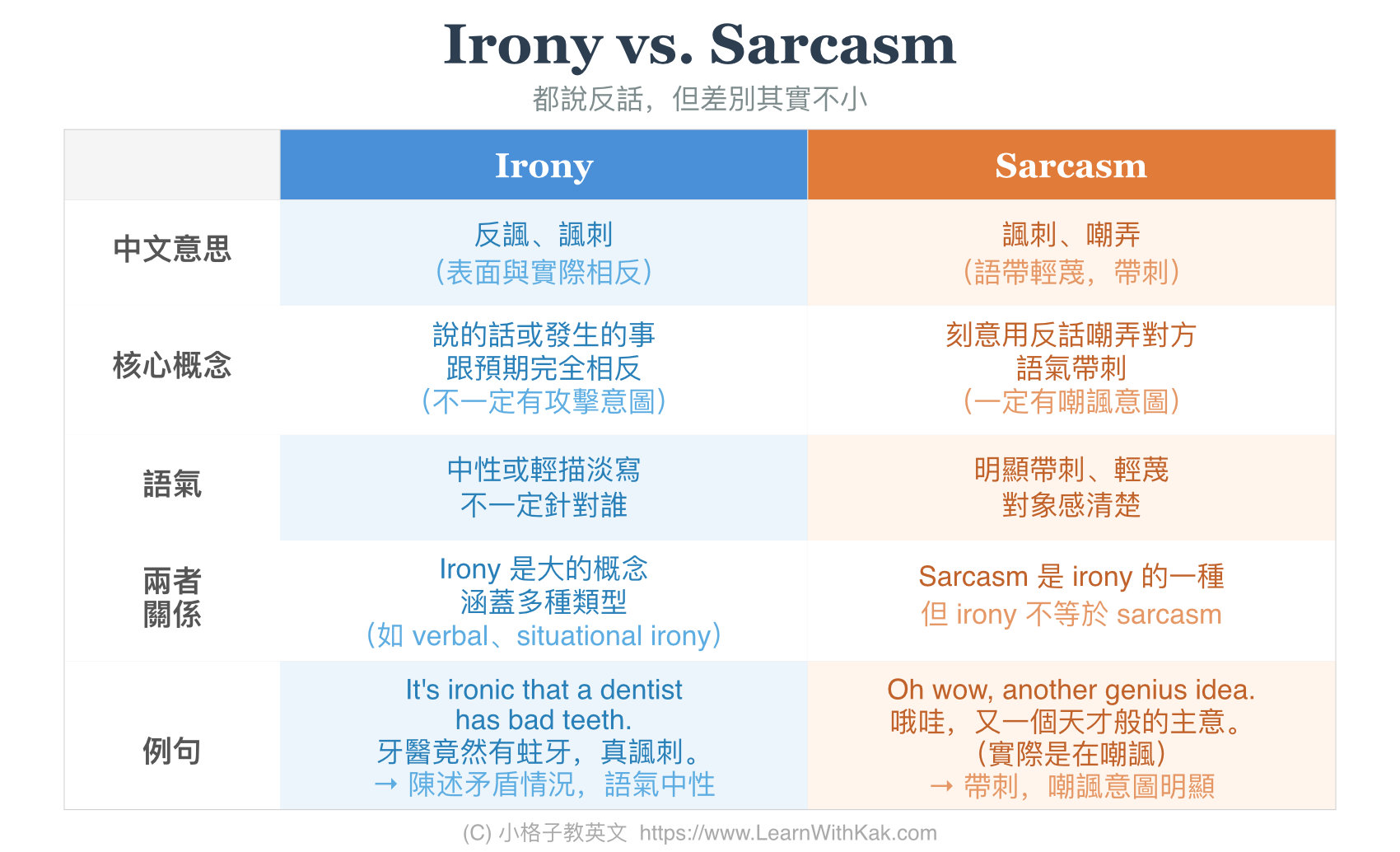
搞清楚 irony 中文真正的範圍後,你會發現它其實到處都是。最重要的記住一點:irony 不等於 sarcasm,兩個都跟說反話有關,但意圖差很多。下次聽到這兩個字,應該不會再分不清楚了。
延伸閱讀:【Thanks for Nothing 中文是什麼意思?說「謝謝」卻不是在謝你的英文反話完整解析】
如果你喜歡這篇文章的話,可以追蹤我們的Threads和Facebook唷!