
英文動詞後面到底要接 to do 還是 doing,很多人學文法的時候都被搞得霧煞煞。其實不定詞與動名詞不是隨便選一個都可以,有些動詞接不同型態,意思會完全不一樣,甚至差到南轅北轍。像 forget、remember、stop 這幾個超常用的動詞,接 to do 跟接 doing 講的根本不是同一件事,這也是台灣人最容易犯的常見文法錯誤之一。這篇整理清楚,多益考試、職場英文書信都會遇到,把不定詞與動名詞的差別搞懂,你的英文表達會精準很多。
有些動詞後面接不定詞(to + 原形動詞),有些接動名詞(Ving),還有一群動詞兩種都能接,但意思完全不同。這種不定詞 動名詞 差別,其實只要抓住一個邏輯就好懂:to do 通常指向未來、還沒發生的事;doing 通常指向已經發生、正在進行或當作一種方法的事。以下每一組都會用生活對話帶你看清楚。
Forget to do vs Forget doing — 忘記要做 vs 忘記做過
Forget 是最經典也最容易搞混的例子。簡單來說:
- Forget to do:忘記「要去做」某件事(事情還沒做)
- Forget doing:忘記「曾經做過」某件事(事情已經做了)
關鍵在於時間順序,to do 指的是未來要做的事,doing 指的是過去做過的事,這也是 forget to do forget doing 最常被搞混的地方。
(1)
A: Did you lock the door?
A: 你鎖門了嗎?
B: Oh no! I forgot to lock it. Let me go back.
B: 糟糕!我忘記鎖了。讓我回去鎖。
(2)
A: You need to call the client back.
A: 你需要回電給客戶。
B: I forgot to call him yesterday. I’ll do it right now.
B: 我昨天忘記打給他了。我現在就打。
(3)
A: Have you ever been to Tokyo?
A: 你去過東京嗎?
B: Yes, but I completely forget going there. I was only five years old.
B: 有,但我完全不記得去過。我當時才五歲。
記憶訣竅:Forget to do 往前看,未來要做;Forget doing 往後看,過去做過。
Remember to do vs Remember doing — 記得要做 vs 記得做過
Remember 的邏輯跟 forget 完全一樣,只是意思相反:
- Remember to do:記得「要去做」某件事(提醒自己未來要做)
- Remember doing:記得「曾經做過」某件事(回憶過去的經驗)
(4)
A: Are you ready for the trip?
A: 你準備好旅行了嗎?
B: I think so. Oh wait, I need to remember to pack my passport!
B: 我應該準備好了。噢等等,我要記得帶護照!
(5)
A: This restaurant looks familiar.
A: 這家餐廳看起來很熟悉。
B: Yeah, I remember eating here five years ago. The food was amazing.
B: 對啊,我記得五年前在這裡吃過。食物超棒的。
(6) Remember to lock the door when you leave.
離開時要記得鎖門。
(7)
A: Remember locking the door?
A: 你有記得鎖門吧?
B: I’m not sure if I did.
B: 我不確定呢。
Stop to do vs Stop doing — 停下來去做 vs 停止做
Stop 這個動詞的邏輯跟前面兩個不太一樣,要特別小心:
- Stop to do:停下正在做的事,去做另一件事
- Stop doing:停止正在進行的某個動作
(8)
A: Why did you stop the car?
A: 你為什麼停車?
B: I stopped to buy coffee. Want anything?
B: 我停下來買咖啡。你要什麼嗎?
(9)
A: The neighbors are being loud again.
A: 鄰居又在吵了。
B: I wish they would stop playing loud music at night.
B: 我希望他們晚上不要再放大聲音樂了。
(10)
A: Are you still smoking?
A: 你還在抽菸嗎?
B: No, I stopped smoking two years ago. Best decision ever.
B: 沒有,我兩年前就戒菸了。最棒的決定。
(11)
A: The meeting is running long, can we stop to grab lunch first?
A: 會議拖太久了,我們可以先停下來去吃個午餐嗎?
B: Good idea, let’s stop discussing this and continue after lunch.
B: 好主意,我們先停止討論,午餐後再繼續。
這種在會議情境下的用法,也是多益聽力和職場英文常出現的場景,考試選項常常故意把 stop to do 和 stop doing 混在一起考。
記憶訣竅:Stop to do 是為了做某事而停下;Stop doing 是不要再繼續做某事。
Try to do vs Try doing — 努力做 vs 嘗試做
Try 的兩種用法也很有趣,雖然中文都可以翻成試試看,但英文語感不同:
- Try to do:努力、盡力去做某事(強調努力,但可能做不到)
- Try doing:試試看做某事(當作一種方法或實驗)
(12)
A: I can’t open this jar.
A: 我打不開這個罐子。
B: Try using a rubber grip. That usually works.
B: 試試用橡膠握把。那通常有效。
(13)
A: I tried to call you all morning but you didn’t pick up.
A: 我整個早上都在試著打給你,但你都沒接。
B: Sorry, my phone was on silent.
B: 抱歉,我手機調成靜音了。
(14)
A: I’m having trouble sleeping lately.
A: 我最近睡不好。
B: Have you tried drinking chamomile tea before bed?
B: 你試過睡前喝洋甘菊茶嗎?
(15)
A: I tried to finish the project on time, but there were too many obstacles.
A: 我努力想準時完成專案,但障礙太多了。
B: At least you gave it your best effort.
B: 至少你盡力了。
關鍵差異:Try to do 通常暗示有困難或挑戰;Try doing 則是建議嘗試某個方法或做法。
Regret to do vs Regret doing — 遺憾要做 vs 後悔做了
Regret 的用法比較特殊,在日常對話中不像前面幾個那麼常見,但在職場email裡反而很實用:
- Regret to do:很遺憾要(告訴你壞消息),通常用於正式場合
- Regret doing:後悔做了某事
(16)
A: I have some bad news about your application.
A: 關於你的申請我有一些壞消息。
B: What is it?
B: 什麼消息?
A: I regret to inform you that your application was not successful.
A: 我很遺憾地通知你,你的申請沒有成功。
(17) We regret to inform you that the meeting has been rescheduled to next Monday.
我們很遺憾通知您,會議已經改到下週一。
(18)
A: Why do you look so upset?
A: 你為什麼看起來這麼沮喪?
B: I regret quitting my job so impulsively. I should have thought it through.
B: 我後悔這麼衝動地辭職。我應該想清楚的。
(19)
A: Do you regret not studying abroad?
A: 你後悔沒有出國留學嗎?
B: Sometimes. I regret not taking that opportunity when I had the chance.
B: 有時候會。我後悔當時有機會卻沒有把握。
使用情境:Regret to do 幾乎只用在 regret to inform/tell/say 這類正式通知,職場email、客服信件很常見;Regret doing 才是表達後悔的常見用法。這組動詞在正式書信裡出現頻率很高,寫報告或發客戶通知信時,用 regret to inform 開頭會比直接講壞消息更有禮貌,也更符合英文商業書信的語氣,這點在準備多益寫作或閱讀測驗時也特別容易遇到。
Go on to do vs Go on doing — 接著做另一件事 vs 繼續做
Go on 也是個有趣的動詞,兩種用法的差別在於是否換了活動:
- Go on to do:做完一件事後,接著做另一件事
- Go on doing:繼續做同一件事
(20)
A: What did you do after graduating?
A: 你畢業後做了什麼?
B: I worked in marketing for three years, then went on to start my own business.
B: 我在行銷業工作三年,然後開始創業。
(21)
A: Are you still talking about the same topic?
A: 你們還在討論同一個話題嗎?
B: Yes, he just went on talking about his vacation for another hour.
B: 對,他又繼續講他的假期講了一個小時。
記憶訣竅:Go on to do 是做完 A 換做 B;Go on doing 是 A 一直做下去。這組動詞平常聊天講故事的時候很常用到,尤其在描述職涯發展或講一件事情的來龍去脈時,選對 to do 還是 doing 會讓整段敘述更清楚順暢。
Mean to do vs Mean doing — 打算做 vs 意味著
Mean 的兩種用法意思差很多,這種不定詞 動名詞 差別在職場溝通裡especially容易搞錯:
- Mean to do:打算、有意要做某事
- Mean doing:意味著、表示某個結果或後果
(22)
A: Why didn’t you come to the party?
A: 你為什麼沒來派對?
B: I meant to come, but something came up at the last minute.
B: 我本來打算來的,但最後一刻有事。
(23)
A: Should we take this job offer?
A: 我們應該接受這個工作機會嗎?
B: Taking this job means moving to another city. Are we ready for that?
B: 接受這份工作意味著要搬到另一個城市。我們準備好了嗎?
(24) Accepting the client’s terms would mean lowering our profit margin significantly.
接受客戶的條件會意味著我們的利潤大幅降低。
這種用法在多益必考的介系詞片語裡也常搭配出現,考試常常混著考,值得一起熟悉。
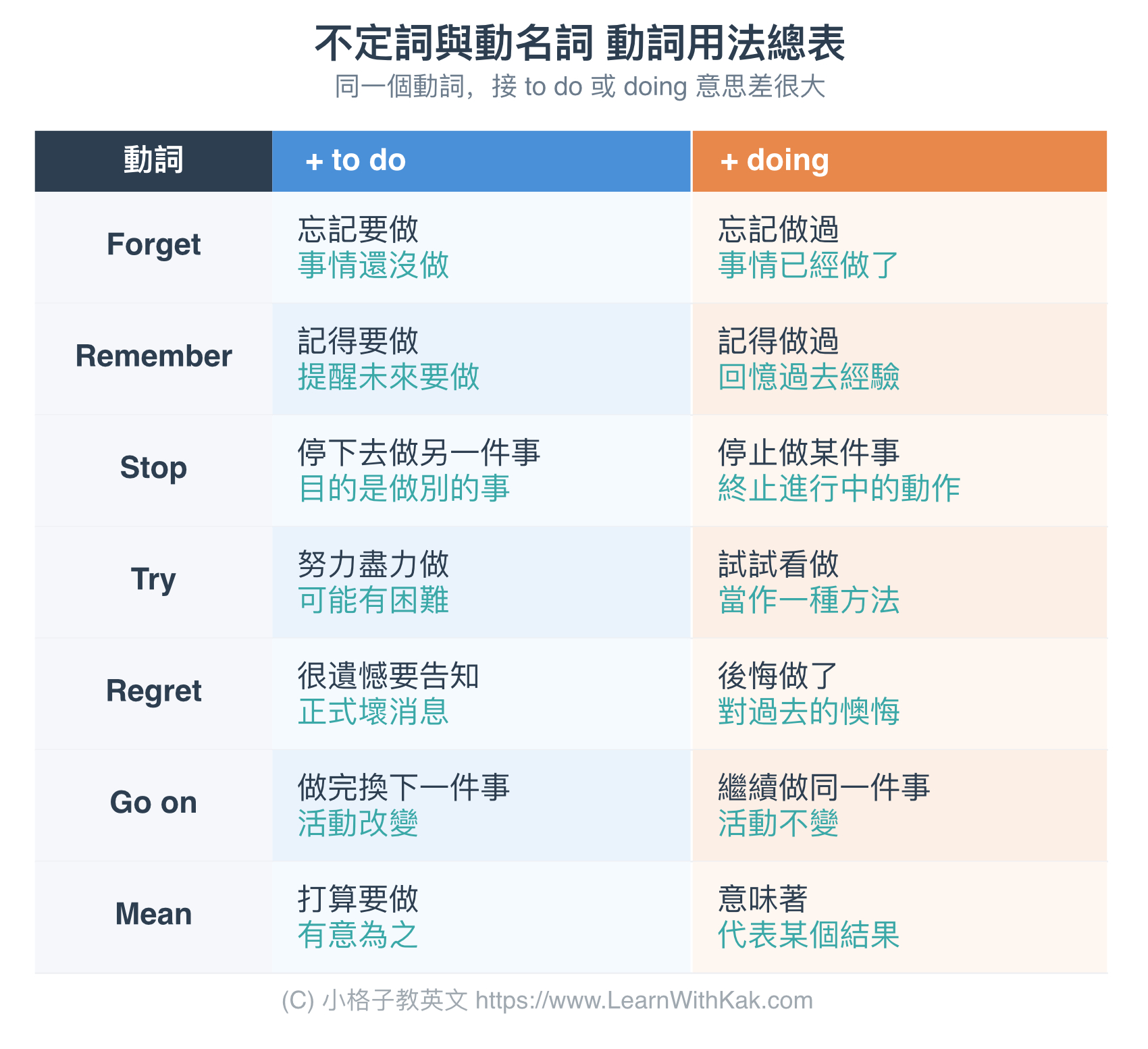
掌握這些動詞用法,你會發現英文表達會更精準,不會再因為一個小小的 to 或 ing 就整句意思顛倒。下次用到這些動詞,停下來想一想:我要表達的是未來、過去、目的還是結果。
延伸閱讀:【to 後面一定接原形動詞?這 5 個超高頻片語打臉你!弄懂「不定詞」與「介系詞」,英文不再漏氣】
如果你喜歡這篇文章的話,可以追蹤我們的 Threads 和 Facebook 唷!