
Got it 是英文對話裡很常出現的一句話。朋友傳訊息說七點車站見,你回 Got it;店員說餐點再十分鐘就好,你也可以回 Got it。所以 got it 意思其實很簡單,就是「收到、我知道了」。比較容易搞混的是 I got it、I get it、You got it 這幾個,只差一兩個字,意思卻不太一樣,有的是「沒問題,交給我」,有的語氣不對還會變成「好啦,我知道了啦」。下面一個一個來看,每個都附上日常會用到的例句。
Got it 意思:收到、我知道了
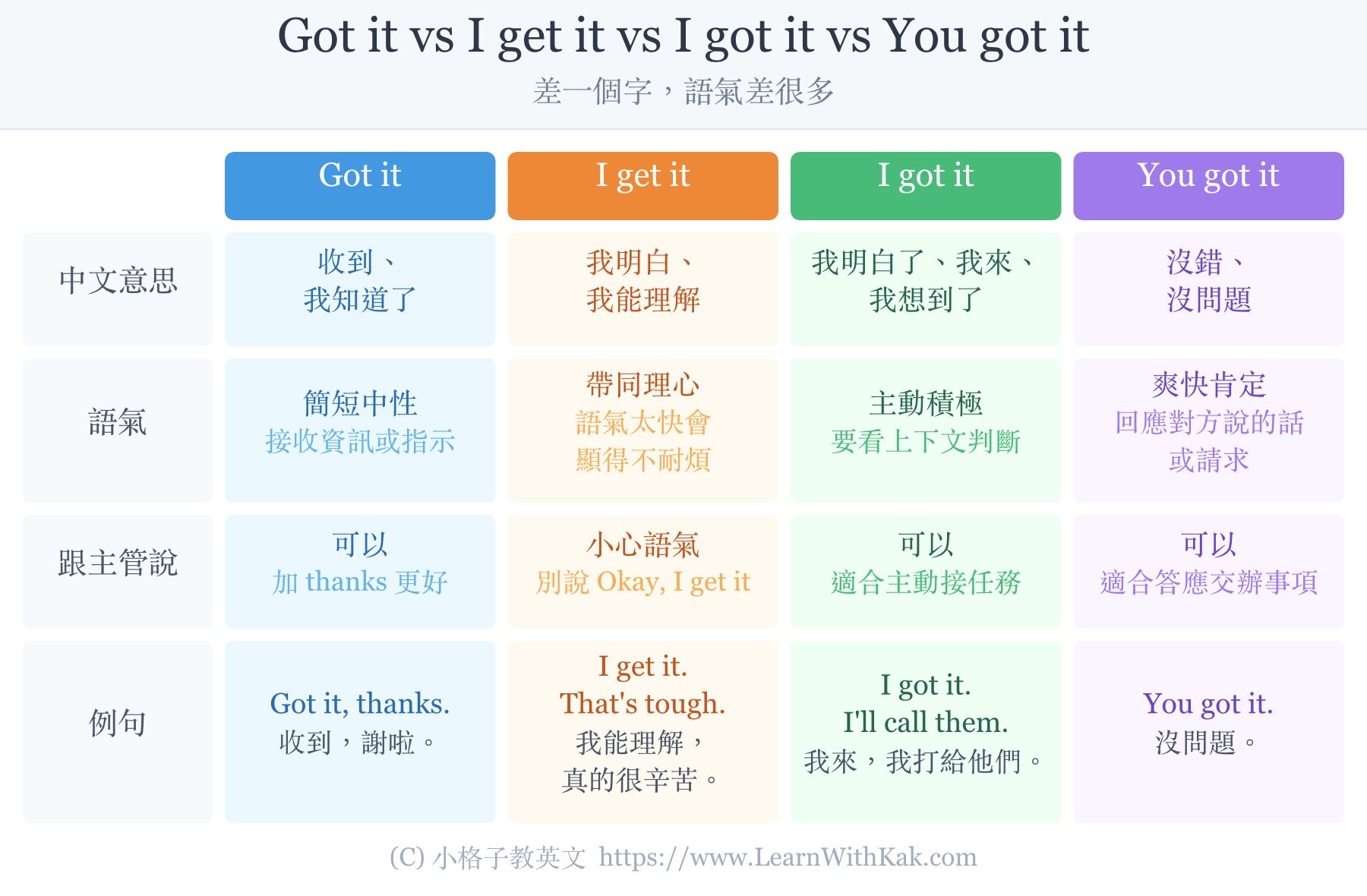
Got it 是 I’ve got it 的省略說法,意思是「收到」「我知道了」,表示你已經接收到對方給的資訊或指示。它是最常見的「收到」英文口語說法,語氣簡短中性,傳訊息、開會、跟朋友約見面都能用。
很多人查 got it 中文的時候,會看到「明白」「了解」「收到」好幾種翻譯,其實都對,差別只在中文怎麼講比較順。換句話說,got it 意思的重點不在翻譯,而在於它是一個「我有收到」的確認回應。Got it 用法也很單純,通常就是一個人交代事情,另一個人回 “Got it” 表示收到。想讓語氣溫和一點,後面加個 thanks,或是補一句你接下來要做什麼,聽起來就會很有禮貌。
(1)
A: The meeting’s been moved to Room 3B.
A: 會議改到 3B 會議室了。
B: Got it, thanks.
B: 收到,謝啦。
(2)
A: Just a heads-up, the client wants the file in PDF, not Word.
A: 先跟你說一下,客戶要 PDF 檔,不要 Word。
B: Got it. I’ll convert it before I send it out.
B: 了解,我寄出去之前會先轉檔。
(3)
A: Turn left at the 7-Eleven. It’s the second building on the right.
A: 在 7-Eleven 那邊左轉,右手邊第二棟就是了。
B: Got it. See you in ten.
B: 知道了,十分鐘後見。
(4)
A: Remember, no peanuts in the cake. My sister can’t have them.
A: 記得蛋糕裡不要放花生,我妹不能吃。
B: Got it. I’ll double-check the ingredients.
B: 收到,我會再確認一下材料。
(5)
Got it. I’ll update the file and send it back by three.
收到,我改完檔案三點前回傳給你。
跟主管說 Got it 會不會不禮貌
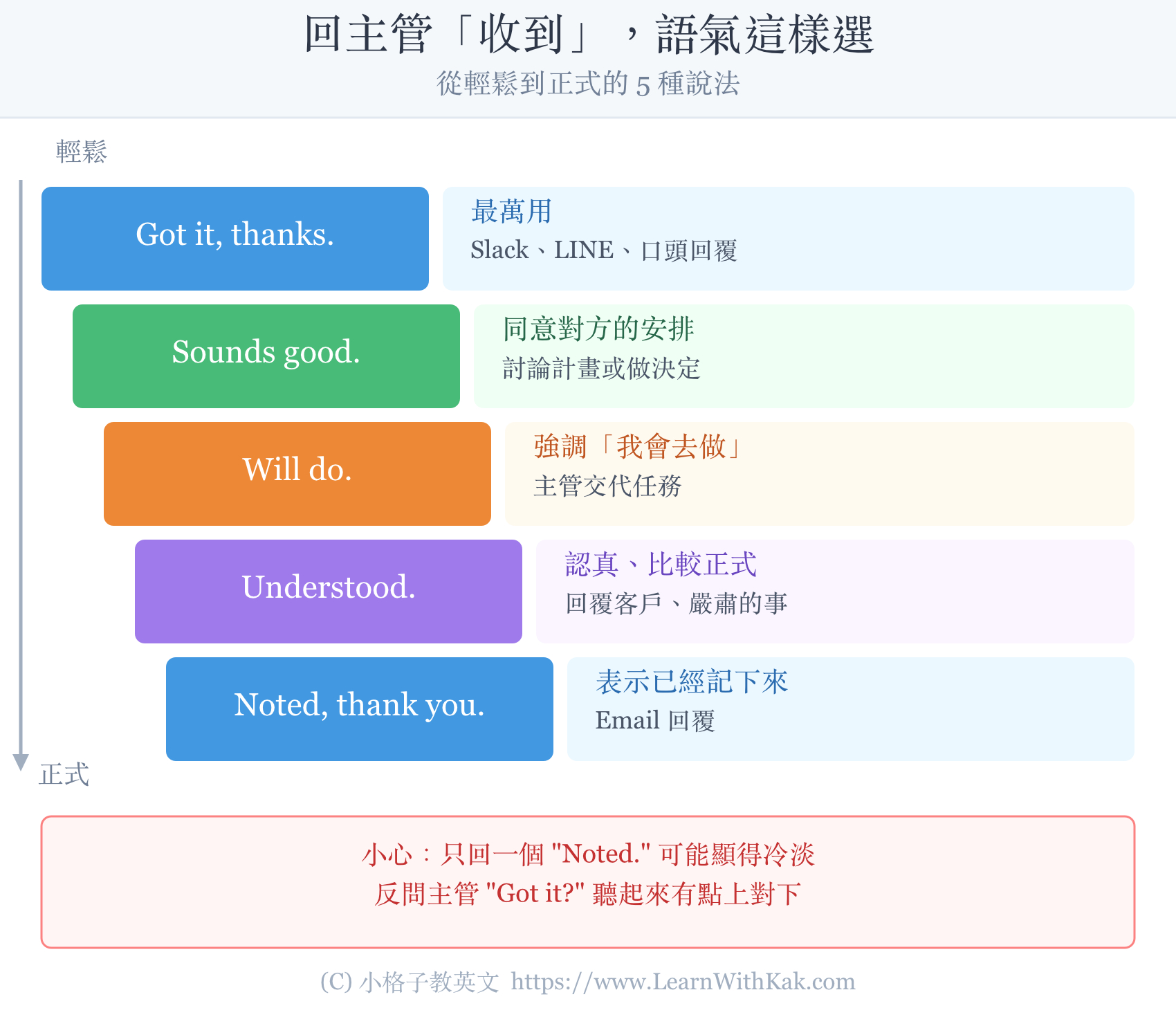
大部分的情況不會。Got it 意思雖然只是「收到」,但它本身沒有不客氣的成分。在美國公司,跟主管回 Got it 很正常,尤其是 Slack、Teams 這種即時訊息,大家都講求快。所以 got it 禮貌嗎?答案是看場合。真正要注意的是三種情況:正式 email、回覆客戶,還有對方剛交代一件很重要的事。這時候只回兩個字,會讓人覺得你有點冷淡,好像隨便看一眼就打發掉了。
解決方法很簡單,多加幾個字就好。下面這幾個說法從輕鬆排到正式,可以照場合挑:
- Got it, thanks. 最萬用,Slack、LINE 群組、口頭回覆都可以。
- Sounds good. 帶一點「我同意這樣做」的意思,適合對方提出安排或決定的時候。
- Will do. 強調「我會去做」,適合對方交代任務的時候。
- Understood. 比較正式,語氣認真,適合回覆客戶或處理比較嚴肅的事情。
- Noted, thank you. 常用在 email,表示「已經記下來了」。
有兩個小地方要特別留意。第一個是單獨回一個 “Noted.” 在美國人眼裡有時候會顯得有點冷,甚至像在表達不滿,後面加上 thank you 或補一句說明會好很多。亞洲和印度的職場很常看到 “Well noted”,但美國同事比較少這樣寫。第二個是反過來問別人 “Got it?”,如果對象是主管或客戶,聽起來會有點上對下,好像在確認對方有沒有在聽。這時候改成 “Does that make sense?” 會客氣很多。想在信件裡回得更得體,可以參考這些 職場 email 開頭結尾的替代說法,整封信的語氣會一致很多。
(6)
A: Can you send me the updated deck before lunch?
A: 午餐前可以把更新的簡報寄給我嗎?
B: Got it, thanks! I’ll have it to you by 11:30.
B: 收到,謝謝!我十一點半前寄給你。
(7)
A: We’d like to move the delivery date to the 15th.
A: 我們想把交貨日改到 15 號。
B: Understood. I’ll confirm the new date with our warehouse today.
B: 了解,我今天會跟倉庫確認新的日期。
(8)
A: Just so you know, the budget review is on Thursday now.
A: 跟你說一聲,預算檢討改到星期四了。
B: Noted, thank you. I’ll adjust the slides.
B: 好的,謝謝,我會調整一下投影片。
(9)
A: Let’s go with option B for the campaign.
A: 這次活動就用 B 方案吧。
B: Sounds good. I’ll let the team know.
B: 好啊,我去跟團隊說。
(10)
So that’s the new approval process. Does that make sense?
新的簽核流程大概就是這樣,這樣講清楚嗎?
如果主管交代完事情,過幾天又來問進度,記得別只回 Got it,用這些 追進度時常見的英文說法 來回應,會比較有來有往。
You got it 的兩種意思
You got it 意思主要有兩個:對方說對了,你回 You got it 就是「沒錯」;對方請你幫忙,你回 You got it 就是「沒問題,交給我」。判斷的方法很簡單,看前一句是在確認資訊,還是在拜託你做事。
第一種用法比 “That’s right” 更有人味,有點像中文的「對啦,就是這樣」。第二種用法比 “Sure” 更爽快,聽起來很有執行力,很多餐廳和咖啡店的店員都很愛說。要注意的是,You got it 的主詞是「你」,所以它一定是在回應別人,不會用來說自己明白了。如果是要直接拒絕,美國人也有一句很口語的 No can do,剛好跟 You got it 是相反的意思。
(11)
A: So we’re meeting at the station, not at the restaurant?
A: 所以我們是約在車站,不是餐廳?
B: You got it.
B: 沒錯。
(12)
A: Wait, so the refund goes back to my card, not as store credit?
A: 等等,所以退款是退回我的卡,不是換成購物金?
B: You got it. It usually takes about five business days.
B: 對,大概要五個工作天。
(13)
A: Could you print 20 copies of this for the meeting?
A: 可以幫我印 20 份開會要用嗎?
B: You got it.
B: 沒問題。
(14)
A: Two iced lattes, one with oat milk, please.
A: 兩杯冰拿鐵,其中一杯換燕麥奶,謝謝。
B: You got it. Coming right up.
B: 好的,馬上來。
另外,英國人常說 “You’ve got it”,意思一模一樣,只是多了 ‘ve。
I got it 不只是「我拿到了」
I got it 意思不只一種,常見的有四個:「我明白了」「我來」「我想到了」和「我拿到了」。它的主詞是「我」,所以都是在講自己的狀態或行動,要靠上下文判斷是哪一個。
很多教材只會教「我拿到了」,但在美式口語裡,I got it 最常見的意思反而是「我明白了」,跟 Got it 差不多,只是把主詞說出來。另一個超實用的情境是有人要去做某件事,比如開門、接電話、付錢,你搶先說 “I got it”,就是「我來」,語氣很主動。如果是突然想通一件事,”I got it!” 就是那種「啊,我知道了!」的感覺。
(15)
A: So you press this button first, then hold it down for three seconds.
A: 先按這個按鈕,再按住三秒。
B: Oh, I got it now. Thanks!
B: 喔,我知道了,謝啦!
(16)
A: Someone’s at the door.
A: 有人在門口。
B: I got it.
B: 我去開。
(17)
A: Let me get the check.
A: 我來買單。
B: No, no, I got it. You paid last time.
B: 不用不用,我來,上次是你付的。
(18)
A: What was the name of that ramen place we went to?
A: 我們上次去的那間拉麵店叫什麼?
B: Hang on… I got it! It was Ichiran.
B: 等一下⋯想到了!是一蘭。
(19)
A: Did my package come today?
A: 我的包裹今天到了嗎?
B: Yeah, I got it this morning. It’s on your desk.
B: 到了,我早上收的,放在你桌上。
I get it 小心聽起來很不耐煩
I get it 意思是「我明白」「我能理解」,用現在式,強調你理解的是一個道理或一種感受,而不只是收到一個訊息。所以朋友在抱怨的時候,回一句 “I get it” 帶有「我知道你的感覺」的同理心。
但同一句話換個語氣,意思就完全不一樣了。如果對方一直叮嚀,你很快地回 “Okay, okay, I get it.”,聽起來就是「好啦好啦,我知道了啦」,有點嫌對方囉唆。用在家人朋友之間還好,跟主管或客戶這樣說就很危險。反過來,如果是真的不明白,可以說 “I don’t get it.”,想要更多種說法的話,聽不清楚和不明白的英文說法其實差蠻多的。
(20)
A: I’m just tired of covering for him every single week.
A: 我真的受夠每個禮拜都要幫他收爛攤子了。
B: I get it. That’s a lot to deal with.
B: 我能理解,這樣真的很累。
(21)
A: Remember to lock the door, turn off the AC, and take out the trash.
A: 記得鎖門、關冷氣,還有倒垃圾。
B: Okay, okay, I get it. You’ve told me three times.
B: 好啦好啦,我知道了,你已經講三次了。
(22)
A: Why did they cancel the trip? Everything was already booked.
A: 他們為什麼取消旅行?明明都訂好了。
B: I don’t get it either.
B: 我也想不通。
(23)
A: Did you figure out why the coupon wasn’t working?
A: 你知道為什麼折價券不能用了嗎?
B: Yeah, I finally get it. You have to sign up for the membership first.
B: 對,我終於搞清楚了,要先加入會員才行。
You got this、I got you、Gotcha 別跟 You got it 搞混
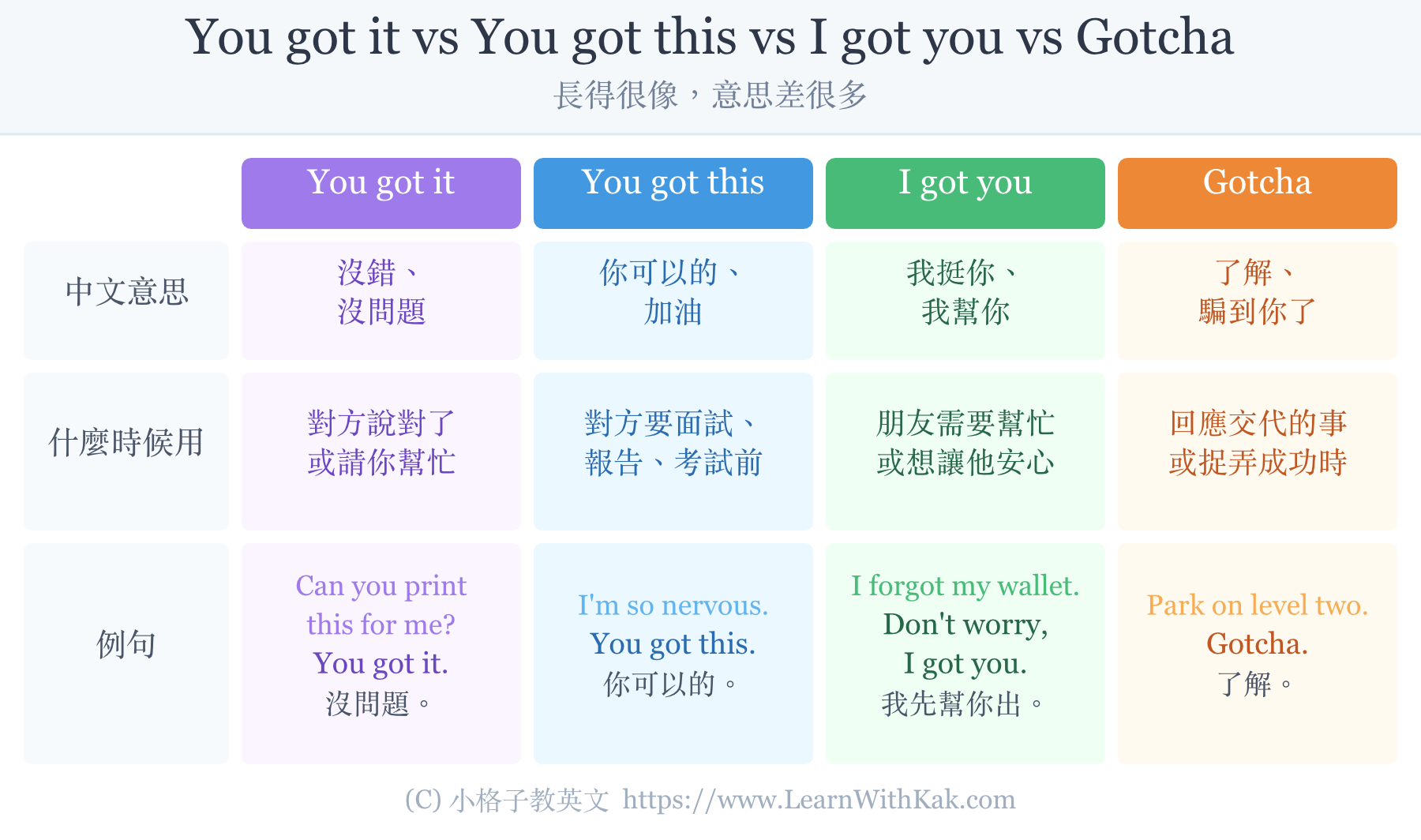
這三個說法跟 You got it 長得很像,但意思完全不同,說錯了對方可能會聽得一頭霧水。
You got this 是在幫人加油打氣。You got this 中文最接近「你可以的」「沒問題啦」,常用在對方要面試、上台報告、考試之前。
I got you 通常是「我挺你」「我幫你」,比如朋友忘了帶錢包,你說 “I got you” 就是「我先幫你出」。I got you 意思也可以是「我明白你的意思了」,口語常寫成 I gotchu。
Gotcha 是 got you 的連音寫法,gotcha 意思有兩個:一個是「了解」,跟 Got it 差不多但更隨性;另一個是捉弄成功時說的「被我騙到了吧」。
(24)
A: My interview is in ten minutes. I’m so nervous.
A: 再十分鐘就要面試了,我好緊張。
B: You got this. You’ve been preparing all week.
B: 你可以的,你都準備一整個禮拜了。
(25)
A: Oh no, I left my wallet at home.
A: 糟了,我把錢包忘在家裡。
B: Don’t worry, I got you.
B: 沒事,我先幫你出。
(26)
A: The meeting’s optional, but the boss notices who shows up.
A: 會議不是一定要去,但老闆會注意誰有出席。
B: I got you. I’ll be there.
B: 我明白你的意思,我會去。
(27)
A: Park on the second level. The first one’s for staff only.
A: 停二樓,一樓是員工專用。
B: Gotcha.
B: 了解。
(28)
A: Hey, your shoelace is untied.
A: 欸,你鞋帶掉了。
B: Huh? Where?
B: 啊?哪裡?
A: Gotcha!
A: 騙到你了吧!
Will do、On it、Sure thing 這些答應說法也很好用
除了 You got it,英文裡還有好幾個爽快答應的說法。一直回 “OK” 或 “Yes” 不是不行,但換著用會讓你的英文聽起來更自然。
Will do 是 I will do it 的省略,兩個字乾淨俐落,在職場訊息裡超常見。On it 比 Will do 更有行動感,意思是「我已經在處理了」或「馬上去做」,接下來要回報進展的時候,搭配這些 回報進度的英文說法 剛好可以接上。Consider it done 是「包在我身上」,語氣很有把握,帶一點小幽默。
日常對話的話,Sure thing 比單純的 Sure 親切,跟朋友或熟一點的同事說很剛好。You bet 是很美式的說法,可以當「當然啊」,也可以在別人道謝時回「不客氣」,跟 No worries 這類回應說法 很像。反過來,如果你是開口拜託人的那一方,請別人幫忙的英文怎麼說才不失禮 也一樣重要。
(29)
A: Please cc me on the email to the vendor.
A: 寄給廠商的信請 cc 給我。
B: Will do.
B: 好的,沒問題。
(30)
A: The client wants the revised quote today.
A: 客戶今天就要修改過的報價單。
B: On it. You’ll have it within the hour.
B: 我在處理了,一小時內給你。
(31)
A: Can you book a table for eight on Friday night?
A: 你可以幫忙訂星期五晚上八個人的位子嗎?
B: Consider it done.
B: 包在我身上。
(32)
A: Mind grabbing me a coffee on your way back?
A: 你回來的路上可以幫我帶杯咖啡嗎?
B: Sure thing. The usual?
B: 當然好,老樣子?
(33)
A: Are you coming to the barbecue on Saturday?
A: 你星期六會來烤肉嗎?
B: You bet!
B: 當然會啊!
(34)
A: Thanks for helping me move last weekend.
A: 謝謝你上週末幫我搬家。
B: You bet. Call me anytime.
B: 不客氣,隨時找我。
Got it 常見問題
Got it 禮貌嗎?可以直接回主管嗎?
可以。在一般的職場訊息裡,跟主管說 Got it 很正常。如果是正式 email、回覆客戶,或是對方交代的是重要的事,建議加上 thanks,或補一句接下來的行動,語氣會更完整。
(35)
Got it, thanks. I’ll send it over by five.
收到,謝謝,我五點前寄給你。
Do you got it 文法對嗎?
不對。got 是過去式,前面有 do 或 did 的時候要用原形 get,所以要說 “Do you get it?” 或 “Did you get it?”。如果要用 got,可以說 “Have you got it?”,或是口語直接問 “Got it?”,只是後者對主管或客戶要少用。
(36)
A: Did you get my email?
A: 你有收到我的信嗎?
B: Yes, I got it this morning.
B: 有,我早上收到了。
I got it 和 I’ve got it 差在哪?
意思一樣,都可以是「我明白了」或「我來」。I’ve got it 文法上比較完整,英式英文比較常用;I got it 是美式口語的說法,日常對話裡兩個都聽得到。
(37)
I’ve got it. Let me handle the call.
我來吧,這通電話我處理。
You got it 意思跟 You got this 一樣嗎?
不一樣。You got it 意思是「沒錯」或「沒問題,交給我」,是在回應對方說的話或請求;You got this 則是「你可以的」,是在幫對方加油。
(38)
A: Can you cover my shift on Sunday?
A: 你星期天可以幫我代班嗎?
B: You got it.
B: 沒問題。
說到底,這幾個說法差的就是主詞和語氣。在職場上多加個 thanks,在朋友之間就放輕鬆用。下次收到交代的事情,也可以試著換成 Will do 或 On it。
延伸閱讀:【老闆問 Is it doable?搞懂 Doable 中文意思和職場英文回答技巧】
如果你喜歡這篇文章的話,可以追蹤我們的 Threads 和 Facebook 唷!